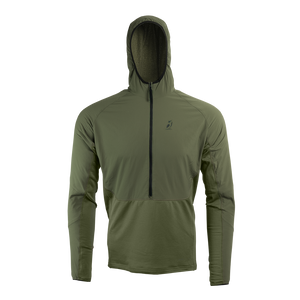

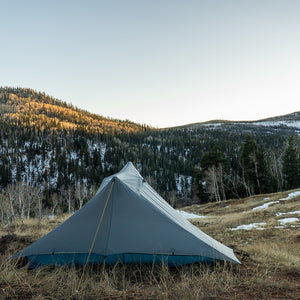


Possibly, and it depends on which replacement chemistry a brand switches to. PFAS-based DWR has been the most reliable, longest-lasting water-repellent treatment available for decades, and a growing list of states, including California, New York, Maine, Connecticut, and Vermont, are now banning intentionally added PFAS in apparel, with Colorado and Washington following in 2027. Some PFAS-free alternatives, like hyperbranched polyurethane finishes, already perform close to PFAS. Cheaper and more common alternatives tend to wear off faster and struggle with oil and dirt repellency. Either way, DWR of any chemistry is a surface treatment that wears off through normal use. It was never the part of a rain jacket doing the actual waterproofing. The membrane underneath it is, and that part isn't changing.
By Derek Rasmussen, Marketing Director at Outdoor Vitals · September 2026
Key takeaways
- PFAS-based DWR is being phased out by state law, not by choice: California and New York started January 2025; Maine, Connecticut, and Vermont started January 2026; Colorado and Washington follow in 2027.
- The Outdoor Vitals Tushar Rain Jacket's current-production DWR contains PFAS, disclosed on its own product page, same as most technical rain shells on the market today.
- PFAS-free DWR isn't uniformly worse. High-end hyperbranched polyurethane finishes hold up for 20+ wash cycles. Cheaper polyacrylate and wax-based alternatives wear off faster and still can't match PFAS on oil repellency.
- DWR of any chemistry is a surface coating, not the jacket's waterproofing. It wears off through normal abrasion, dirt, and washing on every jacket at every price point.
- The Tushar's waterproof membrane, not its DWR, is what keeps you dry once the coating fades: a hydrophobic membrane (28,500mm HH) over the shoulders and back, a hydrophilic membrane (15,500mm HH) at high-heat zones.
Watch: why rain jackets wet out, and what PFAS bans change
Outdoor Vitals breaks down waterproof/breathable membranes, hydrostatic head ratings, and why PFAS regulations are about to change what DWR coatings can do, using the Tushar Rain Jacket as the working example.
Table of contents
- Why PFAS bans are reaching your rain jacket now
- What actually contains PFAS on a jacket like the Tushar
- Do PFAS-free DWR coatings perform worse?
- What still keeps you dry once the DWR is gone
- Frequently asked questions
Why PFAS bans are reaching your rain jacket now
PFAS, short for per- and polyfluoroalkyl substances, are the class of chemicals behind most long-lasting water-repellent coatings, DWR included. They're durable and effective, and that's exactly the problem regulators are targeting: PFAS breaks down slowly in the environment, and some compounds in the group are linked to health concerns. States have started banning them in apparel by law, not asking brands to volunteer.
California and New York's bans on intentionally added PFAS in apparel took effect in January 2025. Maine, Connecticut, and Vermont followed in January 2026. Colorado's ban on PFAS in outdoor apparel built for severe wet conditions takes effect January 2027, alongside Washington's. More states are expected to follow the same pattern through 2027 and beyond.
None of this is specific to Outdoor Vitals or the Tushar. It's an industry-wide shift, and every brand selling technical rain gear in the U.S. is on the same clock.
What actually contains PFAS on a jacket like the Tushar
On a technical rain jacket, PFAS shows up in the DWR coating applied to the outer face fabric, the layer that makes water bead up and roll off instead of soaking in. It is not the waterproof membrane underneath, which is a separate material and a separate part of the jacket entirely.
The Tushar Rain Jacket's current production run uses a DWR coating that contains PFAS. We disclose this directly on the product's own features and technology page, alongside a care note not to expose the fabric to DEET-based bug spray or oils, which can damage the coating and discolor the fabric. That's the same category nearly every technical rain shell on the market falls into today, not a gap specific to this jacket.
That's also the part of the jacket that changes as the state bans above phase in. The membrane, the seam tape, the zippers, the cut, none of that is regulated by these laws. It's specifically the DWR coating that has to be reformulated.

Do PFAS-free DWR coatings perform worse?
It depends on which alternative a manufacturer uses, not on PFAS-free chemistry as a whole. Hyperbranched dendritic polyurethane finishes, one of the newer PFAS-free options, hold up for well over 20 wash cycles in testing and rate close to PFAS-based coatings on initial water repellency. That's a real, workable alternative.
The cheaper and more common alternatives are where the gap shows up. Polyacrylate finishes are more economical but wear down faster through washing. Wax-based finishes repel water well when fresh but fade quickly without added crosslinking chemistry. And across every PFAS-free option, oil and dirt repellency remains a genuinely unsolved problem: PFAS chemistry still does that job better than anything that's replaced it so far.
So the honest answer is: some PFAS-free DWR is pretty good, and some is a real step down, and the label on a hang tag won't tell you which one you're getting. The more useful question isn't which chemistry a jacket uses. It's what happens once any DWR coating, PFAS-based or not, eventually wears off, because that happens on every jacket regardless of what's in the coating.
What still keeps you dry once the DWR is gone
This is the part that doesn't change no matter what happens to DWR regulation: the waterproof membrane laminated inside the jacket, not the surface coating, is what actually blocks water. Outdoor Vitals has covered the membrane science in detail elsewhere, so this is the short version rather than a repeat of it.
The Tushar uses two membrane types mapped to different zones. A hydrophobic membrane, rated 28,500mm hydrostatic head, sits over the shoulders and back where a pack's straps create constant pressure and friction. It repels water without absorbing it, so it keeps working at full strength even after the DWR on top of it has worn down. A hydrophilic membrane, rated 15,500mm hydrostatic head with a higher breathability number, sits in zones where venting matters more than raw pressure resistance. It absorbs moisture to form a seal, which is why it breathes better when the DWR is intact and why it can start to feel damp once that DWR fails and the membrane saturates from the outside in.
The face fabric protecting that membrane matters too, and it's not just about the DWR either: the Tushar's 20D face fabric is more abrasion-resistant than the 7D-10D fabrics common on lighter rain shells, which matters once a coating starts to wear thin. That's covered in full, along with the rest of the Tushar's storm performance, in the third post linked below.


Frequently Asked Questions
Q: Does the Outdoor Vitals Tushar Rain Jacket contain PFAS?
Yes. The current production Tushar uses a DWR coating that contains PFAS, disclosed directly on the product's features and technology page. That's standard for most technical rain shells sold today, not specific to this jacket, and it's the part of the jacket that changes as state PFAS bans phase in over the next several years.
Q: Which states have banned PFAS in rain jackets and outdoor apparel?
California and New York's bans on intentionally added PFAS in apparel took effect in January 2025. Maine, Connecticut, and Vermont followed in January 2026. Colorado and Washington's bans on PFAS in outdoor apparel for severe wet conditions take effect in January 2027. More states are expected to add similar laws through 2027 and beyond.
Q: Are PFAS-free DWR coatings worse than PFAS-based ones?
It depends on the alternative. Hyperbranched polyurethane finishes hold up for 20-plus wash cycles and perform close to PFAS. Cheaper polyacrylate and wax-based alternatives wear off faster and still lag on oil and dirt repellency, an area where PFAS chemistry hasn't been matched yet.
Q: If DWR is being phased out, will rain jackets stop being waterproof?
No. DWR affects how quickly water beads off the surface, not whether the jacket is waterproof. The waterproof membrane laminated inside the jacket handles the actual waterproofing, and that part isn't regulated by the PFAS bans or changed by a DWR reformulation.
Q: How can I make my rain jacket's DWR last longer regardless of chemistry?
Wash it in a machine without an agitator on a cold, delicate cycle with a technical cleaner rather than standard detergent, then air dry. Avoid contact with DEET-based bug spray and oils, which break down the coating faster. A worn DWR coating can typically be reactivated with a wash-in or spray-on treatment; Outdoor Vitals covers the full process in its rain jacket care guide.
Related reading
- What Actually Keeps a Rain Jacket Dry After the DWR Wears Off?
- Before You Buy a Rain Jacket, Read This
- Can the Tushar Rain Jacket Keep You Dry Through All-Day Mountain Storms?
- 3 Things You Didn't Know About Your Ultralight Rain Jacket

About the Author
Derek Rasmussen
Marketing Director, Outdoor Vitals
Derek Rasmussen is the marketing director at Outdoor Vitals and a dedicated long-distance backpacker based in southern Utah. He has logged thousands of trail miles across the American West, from multi-day sections of the Colorado Trail to routes through the Tushar Mountains where Outdoor Vitals gear is field-tested. Every piece he writes is grounded in firsthand experience with the gear, not specs pulled from a box.
Learn more about the Outdoor Vitals team | Follow founder Tayson Whittaker at taysonwhittaker.com
References
Mentioned in this article
More stories