[00:00] Tayson: Hey everybody, welcome back to the Live Ultralight Podcast. from Outdoor Vitals today. We are back with another episode of the Ask OV podcast. So that means that we are going to take listener questions and answer them live on the podcast. These can be questions about gear that can be questions about backpacking in general, all questions are valuable for us to answer and we're just happy to do that.
[00:21] Tayson: So got Brigham here, our lead designer on the podcast and we've got some questions to go over today. So let's just jump right in this particular episode, we actually have a few questions that I've kind of grouped together that are a little more around.
[00:37] Tayson: Hunting. And, and there's some others that are just more about just in general. But, but I wanted to kind of segment these for those people that might be carrying heavier packs. That might be, you know, getting out there and doing some hunting out here in the west and just kind of group those together.
[00:56] Tayson: So if that's something you're interested in specifically about getting into, you know, heavier packs, this episode will be for you. So let's start with a long time, listener, David. So David's question is as a fellow Hunter and Backpacker what pack weight do you switch to carry and more sturdy pack?
[01:16] Tayson: I have the EXO K4 5000 pack, which I love, but it's very heavy without the top lid. It's 5.78 pounds. This pack handles weight very well but I've wanted to get a lighter pack just for backpacking trips. However, the majority of my trips, I'm carrying for my wife or my kids gear and I tend to have have your packs, usually 30 to 40 pounds.
[01:38] Tayson: For example is April, May trip down a pretty Canyon. She didn't carry a pack at all. So he had the gear and food for two adults, for four days in his K4 pack, and wait about 32 pounds. 42 pounds with water. I know you guys have k4s, and if your pack was going to be 40 pounds, that you ought to take the K4 or one of our packs, It's a long question but more or less.
[02:05] Tayson: He's saying what point do you switch from one of our more ultralight backpacks? To a bigger sturdier hunting style backpack.
[02:15] Brigham: Yeah. I mean, definitely in the 40 pounds, it might be more like mid 40s, upper 40s, I mean, It was I guess, you know, if that's without food or water that obviously is a big difference thing. A lot of it for me is weight/volume or the combination of weight and volume.
[02:42] Brigham: so, I mean, a lot of times, especially, for carrying gear or food for other people, That just takes up a lot of space. For sure. Like I I would probably go to like my EXO K4 pack. Like if its 45 pounds or more for sure that it just it's gonna be and it's most likely more appropriate for the volume of things that I need to carry.
[03:09] Brigham: just, I mean most trips like we did the Colorado Trail. And my I probably have about a 10 pound base weight but my food weight more than all of my other gear combined. So like food can really stack up. Now, if you're starting to pack food for two people you're just doubling that and but that's double the volume.
[03:30] Brigham: So it's a for me it's kind of the combination of the two and yeah upper mid to upper 40s is probably a good threshold that I I don't like necessarily weigh it and then make the decision. But from the most part I would say it's probably in that mid to Upper 40 pounds that I'm choosing to use My EXO pack.
[03:53] Brigham: But it's also a higher much higher volume pack to and now I'm back in food and maybe other gear for family.
[04:00] Tayson: Yeah. Yeah, I think that's a really good way to address it, honestly. I mean, our packs are right now. Are we rate them? You know, on the site, you'll see a rating of 40 pounds. So that that kind of tells you something in and of itself, if you're going over 40 pounds, one of our packs, you're really stretching the limit.
[04:18] Tayson: It's not not even so much the limit of like, what it can do. It's the limit of what we are. Happy telling you can can remain comfortable. So take that into consideration. And then just like Brigham said, volume. So, I did do, I went on a family backpacking trip this year.
[04:36] Tayson: And I took the K4 for that one, because I was taking my two, kids and significant other all out on the trip, right? So I've got and then my gear right and inherently, I end up being The hauling machine, you know, I put my kids in the Skyline Fastpacks, I usually put lighter stuff in there, like dehydrated food, a sleeping bag, like bulky stuff.
[04:58] Tayson: But at the end, I still needed the volume that I had in some of these other, you know, 5000 cubic inch packs, which leader wise She, I don't know, I'll probably like an 80-plus-liter equivalent. I actually don't know that on the top of my head.
[05:14] Tayson: So so obviously going for like a 60-liter Shadowlight to an 80-plus-liter backpack, you're getting quite a bit more volume. So for me sometimes it's as much the volume as it is the weight when I'm backpacking specifically. But yeah, I agree.
[05:27] Tayson: I mean when I went and did a pack rafting trip in the Grand Canyon, I took, you know, my pack was basically 40 pounds and I still took our Shadowlight backpack and it was the right choice for that pack or for that trip.
[05:41] Tayson: I was glad. I had it saved me pounds of weight off of just the backpack weight and it was, it was an acceptable, you know, it was tight, but I was able to make that work. So Yeah, I think I think right where you're talking about like, 35 to 45 pounds.
[06:00] Tayson: You're right at the switch point. You really are. I do think You know, trying to get your pack lighter in general as you will. Really enjoy that. Of course, the key is getting as light as you can for the for the mission and the purpose of your trip.
[06:17] Tayson: I think you're going to, you're going to just gain Comfort outside of that. But yeah, for me, I'm with you somewhere in that 40 to 45 pound, Mark, I'm switching to a hunting pack a K4 specifically and that's because their frames are, you know?
[06:34] Tayson: More than twice as thick I would. Imagine their Foams are a lot denser, but the problem is, if you take one of those packs and put 10 pounds in it, it's a very stiff and harsh. Ride much more stiff and harsh ride than what our backpacks are built and tuned for so good question.
[06:50] Tayson: Hopefully that that answers it. But unfortunately, there's You know some of these trip weights that you kind of threw out there right on that cusp anyways. So Yeah, I think 40 pounds probably right around that cut off, Mark for me. Okay. This is really quick and easy, Justin asked, you know, what do we use?
[07:13] Tayson: So outside of our OV packs for hunting and hauling meat, what do we use? We use the EXO pack line have for years and I mean, I have experimented other packs, really, really like those packs. I think that the design of them and the comfort of them is incredible.
[07:30] Tayson: So, That's what we're using.
Editor’s note: Pack models, ratings, and recommendations reflect the September 2026 episode context. Confirm current specifications and fit guidance before choosing a load-hauling system.
[07:33] Brigham: Yep, as well.
[07:36] Tayson: Um, okay, here we go. How do you sorry this? I need a balance of text here, so bear with me a little small text. How do you apply your ultralight backpacking mentality towards Backcountry hunting. What principles do you feel best? Lend themselves to getting as light as possible and where do you draw the line on lightweight versus durable when you're looking to hunt for extended trips?
[08:02] Brigham: uh, made me personally, I apply as much of the same. Mentality, as I can in a Backcountry hunting. Scenario. so, on the gear side, I'm still trying to use the lightest gear that I can that will Be adequate for what I'm doing. There's a lot of overlap when I go backpacking and sleeping in a tent in the top quilt on a pad in the mountains.
[08:34] Brigham: When I go backcountry hunting, it's a exact same thing. There's some seasonal or conditional differences that can occur. But I'm always. Trying to minimize the quantity and the weight of everything that I take. So I would say 80 to 90% of everything is all the same in terms of like the main gear items.
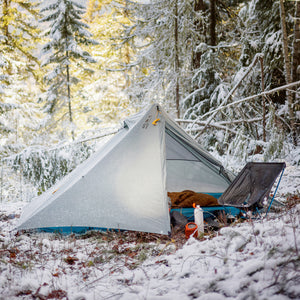
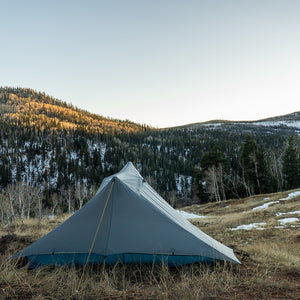
[09:01] Brigham: So, my tenth most of the time, it's still the same time that I would take or that. I took on the Colorado Trail 2 weeks ago. it's like a one and a half pound tent, trekking-pole tent, I take a top quilt and I have taken, you know, that top quilt, 18 or 19 ounces.
[09:19] Brigham: And I've taken that into Like late, October, and Colorado, Idaho Utah. In cold conditions. So, I mean, there's there's no differences there, sleeping pad, a Therm-a-Rest XTherm. I'll use that in July, on a backpacking trip. And I'll use that in January. Hunting trip, but November hunting trip.
[09:45] Brigham: You know what I mean? Like, the main gear items that affect your weight, the most are pretty much the same. clothing is going to differ a little bit, but that's mostly because of just the the seasonal conditions of kind of a shoulder Seasons, late October, early November, There's some longer periods of stagnation just sitting still like glassing on a hillside where I need more insulating layers, so I'll have puffy pants.
[10:16] Tayson: Really quick glassing on a hillside. What is? Sorry, through binoculars. Yeah, for hours at a time, you know, just just looking through binoculars.
[10:24] Brigham: Yes. Looking for looking for Animals through but binoculars or a tripod or a spotting scope on the tripod, something like that. So that's a period of just sitting still creating no body heat so Clothing. There's, there's some some differences, but still tons of overlap and similarity.
[10:42] Tayson: I mean, let's talk a little bit more about the mentality here because I'm not the same as you. Like, my setup is Hardly changed one of the main key differences for me is I will because like you're saying when you're sitting there glassing on a hillside for a long time, you get a lot colder than when you're actively walking, right?
[11:01] Tayson: If you're actively hiking all day, it's a very different temperature level. Then when you're sitting stagnant, maybe on a cold rock, you know what I mean for for hours. And so, we typically will bring a puffy layer. We're going to bring a bigger puffy jacket and typically puffy pants.
[11:20] Tayson: Now the nice thing is the mentality side of that, though, is with the ultralight mentality, it's you want to use everything you have and use it in as many ways as you can. So both me and Brigham will use a 30 degree, sleeping bag or top quilt, well into what would be maybe after what people would consider using those in, but we're totally fine using our puffy layers to sleep in.
[11:41] Tayson: That's one of the ways that we shed a little bit of weight and, and help ourselves out. And that sense, Some of the other mentality points that I think Hunters overlooked is. if you're someone who's focused on weight and being ultra light, apply that to everything.
[11:56] Tayson: Apply that to your tripod, finding the lightest weight, tripod, finding the lightest weight bino, harness, finding, you know, a light, you know, weapon of choice, you know, your backpack, like all these things, add up in the same way that ounce counters and Ultra Lite world.
[12:12] Tayson: You can kind of take the mentality and apply it over, I would say as well. And so I get really focused on on some of those things I've You know, tripods is one that I've, like, I have multiple tripods, as I've slowly got lighter, and as new stuff comes out.
[12:26] Tayson: I'm like, man, that one's even lighter, I'm gonna go for that one. And with Optics as well. Both me and Brigham we don't really use big spotting Scopes and things we we opt for smaller spotting scope and that's like a strategy level too because some people want to Glass extreme distances and have massive Optics.
[12:47] Tayson: And for, for me the choice that I make there is If I've got a smaller lighter setup that also means that I can be more mobile. So if I don't have a heavy pack, And I have a lighter pack. If I see something that's of interest to me, I can, I can close the gap and get closer and my, you know.
[13:05] Tayson: Lighter, spotting scope is still adequate because I plan on getting closer versus sitting, you know, completely stagnant in a one specific spot. So, there's a lot of strategy that comes in here, but in terms of the mindset itself, very much the same, very similar, I mean, and, and with say like the
[13:23] Brigham: ultra like just ultralight, backpacking. To. Like to maximize Effectiveness, it requires an awareness of the trade-offs of what you what, the give and take of what you are putting into practice. So, like but that same mentality, just apply that same thing with with backpack hunting, like, that's, that's how I look at it.
[13:46] Brigham: Meaning. So, as you were talking about some of those things like, Like Optics. For me, I'm recognizing the trade-off. So the trade-off by going to, a 55-millimeter, sub-two-pound spotting scope. The trade-off that I am aware of is that I say of a lot of weight.
[14:06] Brigham: And I give up. A low light capability. I give up long range, glassing ability and for me, I'm willing to accept that trade-off because of what The cumulative accumulation of all the other weight savings that I make through that same process of. What I take and don't take or all that, that ultralight mentality of minimizing taking just the minimal.
[14:34] Brigham: the minimal like, Viable, whatever. To be effective the way that I like to do things in the mountains. And so I like to be, I like to feel Like Unlimited in physical. ability in the mountains, I don't like to feel like I don't want to get up and go.
[14:57] Brigham: Wherever because my pack is just so heavy. Like, I just want to eliminate that variable as much as possible. So for me, I prioritize using really lightweight. Optics set up. Tripods and just just even things like what I don't pack like, like, again, like that mentality of, like, don't don't pack.
[15:20] Brigham: like what ifs or fears and all that is just Yeah, like even how many, how many, you know, game
[15:26] Tayson: meat bags? Do you really need, you know, just just, you know, you could grab the pack that comes with four bags or whatever, but you can also be like, how much do I actually need? And okay, I'm going to leave two of those at home, you know, just just all the little cumulative things, and that comes back to like, some of the principles of just, like, have a gear list, you know, like know what your stuff weighs.
[15:46] Tayson: And you can see that yourself as you're working down your own, your own list. Last part of this question is kind of a lightweight versus durability, which is kind of funny because I I don't think about this a lot. I don't know if you think about this a lot in terms of specifically durability and lightweight.
[16:06] Brigham: Yeah. I mean the the types of conditions that I come to mind when I think of where that would matter. Would. Potentially be. Shelters and sleep systems but mostly just shelter's. That shelter is the, it's the fall back location when the weather is bad, right?
[16:30] Brigham: It is, what keeps our body's protected from the elements. um, clothing can be thought of that way, but I will say, I care way more about my shelter holding up, then I care about my clothing holding up. The reason that is is because I don't care how many snags or pilling or little whatever is on my pair of pants.
[16:57] Brigham: Until that pair of pants ceases being a pair of pants. It's fine. Same thing with a shirt, you know? I mean like But a shelter can stop being a shelter. And you are in a bad way like as soon as your shelter is unable to protect you from the elements that's bad.
[17:18] Brigham: And So I care way more about that. But this is all in context, right? Like, I'm not saying that I'm carrying a Four Season, you know, eight pound tent. because I'm so worried about it blowing, you know, blowing over, I'm just weighing what the conditions I Reasonably expect with some buffer, you know?
[17:42] Brigham: And so I'm also putting into practice, good decision-making. If I can avoid setting up a tent on an exposed Ridgeline where it's blowing 30 miles an hour, then I'm gonna do that.
[17:42] Tayson: I was just gonna say that. I actually
[17:56] Tayson: mean you are on a hunt in Montana. Last November. And we were experiencing 50, plus mile an hour gusts in fact, in one area. I swear they were 70. Plus, I couldn't, I could not stand up. I had to crawl and we had to, we were up on this exposed Ridge and If we had been like, hey, this is where like this is where we plan to camp.
[18:18] Tayson: But when we were there, we were like There's no way there's no way that like a shelter is going to to work up here. And so we hiked essentially off until we found a an area, within some trees and and protection. And then we pitched our tent And there are kind of two trains of thought here.
[18:36] Tayson: One is like, no, I need a shelter that I can pitch anywhere in his durable enough to handle anything or if you're in the ultralight mindset. You pack light enough that if you need to hike, and push and move somewhere else, and be adaptable to the country?
[18:50] Tayson: You Just can't because you're pack isn't 70 or 80 pounds on our back. So there's there's different things like that. That come into when you're aspects of when you're in the field and you have a lighter pack, you can make slightly different decisions around that too.
[19:06] Brigham: I think there's there's the potential mind trap of thinking that you can out gear the conditions. you can you can out Essentially out, purchase or out gear. What the weather can do? And that's that's a fallacy like there—do not think that. I think the danger is in overconfidence or complacency because I Don't Care What tent you have or somebody has.
[19:34] Brigham: I could find a mountain to put that on. That would have obliterated that tent, right? So do we, I don't want to be in that position, you know? So I avoid that position. So I just am aware again of the trade-offs, like There's a trade-off to being in the mountains, like, they're the trade off to just being in the mountains means there are conditions that I cannot withstand, so durability.
[19:56] Brigham: I want to make sure, you know that I that I do have a tent and gear setup that can handle the conditions that I reasonably would expect with some buffer. I do care about the durability of my sleeping pad especially cold conditions because that is the difference between hiking out and getting a good night's sleep.
[20:21] Brigham: So I take extra precautions to make sure that I'm setting my pad down in a safe location that I'm pitching my tent in a location, that's not going to compromise my pad. so, I take some extra care there by just I'm trying to again, I want to carry the lightest stuff possible that I can remain effective and stay in the mountains as long as I want.
Editor’s note: Shelter, sleep-system, and campsite choices are personal examples, not guarantees. Match gear and site selection to current conditions, manufacturer guidance, skill, and a conservative safety margin.
[20:48] Tayson: Yeah, I think kind of the last thing that I'm thinking about is just clothing in particular. I think, sometimes people end up buying a lot heavier, clothing for hunting in the name of durability. and I think you can get really good durability out of still really lightweight options and sometimes like I'm just kind of looking at a puffy jacket that's hanging up over here and like people might want like I want more durable puffy jacket.
[21:16] Tayson: Well there's a level of durability that needs to be in existence for any high-mountain pursuit, any ultralight mountain pursuit. but to go from like let's say one of our jackets to a heavier, you know, more durable jacket. The reality is a puffy jacket is not meant to be durable and not meant to be bushwhacked, you know, through bushes, regardless of whether it's a 20-denier fabric or 30-denier fabric or 40-denier fabric.
[21:43] Tayson: you know, like like so all such as being aware of like, okay, I'm in the mountains and I'm hunting and I want my stuff to be durable but like I've got a puffy jacket on. I don't need to go bust down this mountain right now through all this stuff.
[21:56] Tayson: And so when you start to realize like the true application of all the stuff we already do with with With, with our gear. Crossover and the amount of gear that overlaps perfectly into the, the hunting and Sportsmen world is, is really, really high.
[22:11] Tayson: I mean, Truthfully like we've hunted in our gear for, as long as we've made our gear.
[22:18] Brigham: Yeah.
[22:18] Tayson: And it's been great, like, I've never had durability or failure or issues like that in the mountains.
Editor’s note: Clothing durability comments describe personal experience in this 2026 discussion; use each garment within its current intended application.
[22:25] Brigham: Yeah. So just like, yeah, I I when I the one question about the thicker, maybe it's the same question about the gear. It's like take my ultralight backpacking set up. Throw some Optics and weapons and some other things in there. That You need for a hunt and that's that's it.
[22:43] Brigham: Like there's very
[22:44] Brigham: little different
[22:44] Tayson: Yeah. Okay. All right, let's tackle this last question from Daniel. When you're in, this is unrelated to hunting. Now we're gonna shift gears just a little bit but when you're hiking and things start to get difficult, how do you decide to keep pushing and fighting through or stop and take a break and regroup, the mental side of hiking, can sometimes be more of a challenge than the physical side.
[23:13] Tayson: I love this question. because, It's, it's of my opinion that more people can hike farther and do more things physically than they can mentally. I think more people, tap out mentally than they do physically, when it comes to backpacking, I'm actually looking at this right now, I I have an injury, I can't train like I usually want to train.
[23:42] Tayson: I have some upcoming Big hikes and and hunts that I'm gonna be doing. And I'm like, I know that my physical capabilities are shrinking But I can still rely on the mental fortitude that I've developed and just realized like, okay, so maybe I can't hike that mountain as fast.
[24:02] Tayson: Still can do it. Like it, it might hurt more. My hurt, meaning like it might be harder. but it's still totally within the realm and I think developing a bit of a muscle of, like, I don't say like the don't quit muscle, you know.
[24:17] Tayson: Like but like that mental fortitude, I think it's it's huge and and people don't talk about it enough. Most the time people that have I say she's talking like about people that have hiked 20 miles and people that haven't hiked 20 miles. Maybe people have only hiked 10 miles in a day.
[24:34] Tayson: Um, I think a lot of people can hike 20 miles in a day. They just don't know that they can yet, and they don't know what that looks like. And they don't know what that feels like. And once they push themselves to hike, 20 miles in a day, they realize that they can do it.
[24:46] Tayson: There's a rewarding benefit of that, but also, they now have experienced it once. And so when they feel this way, at some point in the day, or they start to drag, or they have these different feelings, they already know that they can do it, and it's not a physical limitation, as much as a them getting comfortable, with the mental side of it, and that limitation.
[25:06] Brigham: Yeah. this isn't all inclusive, but I mean a lot of like human the emotion and the psychological psychology of like Humans experience, I think fear or inhibition about something is from a lack of familiarity with that thing, they have not experienced that thing.
[25:25] Brigham: So There's a lot of different directions to take this. I agree with what you would what you just said but You know. it's like the most simple thing that I my advice is go hiking. Like the more you go hiking, the more your brain is going to recall on that experience of I've been here before I've done this.
[25:52] Brigham: every hiking trip is going to be different and then if you gradually increase, The difficulty or something, or just the more you do things, the more you're going to encounter new things of that thing that you're doing and your your brain is going to adapt.
[26:09] Brigham: That's like number one to me is. The more experienced anybody has with something the more confidence they have and the less fear or inhibition, they have because you have been there before. Now I will take that a step farther and say do hard things in general.
[26:26] Brigham: Not like flip a switch and tomorrow think I need to go hike 100 miles in a day. No, but what it wherever you are at or wherever a person is at Let that be. like, Constantly try to put yourself in new or more challenging, more difficult situations or experiences because in my opinion that is how a person overcomes that, that almost overwhelming feeling of that they have to fight or push through.
[27:02] Brigham: And once you do push through something, the next time you have to push through something new. The Mind recognizes that. Hey, I have, I've done hard things before. It sucked. It was difficult. It wasn't pleasant. But here I am, I'm alive. You know.
[27:23] Brigham: and that that is very powerful because like like you said, like people can do way more than they think they can unfamiliar unfamiliarity is is a real thing that generates a lot of anxiety and fear keeps a lot of people from doing what more than from doing what they could.
[27:49] Tayson: Yeah, I kind of viewed as almost anchoring
[27:51] Tayson: too. When you've done something really hard push through it and and got to the other side. That's like a new High Mark and so anything underneath that becomes easier like if I'm not as bad a condition as that, or this is not as hard as that everything, underneath that you gain a lot of confidence.
[28:06] Tayson: And, but to back up here a little bit, he's specifically, did ask How do you know when to push through versus stopping and taking a break and regrouping? That that's a little bit more specific here. So, I know when to stop versus pushing through, That's a really good question for me.
[28:33] Tayson: I think for everyone, there's there's different ways that your body reacts. So first, I talk to people a lot about So sometimes your body will throw things out there that are like this is been my experience has been stuff. I've read about and let's throws out like fictitious things to try to get you to slow down at times or just like stopped or things like oh man this is really hard.
[28:55] Tayson: Like I'm going to throw like Whatever my calf is starting to tighten up or something like that, I need to stop. And my experience with a lot of those is if you just continue through it, it just disappears and then like you totally forget.
[29:09] Tayson: That even happened. Sometimes, now if it persists longer term, like you start to develop something else and then that's good to know. It's sometimes figuring out like, hey is this my body like to me trying to slow me down? Or is this like a real pain?
[29:21] Tayson: The other thing that the body does is if you get into the world of like cramping cramping is a really interesting one and the science behind cramping is It's not concrete. There's a lot of reasons that the body can decide to cramp, but one of the things that that I've also read about and also experience is the body.
[29:40] Tayson: Will sometimes cramp Specifically is like a, like a governor like on a vehicle. Like if like a lot of times Vehicles, you, your car will accelerate Crazy Fast till it's like, 95 miles an hour and then it just stops accelerating. That's called the governor.
[29:53] Tayson: It's like it's programmed to not exceed this mile per hour for safety reasons, your body, sometimes throws things out there and sometimes cramping can actually be one of those for your body saying. All right? You're hitting the governor. We're going to try to limit you and you need to slow it down.
[30:08] Tayson: You need to hydrate more slow down. Take it easier, and, and whatnot. And a lot of times, it's cramping, it's not even so much that you have to just fully stopped. Sometimes it's just like, okay, I was hitting this exertion level, I need to back it down from an exertion level to a six on the exertion scale and then I don't cramp anymore.
[30:23] Tayson: So there are some built-in things that the body will will try to tell you and show you and stuff like that. From there. I think it becomes experience. Like you really just start to learn like oh no, I am actually dehydrated and I'm actually doing this climb and I got really hot really exposed and I hit my limit and me stopping for a minute and hydrating and and putting some some gummy bears into my mouth right now is is actually going to be a really solid
[30:52] Tayson: regroup. Yeah. But that can become a crutch and sometimes, Start to get into a habit of doing that and then you're just not getting the mileage on the trail. Yeah,
[31:02] Brigham: I think like there's a difference between taking a break and quitting I mean taking breaks taking a break, it's not It's not final. Like you quit. Once you're a quitter. You have now quit. That's fine. Taking a break is not quitting. But There's so much in between that right?
[31:25] Brigham: Like Taking a break is a very practical logistical choice at times. because, Like, you just mentioned, sometimes it's just appropriate to take a break exertion compounds. So, taking a break, can Can separate that compounding period. It's just like we've talked about before hiking, you know, continually uphill for 10 miles straight.
[31:54] Brigham: way more difficult and taxing on the body, then if you spread out that same elevation gain, You know and break that up with some some decent, you know what I mean? It's compound. So exertion compounds so taking a break is totally appropriate times and like it becomes a logistical calculation or can be a logistical calculation of okay.
[32:22] Brigham: I know, I have to get from here to here today, so, Just add up the amount of minutes that however many breaks might take. Like there's some calculation there, that is just very, it's very objective and practical speaking. So but in terms of like the mental side of Taking a break.
[32:42] Brigham: That gives you a physical respite. And that should maybe give you like kind of a mental break. But yeah, that that's different than quitting and and the decision to stop and take a break. Yeah, everybody's different again. You have to listen to your body.
[33:00] Brigham: we people in general can do more than they think they can, but I wouldn't never recommend just constantly pushing through every signal, your body is giving you, you can wreck yourself and then you can put yourself in a worse position than is then if you just took a two minute break, you know, every 45 minutes or take a five minute break every hour often times those little crate and creating a little milestones for yourself.
[33:33] Brigham: Actually, gives your brain some energy, some chemicals things that happen to where you're like, all right, it's been an hour. There's five minute break. Now I just need to hike another hour to get another five minute break. Little mental tools like that can be can be helpful.
[33:49] Tayson: I think the best way that
[33:50] Tayson: I can answer this question is Don't just take a break to take a break. Take a break with a purpose, so, If you build a habit of stopping, whenever you feel like stopping, you will end up stopping a lot. Your body will get in the habit of saying it's break time.
[34:07] Tayson: It's break time, it's break time, and you'll get off of whatever schedule you're trying to be on. And so, to me, I've kind of like, when I start to feel like, I need to take a break, I start to calculate out like, okay, where should I take the break?
[34:20] Tayson: Is there, you know, is their Strategic Benefit to going a little further or stopping now, is there shade is, there water is there and and why am I taking the break? Am I taking the break to eat? I'm taking a break to hydrate.
[34:30] Tayson: I take the break to take my shoe off and fix something and so like, Like but if you get in the habit of just like I just want to take a break like that's a little bit different than like a then putting in more foresight to why do I feel like I need to take a break and addressing the reason that I feel like I'm gonna take a break now I'm saying that I still like I calculate out typically we try to stop every so often.
[34:53] Tayson: Anyways to take like standard breaks, you know, every two hours or so. We will stop to take more of a standard break. Every water filter will take a little bit more of a standard break. But if inside of that, I would say, I'm trying not to stop to take any breaks, unless I feel like I have a reason to take a break, if I'm hitting a calorie wall.
[35:12] Tayson: I'm gonna stop and take a little bit of a break and eat a little bit of food, or I'm hitting a hydration wall or hey, I've got a hotspot on my foot. I'm taking a break for a reason and I think that's one way to help you decide if you should push through something.
[35:27] Tayson: Versus not and I think as you do that more often you you come back to this concept of building, your mental fortitude, and training yourself, not to stop on any whim that comes across your mind to stop. and the last thing I just want to say on this, and I think I've said this before, but I remember reading something once that they came from like in an ultra running organization or like a woman puts on events and they said something like, 80, or 90% of people
[35:58] Tayson: that quit an ultramarathon. Within one hour have regrets. That they quit that they actually wish that they had just stopped at an aid station and took a substantial break to reset and then continue. So one thing that I also tell people and that I also believe in is if you think that you're like oh my goodness like I need to get off the trail.
[36:22] Tayson: Don't make that decision, impulsively, like get to the night time and sleep on it. See how you feel the next day? Like, give it time or take a substantial break, you know, and then make a decision but don't make the decision In the Heat of the Moment.
[36:35] Tayson: When you're feeling at your lowest on a hot exposed climb and things aren't going, right? Like there's there's a lot of value to just slowing down and like sometimes you can have crazy big resets in a 15-minute stop, you know, like crazy resets, so something I think about but I love that question.
Editor’s note: Pain, cramping, dehydration, heat illness, and severe fatigue can signal real danger. This historical conversation is not medical advice; do not push through concerning or worsening symptoms, and prioritize hydration, cooling, rest, turnaround, evacuation, or medical help as conditions require.
[36:57] Tayson: I think the mental side is crazy important and I think the mental side is a muscle to be developed. Just like you can develop physical capabilities. You can develop mental, fortitude capabilities. So great question, Daniel. Hope that's helpful and something to think about as you're out on the trail next time hiking.
[37:14] Tayson: So All right. That's it for questions today. Thank you guys for tuning in. If you have more questions for us, make sure to drop them in the comments on YouTube. Click the link down below and you can record a question on SpeakPipe for us or as always you can reach out to support@outdoorvitals.com and shoot a question over there.
[37:30] Tayson: Just tag it as a podcast question and we'll be able to look at that and answer it on a future Ask OV episode, thanks for tuning in guys like And subscribe and we'll talk to you guys on the next episode.
Editor’s note: Product details and question-submission channels reflect the September 2026 episode context and may change.