Tayson: Hey everybody welcome back to the Live Ultralight podcast today we have a very special episode one of your guys's the crowd's favorites which is a deep dive on a new product so obviously we've got the man Brigham here um who helps us design all the products here gets them out to you guys and every detail looked at so we'll be diving deep into a new product which we're very excited for and is also a product that you guys have been asking for since the release of its we'll call it brother or sister products so um it'll be really exciting but for those of you that are brand new to the podcast on the Live Ultralight podcast it is powered by other vitals and we typically spend our time inspiring you to get Outdoors showing you.
Tayson: How to lighten your pack and build your confidence that you can start living a life full of Adventure so if you're interested in getting out more adventuring more make sure you are subscribed to this and for those of you who have not yet done so please go leave a review it helps this podcast get found and helps us help more people get out and start adventuring so Brigham what what what is this magical product we're going to be talking about today because I know that's how we refer to it internally as magazine product.
Brigham: Yeah uh that's vario jacket.
Tayson: What is the vario jacket where did it come from where did the idea come from uh because obviously we needed another jacket right I came from yeah yeah we.
Brigham: Need more jackets this is our this is if depending on where you categorize the ventis you know this would be like our third or fourth insulated piece yeah now so I think what it is kind of cool because I do feel like it came from a few different directions um which is often I don't know I could sometimes feel like it's beating a dead horse because we we kind of say the same things like a lot like that's just oftentimes where some of these originate is like we kind of say the same thing it came from like a bunch of different directions but it is it's it's just the case it comes from Field Time really we get yeah that's where all the directions come from I feel like we get yeah and then I.
Brigham: Maybe it's just that once we get it from enough different things or areas or directions like then we feel like oh yeah we should do something about this but um but that's probably a good way to originate a product yeah that it's not just like from one suggestion or one audience or one bit of feedback but it's corroborated by you know maybe some people's feedback and some suggestions but our own field experience and some of our own thoughts and then you know um yeah it's probably a good way to I.
Tayson: Think for my yeah I think from my perspective it was first off the second that we released the Ventus hoodie people where we're asking hey could we get this in a full zip and could we get Pockets right those are the two big ask for features and and the answer was no because that's not what that piece was intended for and and so then when we kind of play that farther forward the answer was still no is we even like got more pushback from you guys saying hey you guys really should do this in a full zip and hand pockets and I think the answer was for us it's just like like no like that takes away from the Ventus meaning the Ventus is so unique because of its weight category its use its features. It's not meant to be a jacket it's meant to be this this hoodie piece and so we kind of played with that and then it was kind of as we played with that more it's like well if we are going to look at this seriously it needs to be a whole new piece with with differences.
Brigham: Yeah that's a good way of thinking of it because you know in terms of getting that feedback from people regarding that piece the Ventus hoodie you know by adding a full zip and Pockets it changes the product um like that's how that's how deliberate we were about making the Ventus how we did was that is that's the product um just like think of it as like a two-door coupe versus a sedan um like you go to two doors to four doors you're talking a different car and so but um I guess how that evolved is like you said if we're going to do that then it it's a different product and so if it's a different product then that allows us to have kind of a different objective some different goals um some different like. Performance standards and things like that so here we're getting into like some of those different directions of where this this.
Tayson: Piece originated yeah and so so I think that was kind of the original thought but then I would say I would add to the this from my personal perspective where this piece came in to be was um everyone in the office started to use it like almost as a replacement for a puffy meaning the Ventus is almost as warm as what was then when they released at the loftech jacket this is before the novas were released and so we're all using it we're saying this thing almost feels as warm as a loftech jacket I may as well just take the Ventus yeah but then if you are using only the Ventus sometimes you want some additional features or want a hair more warmth and so it kind of adapted to be like well like like.
Tayson: That was kind of the need was like can you get away with just bringing a Ventus or do you need something warmer and if you needed something warmer you know then do you leave the Ventus behind because I mean for me personally like depending on the weather conditions I sleep in leventus a lot it's such a good compliment to a top quilt yeah to sleep in a Ventus yeah and then not have to bring a hood or a balaclava or whatever like sleep in the Ventus pull up the hood when it's cold and and it's such a good piece for that anyway so I think all of that being put into play was like okay you know maybe maybe there is still a piece missing in our lineup here and that would be the piece. That we designed yeah.
Brigham: Um I would definitely I would definitely second everything you just said um and then as we're you know as we're kind of putting all these things together I think another aspect of it is just that realizing you know um we can't expect that everybody like we we're designing gear kind of I would say towards a more narrow audience and like you know the backpacking and ultralight backpacking space but but it's important to also realize that you know there may be people that just aren't necessarily uh in need of or wanting like kind of what you could call your like traditional style puffy jacket like there's just people that maybe they don't want to use down they don't want to use like a natural insulation like that um they might not like how it looks and.
Brigham: That's not necessarily always a priority of like aesthetic for us but it is important that do we do acknowledge that like hey you know right now we offer down puffy jackets but there could be a huge chunk of like our audience you know the guys out there backpacking that just don't really care for the puffy the down puffy and so I don't know it's got to be a conversation that I want to have later in this podcast is basically this piece the vario jacket compared to your traditional um down puffy jacket not necessarily like a like a really warmed one or like just like three basically basically like our Loft tech jacket or the Nova uwell style of jacket I I think we I think for the listeners you guys will get a lot of.
Brigham: Value out of us just comparing those because there are some differences um some people some friends of ours even that make content have have talked pretty specifically on this I think there's a lot of interesting points to make so I think it'll help us differentiate why this piece exists and which piece you may want to select if you're selected that'll definitely be a good a good uh topic to go over in a little while yeah why you know why this piece versus others and and what this piece you know offers versus something else I guess one thing we could do real quick that you did ask earlier and I don't know that I really answered too well I was like what what are we talking about what what is the vario jacket well the vario.
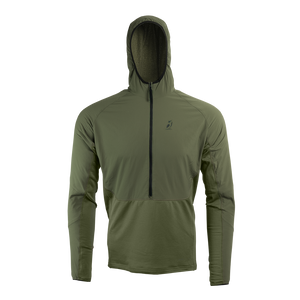
Brigham: Jacket is a synthetic insulation I would call it like a three season jacket it's an outer piece it's an outer layer to to be your insulating jacket for pretty much three season use it's a full zip um a hooded jacket that because of the insulation it being a synthetic sheet of insulation it doesn't require any additional Stitch lines or quilting to stabilize insulation and so and then we it also has you know some some targeted uh ventilation in the underarm and then.
Tayson: Yeah yeah I think I think for those of you that are listening to this on YouTube you'll be able to see a model or a jacket is actually a women's cut um here on the screen if you're listening to this on your phone or wherever you know you should be able to pull this up on our website and look at the things that we're talking about in specific this will be released the week that this podcast is coming out so you'll likely be hearing this at the same time that we've released this product but yeah it's it's a synthetic piece for those of you that are familiar with the ventis it uses the same 3dfx insulation we were able to migrate this over to a 50 recycled insulation so there's no loss in performance we.
Tayson: Just were able to to Source fifty percent of that insulation from recycled sources and and so it's it's a I I hate to do this but it is one of the better ways to describe this piece to our existing audience which is basically to to point out the differences in this to the Ventus so the Ventus is an extremely popular piece of ours it's one of our best sellers um and a lot of you guys have that piece so again just to point out the differences in this you've now got that full zip you've now got these hand Pockets which these are a recessed pocket which helps with warmth as well we we added or we kept the the vent underneath the arm but we actually Shrunk the size of it so again that will. Play into the fact that this is a slightly built to be a slightly warmer piece so it still has the underarm perforated vents here and then the insulation itself it is the same insulation but it's a slightly thicker or or more weighty category so instead of being a 25 GSM or gram per square meter fabric it's now a 40.
Tayson: So um slightly slightly warmer piece there um other aspects of that are going to be pretty much the same as the Ventus you still have the draw cord on the bottom the Hood's going to fit and act the same the Fabrics are the same internal and external Fabrics are going to be the same and then this will be available in a stellar blue a cherry mahogany which is what I've got in my hand right. Now and the black color so that is the piece yeah and then also just again just like the Ventus there's a men's and a women's cut yeah thumb hole Loops YKK you know zippers um there's you know very very very similar pieces there and really what that all equates to is the the Ventus hoodie is somewhere around the six and a half to seven ounce weight category for it whereas this piece right here comes in at about the nine and a half to ten ounce weight category so roughly three ounces heavier than the Ventus hoodie with that zipper the hand Pockets warmer insulation Etc um there's also going to be a slightly difference in packability this one is designed I believe to just pack into its own pocket that doesn't have the internal chest pocket.
Tayson: If I remember right we took that off.
Brigham: No yeah there's no internal chest pocket and then yeah it's uh slight it's slightly thicker insulation so it's it's warmer um and I guess one other thing to note is because this is intended to be an outer insulation piece it is slightly roomier than the vent is so if you're familiar with the Ventus this will allow for more layering underneath it if you're not familiar with the Ventus then just think of this as it's a three season you know outer insulation jacket with with with room for you know like a mid layer and a base layer underneath but it I I would say I think most people that have you know used it tried it on provided feedback is that I would say that the the fit or the cut is still um like quite. Trim and it's like efficient there's not a lot of like excess bagginess or you know stuff that's going to catch a lot of wind in exposed areas so it's still it still has a really good um I don't know if you'd call it like athletic or trim aesthetic to the to how it fits so yeah.
Tayson: Yeah um and to take this maybe just one step further we do use a 20 denier rip stop nylon as our internal and exterior fabric maybe elaborate on why weave because if you look across our jacket line almost everything is 20 denier from our actual rain jacket exterior fabric to our Nova line to the Ventus.
Brigham: Um yeah uh we have found a really good balance what we feel and a lot of people have given us the positive feedback on that is we've we found a good balance with weight and durability of a 20D rip stop nylon um nylon is a is a inherently strong synthetic fiber um and then that that 20D weight class of you know the thickness of the fabric and the the fibers that it's made of um yeah I think it's a good balance between being allowing us to design carefully a jacket that hits our weight objectives but still meets our durability objectives so.
Tayson: I want to ask this so let's say we want the durability of the 2010 year on the outside of the piece would would there be any benefits to having a 15 or 10 denyer on the inside um or or were there trade-offs there too you know what I mean like I'd say the.
Brigham: Only benefit would be that it would weigh a tiny bit less.
Tayson: Um it would be any additional Coatings would there be any additional Coatings required when you're going to that or I.
Brigham: Mean it's just gonna be really increase at all breathability would possibly increase like I would say probably negligibly negligibly yeah um but you know and the inside of a jacket you know durability is less of a concern but it still would reduce the durability of the overall piece by using a thinner lighter fabric on the inside so yeah I.
Tayson: Think part of that question is in my mind is coming from Sometimes using down products and sometimes when you get into those light of Tears it seems like you have to add extra Coatings to make them down proof still and and like almost Overcoat them to where you might drop from 20 then year to 10 denier but it seems like with the extra Coatings required to tend in your at times um or depending on Mill or all these different variables sometimes you're not really losing that much weight by dropping the durability yeah and then.
Brigham: And like Coatings aren't the only way for down proofing fact there's other manufacturing processes that down proof of fabric but um but they also decrease the breathability so in the end um you know I I just think it's a good balance of durability and weight yeah.
Tayson: And uh yeah it works well yeah I think I think it does work extremely well speaking of that let's talk maybe a little bit now that they know what the piece is they kind of know why we built it let's talk a little bit about just usability and and when someone would maybe want to use it versus other pieces so for the sake of this podcast where I would say let's talk in terms of Ventus and Nova UL and R pieces I guess we could reference like the loftec jacket from historic times but um and then we also could compare that straight across to a Like a Ghost Whisperer or something like that like more of a general cat the category of a Down puffy jacket sure and when we would use this versus others.
Tayson: So um it's kind of a it's kind of it it actually is a tough question I would say because each one has pros and cons to it so starting off I would say with the ventis the Ventus is just the lightest weight insulated piece that we offer and really in in the world per se in the sense of if you need something just to have have that extra warmth to be an insulated you know basically what I mean by insulators I mean like a layer Fabric and insulation and then another layer of fabric so I I put the Ventus in a different category in my mind than um some of these like Grid fleeces or or um anything like that that's a different insulation type for sure so so when it comes to me just.
Tayson: Needing like an insulated piece the Ventus is the lightest weight option and so I typically want the Ventus when I'm either in Super Summer conditions where I know it's really not going to get cold at night but I still want to have a jacket whether that's for safety or just use in the evenings or when I'm using it in a layering system where I'm going to take the ventis to to wear a lot because it regulates temperature so well but then I'm going to put on like a down puffy at some point when it gets really cold in the evenings and and so on so forth that's that's how I typically am using the ventis the vario falls into a slightly different category where I feel very comfortable even in a lot of three season.
Tayson: Scenarios to just take uh the vario and maybe not the Ventus on this particular trip or something like that like I can it it's it's it's warmer than the Ventus but and it gives me a slightly broader range of um overall use I would say before I need to bring a second jacket or a second layering insulated piece so when we did the Uinta Highline this year we're going into high elevation scenarios where weather can swing drastically and swing very quickly and so I think the first time we did it I took aventis and Anova UL this time I opted to just take the vario jacket um and that that worked really well for me because it still shares so much that DNA with the ventis of of really good breathability really good temperature regulation. But when I'm sitting stagnant it's just going to be a hair warmer than aventus well I mean.
Brigham: I would I would want to clarify that I wouldn't say it's a hair warmer it's substantially warmer than the Ventus in so much that in cold conditions I don't want to I'm not going to want to sit still in aventis for more than a couple minutes versus like the vario jacket it is it for sure would qualify as like a static insulation for you know you're sitting around Camp you're low activity you're not really generating a lot of heat but in you know cool and colder temperatures like it's a legitimate insulating piece I would never do that in aventis and then you know to your comments about the Highline Trail like you know we that's some of that field experience like product inspiration that we get is like the not this summer but the summer.
Brigham: Before when we did the Highline Trail it was incredibly wet um and just like the bad wet where it's like cold and wet and then it's going between you know rain and hail and rain and sleet back to rain and uh you know that's the type of water that just seems to just stick you know it just it just doesn't dry and then the air is just constantly just soggy and humid and so um you know you like you said you took a fentis and Anova UL which is a a mostly down insulated piece and I just took the Nova UL but uh you know kind of when we I think we had probably already started development on the vario jacket at that point so kind of knowing that that was coming this year when.
Brigham: We did the the UNA Highline Trail I for sure knew that like that's the piece I wanted to take because I guess that's another thing that we we haven't talked too much about yet on this podcast is this is a fully synthetic 100 synthetic insulation which means it's virtually unaffected by moisture in terms of its ability to retain your body heat so it can get like if you get caught out in the rain on this in this and you're wearing a backpack or whatever like it's still going to retain your body heat because the the insulation is able to it doesn't absorb water and it's able to maintain its Loft when it's wet so that's you know a huge um Peace of Mind type thing for an environment like a really wet weather system in. The Uinta highlight or the Pacific Northwest I think that's a really compelling reason for one to consider you know the vario jacket as their primary insulation piece if you know if people just find themselves spending most of their time in more rain heavy environments uh it's a really good option for that.
Tayson: So I'm going to muddy the waters just a little bit more and bring in the Nova UL to to make this even more clear for you guys which is the Nova UL is a down insulated piece but we use down LT in it which means we've Blended a little bit of synthetic in with it to give it that added moisture um benefits meaning not only does that have hyper dried down in it which is a wax based dwr coating but it also has um a little bit of synthetic in there in case worst case scenario happened and it did get totally saturated it won't completely collapse it'll retain some Loft and be able to dry out but on top of that what's what's actually been almost more substantial in the field after using it for.
Tayson: Longer periods of time and getting feedback is the the stitchless fabric of the Nova line um repels so much water so it's actually just with with my mom the other day and her and my dad like to go Jeeping a lot and they're out in Colorado they were Jeeping with their friends and they got to a section that's that's really really bad it's called I think it's called the deadliest Trail or something like that um where where and when my mom gets nervous she gets out of the Jeep and she walks so she's walking for 45 minutes outside the Jeep in tons of water and you know she's telling me this story because she wants to get to the ending of this story and I'm like well did you get wet she's like no I'm.
Tayson: Like did it did it come through your jacket yeah no you know what I mean so she's out there in 45 minutes in a down jacket not getting wet at all well she wanted to tell me is she was so nervous she didn't even put the hood on the jacket put the hood up so her friend was like you know that jacket's really nice but don't you wish it had a hood and she's like oh it has a hood she takes the hood she flips it up and just slams the back of her head with a bottle of water but um but that's that's what's interesting about the Nova is that stitchless fabric and whatnot it does so well in moisture um so I wanna I wanna to to stipulate this a little bit more.
Tayson: What I would separate what makes the vario different than Anova UL or Anova Pro is breathability so the Nova line with that stitchless fabric I mean it like blocks the wind really really well it's also got that extra Loft um and things like that so it's going to be a warmer piece but it's also going to be a piece that's not going to breathe yes it has pit Zips those do help tremendously but it's still not going to be a piece that you're just going to want to like crank out miles in even at a low exertion Pace yeah um versus the vario because of its synthetic fabrics because of the Fabrics we can use with with less Coatings and treatments for down things like that and the the underarm vents that it has it's. It works very well it walks this fine line of being a static piece and an active piece whereas I would classify our novas as static.
Brigham: Pieces yeah so static meaning you're not moving yeah I think that's I think that's a pretty accurate yeah I would agree with that for the most part like um you know me personally I'm not going to hike in the vario jacket it's just too warm like it's it's a warm jacket um but you're you're absolutely right in that because of the insulation type it's a continuous filament insulation so it's it's a synthetic insulation that's manufactured manufactured into sheets but each little fiber is a continuous long miles long fiber and there's millions of those in the insulation and so there's no such thing as like insulation migration fibers aren't you know working their way through the fabric so that allows us to use a fabric on the inside that doesn't have to be down proof I. Think on the outside too like we don't have to use you know a fabric that would be classified as down proof which makes it much more breathable like for sure and and that's.
Tayson: A really good point is like the and you can feel it too when you put it on like if you're just wearing a t-shirt you you definitely feel that softness of the fabric there's like a very notorious feeling for downproof fabric it I don't think anybody would ever make the statement that it ever feels soft against the skin they don't they don't call it cotton it might not feel sticky but it's not going to feel like soft against the skin whereas this fabric um it does it feels very soft against the skin and that is you know because we're able to use a different type of fabric that's not you know doesn't need to be down proof it is soft against the skin it is much more breathable um so that's a that's a very.
Tayson: Valid point yeah so so I guess to sum up part of that conversation again would be Ventus works well as an active piece um not I wouldn't say high exertion unless you're in really cold environments but moderate exertion active vario is kind of the same like low to moderate exertion it still works well also works well as a static piece then you get into the Nova line and those are for the most part what I'd call static pieces now keep in mind that like walking in and out of the office or or like I'm not calling those as active they're they're very small Snippets of of activity so like obviously I I mean in the winter months like heck I go to the Nova Pro to go in and out of the office just because.
Tayson: You're out in the cold for a brief second then you're back in a warm vehicle or back in a warm office um yes I am walking or I'm walking in a restaurant or walking out of a restaurant but but uh generally speaking those two the novas I would classify as static whereas these are are varia walks that line of static and active now you bring up a good point though with talking about continuous fiber insulation I think that's something that's worth talking about just just briefly too so in the world of sheeted insulations which is basically all um synthetic insulations except for if it's something like the loftec where it's categorized as a loose fill or it's trying to imitate down most of them come out in sheets so big wide you know white looking.
Tayson: Batting type sheets and with those a lot of fibers can be what are called staple fibers or shortened fibers that are then it just kind of glued and bonded together to make that sheet or you can have what's called a continuous fiber insulation which like Brigham said can be miles long per se of this fiber weaving and weaving and weaving so walk our listeners through Brigham what the benefit is of a continuous fiber versus something else and for those that are also familiar with other brands and stuff out there probably one of the more known continuous fiber insulations out there would be the the Apex climate Shield or what's it called yeah climate Shield Apex yeah yeah so that that's probably and that that's going to be a more popular installation out there that is. Continuous fiber I would think that when in terms of uh you know when people talk about something like primaloft they've got so many categories categories and stuff they're going to have both types so you'd have to look at specifics for a company like that I would think to know if it's a staple or or a continuous fiber inspection but what are the benefits of a continuous fiber insulation.
Brigham: Um so one of them is the one we just already mentioned it's there's you don't get the you know like migration you don't get fibers working their way out of a like when you look at the jacket this jacket that's a huge that's a very large panel with no sewing yeah right yeah so that's that's kind of the next benefit is it doesn't so because think of this as from here to here there's just millions of these fibers that are just kind of like not woven but they're randomly just placed so that it creates a bunch of little air pockets and it creates this lofty sheet of insulation but the advantage of continuous fiber insulation is that that doesn't shift around and move it basically maintains the same thickness in every square inch of this.
Brigham: Little sheet of insulation so the insulation you know the warmth is the same throughout the jacket and because it all stays put and maintains its Loft everywhere equally you don't have to do these Stitch lines to keep the insulation in place and the Stitch line is going to be an opportunity for snagging when to get in water to get in ETC to get in and dirt to get in yeah so it's it's very stable the other Advantage kind of alluded to it already is like you don't get cold spots because there's no opportunity for any down voids or insulation voids so you get it's an easy way of thinking is continuous filament means continuous thickness insulation like you're going to have consistent thickness of insulation throughout every single panel.
Tayson: On the jacket so but what about I I would I think that another side benefit is just overall durability so like washing it over and over or using it over and over if you've got a staple you know length type insulation it the the adhesive could there's actually there's almost uh there's almost a life span for how long that's going to hold together whereas this insulation it's basically infinite it's just it's you know you're you're taking five miles of fiber and you're just cutting like a you know let's just say a two foot chunk of that out that that's not going to go anywhere and so yeah I'd say it's there's just not that potential possibility for it to start becoming separated like a staple um sheeted insulation it comes out more stable to begin.
Tayson: With and it stays more stable over time washing it using it Etc it's just got more durability and then like I say I mean the lack of stitching just means more warmth essentially it also makes it look really good in my opinion and more durable on the outside so you know kind of like we talked about with when we launched or released the the Nova jackets having the stitchless technology like that's a durability benefit for the end users there's not exposed thread all over the jacket so and those are just they have the potential to get snagged caught and cut.
Brigham: So you yeah and then not to mention one thing that we we skipped over is the fact that this insulation this particular style of continuous fiber insulation is a stretching insulation yeah so through the 3dfx family of insulation it's they call it um so Toray is is our partner that manufactures the insulation they make 3dfx insulation and it's they call it 3dfx active insulation and so it's a stretching insulation and how that does that is all those fibers we're talking about there's two things that take place um the fibers are all varying thicknesses which creates an inconsistency and Randomness as all these fibers are kind of laid on top of each other so because they're all different thicknesses it creates all these little voids in between them but then they also um coil uh and.
Brigham: Kind of I wouldn't say crimp but coil all these fibers at a random shape as well so there's probably not too identical coil profiles of fiber in that entire jacket and so because they're different thicknesses and different coil shapes and intervals that creates even more Pockets but that allows the insulation to stretch because it's almost like you know think of one Slinky that's like one fiber and so that Slinky is coiled up and it it can pull and stretch and so what that does with the sheeted insulation is when you bend an elbow or reach up or down or Bend forward the insulation is able to stretch with your body but also maintain Loft but also while it's stretching it still allows air to move and breathe through it because it maintains that Loft it's. Not compressing and sealing off all those pockets of insulation so yeah it it makes for a more comfortable piece it makes for better temperature regulation um it it's really an exceptional insulation that I have a pretty long history of using and and so let's I I.
Tayson: Want to Pivot this for a second now and to just like what would be some additional pros of let's let's just compare this to um let's call it let's say it's a Ghost Whisper right let's just take like probably the most common popular down jacket in a similar warmth category to this which I would say is probably the Ghost Whisper what would be pros and cons of say a vario with synthetic insulation versus a down piece like the Ghost Whisperer and and I mean I know personally for myself um over time I've gone I want to say back but kind of like that because I did have a synthetic piece that was very very similar in weight category to this piece years ago from Toray that I loved and then I kind of went to. A down piece and then I've kind of come back to this piece um and so yeah like what what are your just thoughts on on why this is such a great piece and and how it would compete with something I could Ghost Whisper yeah I.
Brigham: Think it um it lends itself to a little bit more active use um you know and again I just said a few minutes ago like I'm not going to be like really hiking in this but it has more allowance I would say or more tolerance for active use because we're not having to use down proof Fabrics um and we're we're using a more durable fabric which means uh that less durable super light 10d fabric has to be ultra processed for down proofness which means it's just going to be even less breathable this is going to feel more comfortable against the skin it's going to be a much more durable piece again more durable fabric inside and out more breathable but also no stitching like no stitched insulation lines it's just gonna um I was telling.
Brigham: Joe this the other day our videographer um that it's almost just like you're able to be a bit more careless with the piece I don't Advocate carelessness but it's I don't know if that word just came out of my mouth because you're like the most careful guy I know yeah that's probably true but you know what I mean like you don't have to it's more of a worry-free if you want to put it that way that was.
Tayson: A thought that came to my mind in the sense of so I've got like infinite jackets in my house like I need to purge the amount of jackets in my house really bad because I get samples after samples after samples then we get the production ones in and I'll typically take a production one and I've got a lot of jackets and so it's interesting to see what I grab when I when I'm headed out and what I have found is that I've been grabbing this piece for a massively broad spectrum of.
Brigham: Use yeah and I think there's a few reasons for that one um depending on what I'm doing like if I'm going backpacking that's different but if I'm like in the broad spectrum of day-to-day life and other active living I typically grab this for the full zip over the Ventus just because it's convenient for that type of application two compared to some of the down pieces let's say I'm gonna go um hang out with my kids and ride a mountain bike or let's say I'm gonna go hop you know in our UTV and go for a ride or something with my kids and well what happens out there there's dust there's debris there's always things well this cleans up so much easier I can wash it a load of laundry as long as it's as long.
Brigham: As it's a delicate load and I don't put in a ton of you know what I mean detergent type of thing like it's easier to wash I don't have special care instructions like with the down piece and things like that and so what it just makes for like this word that comes to mind with this piece is just versatile it's just it's really really versatile it's kind of like your best your your jackets were friends it'd be like your best friend because you can use it in such a broad spectrum of applications um and it works really well like you you it vents well but it also is quite warm for sitting still and and so for me I have been grabbing this jacket for months and months now um I think primarily for those.
Brigham: Reasons now if I'm doing like a very specific hike I might take aventis and an ovul I might take these different specific pieces but for the broad spectrum of use I've been grabbing this jacket I think that's a really what good way to look at it is it has a very broad use case that um you can almost eliminate thought process out of it because for the most part um most of the times like if in a scenario where you would like think about well should I take this or that jacket like you can almost just do away with that thought process because most of the time this will work it'll it'll handle whatever like use case in a very broad you know broad spectrum that you're that you're looking at so kind of again.
Brigham: Like some of that like thoughtlessness it's like really easy to it's just going to work for so many different uh use cases or environments um yeah like I I use it like for all of last year as a as a daily jacket but it's one where like say we were coming into the office early one morning and it was a work trip day like a backpacking trip day and I drove into work in January wearing this jacket but I happened to let's just say I was going to take a different jacket on the trip but I forgot to pack it I'd be totally confident just taking the jacket that I drove in to work with straight to the mountains in January you know what I mean so yeah.
Tayson: Yeah it's it's kind of hard to explain um in that sense but I think I think it will become a lot of our listeners favorite pieces as well and this is probably a good time to just add in here too that um supply chain wise and ordering wise and and just from our perspective as a company um we only have one um batch of these you know coming in right now so for those of you listening here are die hards I would highly suggest that you look at getting one of these because most likely by the time we could get another production of these um it'll be after the winter season yeah.
Brigham: I was just thinking there's this uh this is I will get you'll you'll get the point in a second but you know how it's like September now and you just start seeing like pumpkin everything everywhere right so there's a storage unit out by my house that has really funny marquee signs and they just said like pumpkin spice storage units are in stock now or something like they're pretty cheeky they're they're funny but like I should have called this the pumpkin spice color right here to the point where it's like your your point about like we like we have one order one batch that will be that's what we have when we launch this um you know and to the people that really like if somebody's you know they're listening to this they do the research. And they're like yeah that's the Jack I want that jacket or I want that jacket for me and somebody else definitely do a taste in saying get it sooner than later I expect like if you're thinking Christmas get it the week we launch it you know don't yeah don't try to wait till Black Friday because I don't know that they'll be here you know that sort of thing it's just so well yeah to put it in.
Tayson: Perspective too like this is a smaller batch than than most of our vintus POS and our Ventus PO is like we're stacking these on top of each other but whereas is a brand new piece we're taking a little bit more of a conservative approach with it but from everything we can see in here it's going to be an extremely popular piece and it's not going to be worth waiting because I can guarantee we will have stockouts on it um and that's just that's just the way we've we've done things with with covid it just happened to change some of things where we're we want to be make sure that we'd rather have stockouts than excess inventory if that makes sense and and so we didn't stack Appeal on this one which means um by the. End of I mean I don't know when but when we sell through these there's going to be a delayed stock out on these so yeah and just like maybe a.
Brigham: Little bit of transparency here you know pretty much everybody is always going to say when they release a product like you know everybody's going to love this buy it quick before it sells out like and when Tayson says from everything what we've seen and heard people are really going to like this the behind the scenes is that we do like preliminary or Advanced surveying basically where we take a pulse by certain methods where we basically release this to people and and collect their purchasing intent so that's not just like a sales tactic of oh this is awesome better hurry in order like it's it's legitimate and and like I think people understand to the supply chain situation it is it is a a bit of a limitation right now and yeah like you said it's. Not as big of a of a batch that we typically order with some other pieces so that's we're really just trying to help people out with if you do want this and you're you know you're you're pumped about it um we are trying to be transparent and throw you a bone and say like yeah get it get it quicker than well what what we.
Tayson: Messed up I say messed up but what we what happened with this particular po2 is that we said all right let's order kind of like a minimum run full-on planning to order a second minimum run and then we had a couple scenarios where we got over stocked on a few items that were brand new products and so then we kind of made it a a rough guideline here that we don't stack POS on brand new product lines which means not only did we launch with like what we normally would launch with we launched with a smaller amount of those and then we planning on doing a follow-up pill and we haven't put that follow-up Po in so if we have really strong sales right out of the gate we absolutely will but keep in mind.
Tayson: That could be six to eight months before we get the next run of them so yeah um so there's there's your you know bone for those of you guys that are listening die hards um order early uh and then you'll be much happier than than when your size or color is out of stock but um so yeah just to go back to just that that conversation I would say of just versatility some of the benefits I think of synthetic is is this just a little bit more Carefree you get some water on it it's you're not as worried you sweat in it you're not as worried you know it starts to get dirt or things on it it's easier to wash and just becomes a very versatile piece and then I would say like sometimes.
Tayson: There's times when I might be sitting in it as a static piece where I'm like man I wish this was just a little bit warmer for a static piece um but but typically I can always throw on a rain jacket over the top that helps a bit or like you get up and move just a little bit and you'll heat up and be very comfortable in it and so like we've mentioned it's been a very broad um used application as far as temperature ranges for me and so it's it's yeah it's just been an easy jacket to grab for what that's worth as I've been grabbing of my pool of jackets on the wall it seems to have been the most common jacket I would say over the last eight months and and maybe longer. Since we've been doing the testing on it so.
Brigham: Carefree and easy to use is a good way to think of it and I I guess when I just remembered this when you were talking about washing it another really it's it's very impressive how quickly this thing dries and how little it even gets wet when you wash it yeah like out of the wash bag and you're like what follow the care instructions on the labels but I don't have a front loading washing machine it's nothing special um and like so it's taken a beating in that spinning cycle you know but like when when I take it out to wash like it's it's hardly wet so it dries really really quickly so that's another you know benefit of the 100 synthetic nature of the jacket is like it's it's hard to get wet it just.
Brigham: Doesn't really get wet when you try to get it wet and it dries really quickly so more on that kind of like Carefree aspect of it is is that and then you know for the we do we try to mix up like a lot of our backpacking trips Styles and things but we often do end up cramming a lot of miles in just so we can cover a lot of ground and see a lot of things on our trips and so you know a lot of the you know the ultralight Backpackers out there they're spending most of the day on the Move they're not necessarily sitting around a campfire for hours on end every day so that's a little bit different that creates a different uh set of objectives for an insulating Jacket versus you.
Brigham: Know just a jacket that you you never want to possibly be called in sitting still for hours you know what I mean so like when you said sometimes if you're sitting still for a really long time you may feel like oh this could be a little bit warmer but for The Backpacker that scenario almost just doesn't even exist um you know because you're you're hiking most of the day and then you set up camp you eat dinner and you get you go to bed so and for that I mean it's more than adequate in most conditions so yeah yeah I think.
Tayson: Sometimes I would probably should be wrapping this up instead of this but I think I think I've spent so much time in cold temperatures that like there's this idea of like some level of discomfort is normal okay and I think we see this when we take new people out backpacking such as uh Dan Becker when we brought him out Emmett is his videographer and it's and it's a stud he's been you know sleeping in a tent for a while now on these trips with Dan and Dan is doing everything he can to make him comfortable sleeping in the tent and after he slept on um with some of our gear and stuff and I asked him next morning I said you know how did you sleep and it's like I slept I slept pretty good.
Tayson: You know this this but it was like as he kind of described it I I said well you know that sounds like a pretty good night of sleep backpacking right and I was like if you're expecting to like go in and like fall asleep for eight hours straight without ever rolling over on an air inflated pad and and in a sleeping bag you know what I mean like then you've got the wrong um perception to begin with if that makes sense so like there's again like some discomfort um is kind of the norm when it comes to just being outdoors right yeah and so I think why I've gravitated so much towards this is even an extremely cold environments it takes such a level of like the edge of cold off of me that I'm.
Tayson: Willing to use it in probably colder conditions than I've you than than other people might yeah and so on so forth and so it's like that's how I think it gets such a broad spectrum of use for me is I'm okay being a little bit cold you know what I mean like that that to me is normal to be a little bit cold and to extend this thing down to to much colder temperatures than maybe someone else might and so that's where like man this thing I have had this piece in conditions that that really just like you think about it like dead of winter type conditions up on top of the mountain you know what I mean in just this massive array of variety because it takes such a good edge off of the.
Tayson: Cold but then it also does such a good job at regulating temperatures with the breathability and the synthetic nature and the pit sips and stuff so to me it's just a very very usable piece and such a wide variety it's a little bit more convenient to use than the Ventus because of the the Zips and the pockets it is still a totally different piece than the Ventus and you will still see us use the Ventus a ton you know what I mean it's it's just different applications this one slides right in between the Ventus and the Nova UL in our lineup and and offers you guys just one more option one more tool in the toolbox that I think you guys will really really enjoy it's it's like the Workhorse of jackets I guess in. Our lineup I would almost say and I think you guys are going to love it so any any last remarks on the vario that we haven't covered or or that you just want to know.
Brigham: Um let's agree yeah I think we gave it good.
Tayson: Yeah good talk I think we did too hopefully that is helpful to you guys I'm sure even if you don't end up buying one of these you learned about installations today active static versus static pieces other things like that we hope you got value in this again that's really the biggest reason that we do the podcast is to help you guys you know build more confidence build more knowledge and to empower you guys to get out there on more Adventures so thanks for tuning in if you've not yet left or serve you please go and leave us a review um that helps us get ranked it helps us get found helps us help more people get out on trail and if you do have any questions that you want to write in you can always.
Tayson: Drop them on the comment section of our YouTube channel where we'll be able to answer them on the Live Ultralight YouTube channel or you can email us at live ultralightpodcast gmail.com uh we will also fill the questions there and answer those on the podcast too so I've been thinking a little bit about doing some more like q a style podcasts so if that's something you guys are interested in let us know um that maybe that could be something we do more regularly but again thanks for listening make sure you're subscribed and we'll catch you on the next episode.