[00:00:00] Tayson: Everybody welcome back to the Live Ultralight podcast. Today we have a very special episode. We're literally on top of the mountain at about almost 10,000 feet sitting in a lake watching a Sunset and some little chicks swim around a lake. Absolutely gorgeous. And we have this very special guest
[00:00:18] Devin: of backcountry exposure or as Some of you may know Devin is his first name but welcome back to the podcast. Evan I know I think the last time We were also on a trip. Yeah. Which
[00:00:30] Devin: which trip was that? That was the chop Rock. Escalante trip. Did we do that one on trail? We did man. Yeah, we just sat around the phone, right? Sat around the footage at it. It's a good time. Yeah, I love that. That was that
[00:00:45] Tayson: trip was a lot of fun. Like I I think about that. I really love to get back into some of those Canyons again. Yeah, that's like in your neck of the woods, right? You love spending time there and pretty much if I have a choice that's where
[00:00:58] Devin: I'd like to explore off Trail as much as possible. All of the different like nooks and crannies of the Canyons. Which I mean, I love areas like we're in right now, but it doesn't have quite the same appeal that being in the desert does. So yeah,
[00:01:14] Tayson: yeah, we're joking about this and, and I mean, we'll introduce Devin here a little more formally in a second, but sometimes, it's always like you want, what's not in your backyard and so us living in southern Utah. You know, we we're round the Red Rock country quite a lot and I'm always like, now, let's get into the High Country, gets to the US. It's like, man, you're so lucky, you're up by
[00:01:34] Tayson: the Unis and he's like, yeah, you're lucky. You got Zion in your backyard, you know, so it seems to be how goes but that trip was, was epic for sure, for sure. So real quick, let's have you give kind of a quick background of yeah. Just your history in the outdoors and then what you're doing. With like your channel and some stuff like that. So I was.
[00:01:58] Devin: bused, I guess if you want to put it that way to grow up in a family that we are vacations, were To go camping and I grew up going to Mountain Lakes, like, what we're at right now. And spending time fishing with my dad and I just threw out like my whole childhood and my teenage years and even like into early adulthood everything was focused around being outside, so, I, Realized or
[00:02:32] Devin: a friend of mine actually had mentioned that the college, the local University had an outdoor recreation management degree. and that sounded very interesting to me, and So, I met rated into the outdoor recreation Management program at Utah Valley University. And graduated with that, that degree. And that really was a huge springboard in to just really developing a passion for What I do now. And it was taking like, The various like theories
[00:03:17] Devin: and just the ideas of what being outside provides. That. Helped enhance the experience as that I wanted to have when I would go out. Because before it was just like, oh, I want to go like, on a backpacking trip and like we're just going to go backpacking. It didn't really have as much Like it wasn't as goal-oriented. And but now I try to make sure that when I'm going on a trip,
[00:03:47] Devin: I want to have something. that is like, developmental, I guess in a way, whether that's being out with a fairly large group, like, we're out in right now that develops relationships and opportunities to meet new people and Just kind of network in a way, but also, if I'm going out, like, with my kids, then I have the opportunity to spend that one-on-one developmental time, with my kids, and so it, I feel
[00:04:20] Devin: like my church are just more intentional now in
[00:04:24] Devin: my education. Is to blame for that if that
[00:04:30] Tayson: makes sense. So basically it sounds like at some point you had kind of a switch from where outdoor stuff was Fun like that. You grew up. Maybe doing it for entertainment. Yeah. But it actually switched a little bit to be a little more purpose-driven at this point. Is that sum that up kind of? Yeah, absolutely. Yeah.
[00:04:47] Tayson: And then, I mean, you've taken that and you worked at Climbing gym for a long time, doing some things there. And while you were doing that, you started a YouTube channel, right?
[00:04:58] Tayson: And and did you maybe started that while you were doing your education as well? I'm not sure, but started this YouTube channel called, Backcountry exposure, where he does a bunch of, really good Gear reviews and comes at it, I mean, for my experience, is what I'm going to describe it as you come out from the, the angle of like you spend a lot of time outside, you spend a lot of time
[00:05:20] Tayson: using the gear your Gearhead, and then that'll, you know, translated into a career move for you that will talk about here in a second. But, Yeah. Like like your channel if I like in my mind is is technical its performance focused, its usability focused and it's not so much like Say like, it's not just here's the product, and let me like, just quickly show you the product, it's like in-depth. I got
[00:05:50] Tayson: this specific piece of gear for this specific purpose and this is my review of how it did in that specific situation, which is way more valuable from from my side, at least two and end consumer. But is that I mean, how else would you describe your channel?
[00:06:03] Devin: No, that's pretty accurate. So, I started my channel in He was like October of 2012. So the way that YouTube has changed over that it's like eight year or so span has Changed a lot of the ways that I approach my channel. But in general, like I started the channel because I needed an outlet and I wasn't doing. So to go back in my like history a little bit. I'm also a
[00:06:34] Devin: photographer but I was doing wedding photography and like portrait photography for a period of time and I had stopped doing that completely and I wasn't doing any of that, like creative aspect that I didn't realize that my mind needed. And so the YouTube channel started as a creative outlet and it developed into, as I was kind of moving through my education and college, I became very like, kind of analytical about Use
[00:07:09] Devin: of gear and why you would use certain pieces of gear for things. And so I've taken
[00:07:14] Tayson: I want to dig on that for a second here. Okay.
[00:07:17] Tayson: What? What was that switch? Because I, I feel like I have a relationship with that. I feel like a lot of people listening to this. Also, maybe you're right there where they're starting to realize, like the first step is getting out and just doing stuff and then like the more you do it or at some point it seems to be the switch where the gear starts to really matter and need to
[00:07:37] Tayson: do a specific thing. It's like, I mean so tell me about like when that switch was for you and what happened there The.
[00:07:44] Devin: I would say that, so, I Always had like essentially the the basic gear items that I needed to go out and do trips. But there was a specific trip that I went on in college as one of my classes that just was very apparent. That some of the stuff that I had did not meet the needs of that trip and it was part of it was we were walking in very cold
[00:08:16] Devin: water for Like 30 miles of distance in. Like what trail is that? Remind me not to take that one. No, that would actually be something that would be a ton of fun to do together, but it's the paria River Canyon, the Vermilion Vermilion Cliffs, National Monument on the Utah, Arizona border. Amazing, amazing area. But we went at a time where the cubic feet per second that the paria river was running was
[00:08:52] Devin: at 90, which In to put that into context. Constant above the knee waiting through water in narrow Canyons. So take a canyon is narrow as like the Zion Narrows and
[00:09:09] Devin: your in like, mid-size depth water. That is In like high 40s, mid-40s degrees temperature. So, there's
[00:09:22] Devin: no Outlet. Yeah. And at one point we had to essentially weighed up to like chest height. So we take our packs off and this is not standard for somebody going down that Canyon and and you like it was intense. It was kind of intense and it was a really great learning experience. But what I, what I took from that is a lot of the gear that I have in any other like
[00:09:53] Devin: perfect scenario which is typically the mild type of settings that I would find myself in and like the uintas, for example, Well,
[00:10:02] Tayson: all of the units are not mild all the time, but go, that's true.
[00:10:07] Tayson: But our North like tonight. This is the most beautiful setting. The weather's been perfect. There's lots of
[00:10:13] Devin: little duckies, kick around the lake. Like
[00:10:16] Devin: in this setting is all you're talking about. That's fair, that's fair. I'll give you that. but, the essentially, like I really recognized that what I have does not fit the needs, and I absolutely need to be more, deliberate about having gear items. That match the conditions. And the environmental aspects that. allow for you to be, not only safe, but also comfortable and Creates the opportunity for an experience that doesn't allow for type 3 fun. Yeah.
[00:10:58] Tayson: If that I think anyone who's listening to this knows, type 3, fun, not fun at the moment, not fun to talk about. But I mean before we move on from the trip, like did you have moments where you were like scared or like or like You know what I mean? Where, I mean, if you're walking and you said it's cold water, right? Did you start to like lose a lot of body
[00:11:19] Tayson: heat was? There was there something there? Or maybe, what piece of gear? Was it that you're like this, this sucked? I needed this for that specific trip. That's really unique trip, primarily it was The clothing
[00:11:32] Devin: layers that I have. For basic aside from like sleeping in or had like a warm coat. The shorts that I were was wearing were Incorrect for those conditions. And I was wearing a cotton t-shirt and It just was not the, the right setup for. And you might think that, like, dude, you're part of the outdoor recreation Management program, like shouldn't the professors be more deliberate and like, only take these things. Well,
[00:12:09] Devin: at this point where you add junking, So just know I was a student.
[00:12:12] Tayson: Oh saying this, so the professor should have helped you be more aware of this. Yeah,
[00:12:16] Devin: I'm just saying like maybe people listening right now are like, Who's what? Professors are going to let? Somebody go out and do this. But like, you have to understand too, the there's a lot of trips that happen and I, I don't know. We need we don't need to get into it but I don't want to wrap a hole too much on like the concept of like cotton kills and like that idea
[00:12:42] Devin: but where like wasn't
[00:12:43] Tayson: really on your radar at that point and you go on this trip and it's like this was maybe borderline scary or like really uncomfortable and you came back thinking I've got a figure out better systems in this. Yeah.
[00:12:55] Devin: And that included having a proper sleeping pad. That was insulated and the right? Situation for sleeping because you always think and I think this is very common for new Backpackers to think. Oh, all of my warmth is going to come out of my sleeping bag. So whatever pad I use doesn't really matter. So I'll just jump on Amazon or whatever. I can find cheap at a big box store and That'll make
[00:13:25] Devin: it comfortable to sleep, but so much of your sleep system is the pad that you use. Like
[00:13:32] Tayson: I think this I put out a video, we put out a video a while ago that said like 80% of Backpackers doing this wrong because clear back when I was going to customer support you know and 2016 still the company is still getting started. That was like the most common things like hey I was holding your bag and the first question I'd say is well what did you sleep on? Oh, an
[00:13:50] Tayson: air mattress. Okay, there's no bag that will keep you warm on the air mattress in those conditions. And so I would even say something like, if I was going to be camping and 15 degrees Fahrenheit. I and I had to make a choice between having a sleeping pad that was rated to 15 degrees Fahrenheit or a sleeping bag that was rated for 15 years Fahrenheit. I would sleep choose the sleeping pad
[00:14:10] Tayson: with like, say, 30 degree bag because I can add extra layers and stuff like that on top of me, or like I can wear extra clothes to bed and stretch the the warmth of a bag. But a pad is so much harder to do that and people I want to Stressed
[00:14:25] Tayson: that, you know what I mean? Just that so much, that so much warmth comes or is lost from a pat.
[00:14:31] Devin: Yeah. And what I guess to explain a little bit more of the progression. I realized over time this, this one trip didn't have this awesome. Like massive opening of like Realization of this is how you do everything because that's just not how it works. You Get educated. And you learn things over time and through experiences and my What I learned over time is. That everything has a system. And creating systems that
[00:15:06] Devin: provide good opportunities for good experiences is what? Like, I focus on. So when I'm preparing to go on a backpacking trip, I'm taking a lot of things into consideration that allow me to create an entire system. That is what I'm wearing while I'm hiking but also what I have in my backpack that provides the opportunity for a good experience.
[00:15:34] Tayson: Because you are not a fair-weather Backpacker. You are not someone who just comes. And goes backpacking in July, you backpack year-round, you do lots of trips and on your channel, you also showcase, you know, you going out in the dead of winter, snowshoeing, into places, usually utilizing a hot tent. So describe it a little bit, maybe I would imagine Well, maybe let me ask this way. Did you have you always winter
[00:16:01] Tayson: backpacks or how did that get developed for you and like, was at a progression and itself?
[00:16:07] Devin: No, like I would say, within the last five years, like that recent, Even after I had graduated. So I graduated in 2017 I was like I only backpack from April or May to September and I had not ever really done any trips outside of those months. There was like, I know what I'm doing and I should there's no reason why I can't go and have good experiences. All all year round. But
[00:16:45] Devin: it was I gotta have the right gear. As well as
[00:16:50] Tayson: he built some confidence. That led you to start thinking that, right?
[00:16:53] Devin: Yeah. But I started small And going. Like into doing some desert trips way later in the season. That were like late October, early November. Where I'm not dealing with snow. I'm not dealing with really cold temperatures. but the aspect of The temperature like difference in the temperature swing, and on the desert
[00:17:23] Devin: and shorter days. I think that that was another aspect that they're really consider. it's like, like, okay, it's gonna get my Tent for 12. Yeah, I'm gonna be in this Desert Canyon and the Sun is going to go behind this Canyon. It's like 3:30 and I'm not gonna be have any sunlight. How does that change how I feel? Whether I'm with a group or I'm alone, it doesn't really matter. It's just
[00:17:53] Devin: like, okay. The conditions have changed significantly versus 3:30 in July in the desert, which obviously that's a terrible idea because it's massively hot. But It was, it was it was just like kind of touching into those. different experiences that I had had before on trips and then eventually I was like, okay, I'm going winter camping and took the hot tent and Loved it. Just loved it. Yeah.
[00:18:22] Tayson: So When you're, when you're kind of dabbling into this and getting into this, in my, my opinion like developing that that layering system or or knowledge of, you know, quick drying fabrics and warm, you know, Fabrics might be warm when they're wet or just these these things that start compounding like imagine you had developed just a lot of confidence. Before you started to hot tent, does that sound right?
[00:18:53] Devin: Yeah, and I think I have my channel to blame for that, honestly. Fit your job with your
[00:19:01] Tayson: channel. Was to get more educated, right? Yeah.
[00:19:03] Devin: Because like part of my goal in this kind of goes back to your original question is I I had spent so much time like getting educated that I wanted to be able to share that with other people. And so like early on in my channel, I spent a lot of time going over educational type of things instead of just a gear review or here's the tips and tricks or five mistakes that
[00:19:33] Devin: all Backpackers make which like that's that's fun content to make is a YouTube Creator but I don't think it has as much like depth to what somebody might really be looking for in Getting out of out of a video and I recognize too that a lot of the topics and things that I've talked about. They don't get a lot of views but I find a lot of fulfillment out of comments that
[00:20:01] Devin: I get from people that say this helped me like understand this better. Or I don't realize that this product could be used that way or whatever it is. Just the fact of the like I took the time to test and use and figure out all the new offices of a product and then share all my channel and like try to create some education around that. Yeah.
[00:20:26] Tayson: I mean, I would never say that your channel doesn't get views. You have a large Channel and it gets a lot of views. You've had some breakout videos as well. But I like I like that. You're you're conscious of that saying like this is what I think needs to be made. Not necessarily just what's going to get the clicks and the growth, right?
[00:20:45] Devin: And for the record I'm not always right like no one is and I recognize that like I may put out a video and I express my opinion or Express something and it's incorrect and people tell me that but like I'm also not I don't know everything, right? No
[00:21:06] Tayson: one's no one does any. I will say this anyone who creates anything will have situations, where either, they misspoke or said something wrong, or didn't have the level of knowledge needed. But also like you just put yourself on a pedestal to get fired at, you know what I mean? Like, people are going to say, you know, there's this keyboard Warriors out there but no, I find that your content is comes from
[00:21:30] Tayson: a from someone who has a lot of experience and a lot of time in field and a lot of even educational background. And so it's it's it's it's really spot-on for so many people and I'm sure helps a lot of people. I want to ask you this question because we kind of started to get into it but tell me about like the coldest or the worst winter. Backpacking experience you had and
[00:21:54] Tayson: just how that like happened and walk. It walk me through maybe some of the gear choices that were helpful or not helpful.
[00:22:01] Devin: I, Or maybe you just had nothing but great winter trips, I don't know. Yeah, I can't actually effectively answer that because I genuinely feel like having access and use of a hot tent is I wouldn't say it's cheating, but Using it in the in the right. In the right ways provides so much like security mentally. Where if I go out, I know that I've got. Basically guaranteed warmth. Because it's not that
[00:22:42] Devin: difficult to keep a fire burning in a box. but you're able to keep your clothing dry, you're able to Like sleep more comfortably because you're not. As concerned about the temperature dipping as much. And if you wake up at 2:00 in the morning and it's 15 degrees outside. Let the Fire and like they're going again. But yeah. So on a not had any any bad like really intense winter experience is and
[00:23:16] Devin: that's where I'll say that I'm a little bit of a diva with like camping in the snow where I try to only go out in conditions that are as Favorable as possible for snow winter camping,
[00:23:34] Tayson: it makes a difference. But in the planning of like the trip, getting that tent set up because I've had situations where I'm trying to build a stove, and my fingers are numb, the sun's going down, like, I got to Camp too late, you know? Yeah.
[00:23:46] Devin: And this is a little bit of a tangent, but There's also this idea around at least at least it was a trending thing through YouTube over the last year's, like how low of a temperature can I camp in? And it was like, you see, all these nuts you talking about, some of its not me, alright? See all these thumbnails that were like negative 50 degrees, spare actor, like super,
[00:24:15] Tayson: super low temperature and like people trying to just like show how intensely they were with their winter camping. And I, I hope this because I'm gonna interview that one of the other YouTubers, like, in a few days that I think you're talking about.
[00:24:34] Tayson: And as well as myself. So what I would say is when I go and do that for anyone listening to this, I hope, you know, I'm not inviting you guys to go and do this, what I hope. I what I hope I'm conveying is that we are thoroughly testing our gear and proving Out Concepts and developing that but no, I think if your winter camping you should listen to Devin, go on
[00:25:00] Tayson: good days, be well, prepared, you know, a hot, a hot tent setup is very helpful as well, but all these share a type of
[00:25:10] Devin: experience, maybe not a specific trip, but something that is and I think it answers your question a little bit better is, I've spent some very, very cold mornings and just days in general in some very cold desert Canyons Where you don't have a choice to not walk in the water all day and
[00:25:36] Tayson: you just step right into icy water.
[00:25:39] Devin: Yeah, it's like 8:00 in the morning. You've got like a 10 mile day ahead of you, which that's a pretty decent day in some of these in some of these canyons and the water is Frigid and like it's all you can do. Get out onto the bank and let your feet. Like have a break from being in such cold water.
[00:26:05] Tayson: yeah, I mean The desert is, is crazy, in the sense that like I think most people think desert, and they think, you know, Arizona and it's hot all the time and it's this and that, but we're talking about desert. The temperature swings are massive. I say I feel like you can see, like, even in like winter season or three season type conditions, you could see, you know, on the daytime 70 degrees
[00:26:29] Tayson: and you could see it swing to like 20 degrees at night, which is just, I mean, 50 degree. Variation is a massive thing. And so then, yeah, when
[00:26:38] Devin: the wind asked. In a lot of those situations
[00:26:43] Tayson: is, it's piercing you just
[00:26:45] Devin: can't you can't escape it. Yeah,
[00:26:47] Tayson: so I mean talking about getting into some of these these situations. Tell me what you think are. Some of like the biggest Gear aspects of performance aspects of gear that should be on people's minds. We are talking about sleeping pads. So we'll count that as you know, the first one I guess. But like when you started to make this switch of being really conscious about gear and and you know, you continue
[00:27:13] Tayson: down that path. Looking backwards. Now, what do you think were some of the biggest steps that that changed things the most for you?
[00:27:23] Devin: Who that is a? Yeah I mean
[00:27:26] Devin: that's and that could be like the question. Yeah.
[00:27:28] Tayson: Yeah it is. So I'll try to like give you some some thoughts. It could be related to like clothing performance of clothing quick drawing or it could be like wait you know just even stuff like that. Yeah,
[00:27:38] Devin: so something most recent is I have very recently become a massive lover of synthetic materials. like synthetic jackets and And primarily just around like up top layers. But for the longest time I was like, down is King down is Everything in staying warm, and having the best, like Comfort opportunities possible and you need to really high quality down jacket and that's the only way to do it. And I just learned that
[00:28:18] Devin: that's really not true. like, Three, three of my favorite pieces of apparel are synthetic.
[00:28:27] Tayson: and, And why is that like, maybe explain? Why. I mean, right? Because like people that is just like, get a puffy jacket, get a puffy jacket, but there's pros and cons to it. Right?
[00:28:37] Devin: There is and I think however, that we've reached a point in technology with the way that stuff is designed and how it's all come together that Synthetic materials. They're not because I guess if you if you back up a little bit and you can consider like well, back in 1995, when I was nine, six, seven, whatever years old. Your synthetic sleeping bag was the ginormous. Barrel size, my Coleman sleeping bag. But
[00:29:12] Devin: you're down. Sleeping bag was like. Super packable. And like that's just not really the case anymore because fabrics and technology and everything has like Advanced so much that the performance of synthetic is at or greater than what a lot of down products are able to offer.
[00:29:36] Tayson: specially in terms of Versatility I would say
[00:29:38] Devin: yeah versatility a lot of like to breathability aspects and I've learned a lot that like, down is a great insulator when you are not moving. Yeah,
[00:29:49] Devin: synthetic is great for active and movement and for sitting around.
[00:29:56] Tayson: Yeah. I mean some of the way that I see this too, but
[00:29:59] Devin: that's not to say that, like, down products are inferior. or they're not good or you shouldn't use
[00:30:06] Tayson: down products it's just It's application, specific. and what I think, what I think is hurt some of the gear choices that are people are making now is The commercialism per se of down products and puffy jackets. Because in in actuality Um, if you have let's just say like a down coat versus a down jacket versus a down sweater, you know what I mean? When you get down to something like a down
[00:30:33] Tayson: sweater, you have to you have to baffle it or sew it into such tight channels. It's not really lofting that much more but you're having to use downproof Fabrics. You're introducing tons. More sewing lines through the piece. Etc, etc. Where like a down sweater? Yeah, I'm to me in my personal layering system. Like I'm gonna go with the synthetic piece over that every time because the synthetic piece you can, you can
[00:30:57] Tayson: have almost no baffles in it and then you have that that usefulness of being able to be more active, in it breathable stuff like that. But I think I wonder at least if maybe some of that commercialism of down heightening that up and stuff is lead to using down and some applications that aren't the most advantageous
[00:31:15] Devin: yet. And I've just learned that over time of use. The synthetic products that I've been using lately. You don't have the migration through the baffles that you get with down. And what I notice most often is the underside of your sleeve. Becomes like because you're always like that's where you're setting your arm down. And when you put your arm down like that pressure, pushes the down out away from from that point
[00:31:48] Devin: or like your elbow becomes and it becomes a cold spot like on under your armpit and all of those areas that you have like constant kind of the impact, And it's and it just migrates and pushes the down away from that and it's really hard on those lightweight. jackets that don't have a lot of Like baffle space. for you to move that back, like it almost creates a memory within the, within
[00:32:16] Devin: the fabric that Now, that jacket is not gonna perform as well. Because you've got cold slots. Yeah,
[00:32:24] Tayson: yeah. I mean I think it's I think it's definitely a point to to notice I think it's all. So why I mean some of the pieces that we've we've released Have just been so popular inside the office outside the office, you know, sales, PR and I think it's, I think it's just the people that are actually putting them to use out there, you know, start to develop those, those experiences. And you
[00:32:49] Tayson: just continue to always push that forward and gear. I think,
[00:32:52] Devin: you know, I I
[00:32:54] Tayson: love to talk about gear. I think people are listening to this podcast, love to talk about gear and, you know, we Hopefully we bring on and talk, you know, try to equal out both education, as much as just gear, but you're always evolving your gear system, you know. It's just always improving and yeah I mean I've seen it on your channel, you've been harping up some of these pieces and you've just
[00:33:18] Tayson: been really in love with them and I I think that that's like, amazing. I wonder if you had any experiences in specific were to stand out where you're like, man this synthetic piece like I'm like just stood out or or maybe it was you're using a down piece for like man I wish I had the synthetic like is their use case scenario where someone might be able to see or flip that switch for themselves?
[00:33:45] Devin: Whoo. You're full of all these good qualities. Really deep questions.
[00:33:49] Tayson: I'm so inspired sitting here at this Lake. I will say that
[00:33:52] Devin: put me on the spot. Yeah,
[00:33:53] Tayson: yeah, this this setting is is next level. I do not think I will ever have a podcast In a setting as good as this. I mean that's just phenomenal. This is
[00:34:04] Devin: really great. Yeah. Okay, I'll make a comparison of of two, two products. Um, they're not Outdoor Vitals products. I'm allowed to share this. Yeah. No.
[00:34:16] Tayson: All right, okay, no biases.
[00:34:18] Devin: So I really, I really love the arctic's line of of apparel and I've been wearing our Terrace for over a decade and just really have enjoyed, like, they're atom. LT is kind of a staple piece. Like that is a That is a piece of apparel that they're kind of known for. And then they've got their serum and those two pieces for a long time. Were Serum is a down piece. Yeah. Sorry,
[00:34:50] Devin: the serum is, it is a down down jacket and while the application of those two are not like a direct competitor of each other. The. benefit that I found of using the atom in certain applications outweighed, what the serum and it kind of just goes back to the idea of like can you use a synthetic piece more? So as an active piece in a mid-layer, In a lot of ways Where The
[00:35:20] Devin: Down is just too hot and that's what I like about. I still don't know if this is answering your question, but
[00:35:28] Devin: what I like about synthetic is just It's proven to just feel more versatile and then recently, because the serum is always been a favorite down jacket of mine, like it, the one
[00:35:44] Tayson: I've got just has like patches all over it. If you ever found that like washing, it helps survive, it? Or do you feel like the memory is still in it? Like you're saying,
[00:35:51] Devin: um, washing definitely helps with the Loft because obviously the oils from your body and stuff get into the into the the down, but It's never the same. It's never the same as new, but earlier this year, I bought the Arc'teryx nuclei and, You just an expensive, like 300 dollar jacket. It's synthetic and I love that thing like it is. It's so So nice, like I don't expect to wear my serum, like
[00:36:34] Devin: ever again because of it. But I mean, part
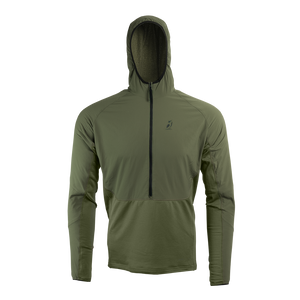
[00:36:39] Devin: of that is also the facts of like, Some of the pieces from outdoor. Vitals have also replaced some of those other items because like the dentist, for example, That piece specifically is. One of the best mid layers I've ever owned. Because it not, it's it's lightweight. But I can be active in it in a lot of the conditions that I find myself in. where, I'll start hiking in the morning and it's
[00:37:12] Devin: like, High 30s, low 40s and you just need something that is going to take the chill off. But if I had something heavier weights in that, I would be overheating. and, but underneath a Thicker like insulation layer. My, I'm not trying no more on the outer bottles podcast right now. They're like it genuinely is One of my favorite pieces of apparel I've ever used, because of how versatile it
[00:37:47] Devin: is in its application. And Like, I've just not used like even a grid fleece. Overheats. I feel like they just don't breathe the way or they Wick. The moisture like you were worn a fleece. Against your backpack and then you take your backpack off and you like start feeling your hands on your back. You're like Just the hands are soaking wet. Like this thing is Never Gonna dry.
[00:38:16] Tayson: know, I I mean, I I appreciate that comment, but I also know that you would Devon's a guy that would never blow smoke. He's not one to give a compliment, that's that he doesn't believe in, so that's appreciated for sure. And I think that drives home, the point of of just just that looking at a piece as this all-encompassing piece, What's it gonna do? How is it going to perform in all
[00:38:42] Tayson: of these conditions? And, you know, if you're someone who maybe only is ever going to fare weather backpack and you're gonna get to Camp early, sit around, you know what I mean? Like, yeah, then then down and that application may be the one but what Devin really is describing is like, you know, Devon's active, Devon's, covering miles, Devon's doing these things. That give an instant synthetic piece, is giving you just that
[00:39:02] Tayson: that versatility, which I, which Has become stable for you. Now, going back to that original question. Oh, unless you got more on this? Well,
[00:39:12] Devin: I was just gonna say, like, there's even situations where like I've worn the Ventus as a mid-layer piece. And then in conditions of like, I don't know about 50 degrees is a low temperature or where down vest over top of it. Yeah,
[00:39:31] Devin: and Just to like, give my core a little bit more, and it's a fantastic pairing. Yeah, yeah.
[00:39:39] Tayson: I think I've seen you do that in a video and we've done it a little bit here. Tyler, one of the members of our office calls at the, because it's, we've got a Nova vest and then, okay, the Ventus he calls it is no Ventus an event is when he pairs those, but he likes to do that a lot too. So we've covered two. We've got pad. I've talked about like, the,
[00:40:01] Tayson: you know, down versus synthetic for this jacket. I think we've got maybe time to slip in one other. Just performance aspects that you've learned in these last handful of years that stand out. If you've got any more,
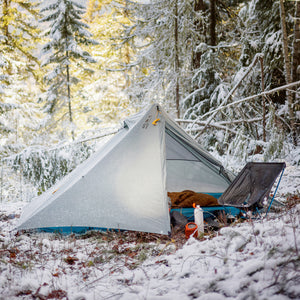
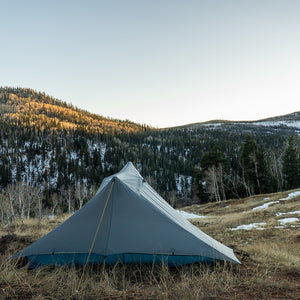
[00:40:14] Devin: maybe you talked about my love for for free, standing tents and my dislike for not free standing tents.
[00:40:24] Tayson: Yeah. Yeah, so we are gonna have difference of opinions on here. It may get ugly, knock, you know, but no, it'll be good, but I do want to hear this, you've you've used them all. I mean you've used a whole variety and would love to hear your perspective on that.
[00:40:38] Devin: Yeah. And I have I have everything under the sun like 10 wise. I probably have like 30 tents sitting in my everything from Big eight-man tents for family camping trips and down to really tiny single walls. Super ultralight, like one pound type of type of shelters, like, Dynamo expensive, ridiculous type of things. But what I found is that at least for a lot of the trips that I do. I may be
[00:41:13] Devin: setting up on slick rock pretty often. Where I literally cannot drive Stakes into the ground. And so I'm reliant on Heavy rocks or just being able to use other things, usually rocks to be able to effectively pitch a tent. And my experience is that I'm just less comfortable overall. This is just me, personally. in a non-free standing tent because typically, Those tent styles are more of a pyramid shape and so you
[00:41:53] Devin: have like steeper walls, there's less room to move around in them. And while they do offer lighter weight. For most of the time. the livability aspect is a big deal for me and there's only so many non-free standing tents that provide like, Livable space that I want out of a tent. so, part of it is like, environmental conditions, where A non-free standing tent set up on Lacrosse. Doesn't fly you take. So,
[00:42:30] Devin: Devin takes groups often through University down into the desert, as well as your own trip, and you're going into some of these national parks, some of these, you know, areas just outside national parks that are
[00:42:43] Tayson: Heavy slick. Rock, You Know, dry dry beds of canyons and stuff like that. Where it feels like, it's concrete trying to get a stake in sometimes, but some conditions that are pretty unique in when you're talking slick Rock, he's talking about, he's talking about, you know, Sandstone rock that just the entire ground is just rocket. There's no dirt, really, or a little sand, maybe but, but that's about it.
[00:43:08] Devin: That's I'm glad you bring up the point that I do guide and take students out because when I've got a group of 10 students out there, the fiddle Factor aspect, Is super important. Like if I'm if I spending so much time setting up my tent and Stakes, keep pulling on an on free standing tent, and I spend even an extra 15 minutes sometimes can be the difference in my ability to spend
[00:43:40] Devin: time with the student that needs some additional attention. And so, the idea that A free-standing tent, just provides really quick, really easy opportunity for me to just have everything set up super fast, and it's not doesn't have that high fiddle Factor.
[00:44:00] Tayson: Then like, I'm good. So let me because I guess the theme of this podcast so far is really been kind of going from Pre Devon analyzing all his geared extreme level to post Evan analyzing Gear extreme level you know being a little more performance-focused or whatever. So maybe describe the difference between attention used 10 years ago versus attention. Use now and what you're getting out of that in performance and in the field
[00:44:26] Devin: it goes Back to. What do I need the gear to do for me? Right.
[00:44:33] Devin: And so, It and creating that system. So previously, like young devyn would have been cool. I have my tilty tent and this is the 10th that I own. This is the tent that I invested in. So this is what I'm going to use for every trip and it's just what it is. And I understand that a lot of people that either don't have the budget for multiple options. Or they just choose
[00:45:04] Devin: to not invest into a bunch of different options. Like I'm kind of ridiculous in the amount of options that I have to choose from, but part of that is because I use that to be able to like share as much options and comparison with people. but, Present. Devin is very focused on again. Like, what does this need to do for me? So, for example, I've got a Nemo dagger two-person tent. That's
[00:45:38] Devin: like almost five pounds in weight, but I don't really care about the weight because I chose to take that tent because It would be the most comfortable for, when I take my daughter out on a trip. And I've got two pad side by side and I know that Us being side by side in the tent together. Allows for the most like space opportunity. and, The ability to be the most comfortable. And
[00:46:09] Devin: I'm not going to compromise that experience. To just save. An extra two pounds or whatever to take a different tent. That may not provide that same experience. So you're you're making a tent Choice based on the specific trip and the specific, whether that's both, you know, conditions of where you're going. But also conditions of maybe whether people coming with you like this one, you're saying, if there's someone coming, you know, with
[00:46:41] Devin: you inside your tent or you're bringing someone along, so just weighing all of these and then making the most educated choice. What, you know. Yeah. Or or like If I am expecting weather, then I will absolutely choose. The shelter option that is going to handle that. Whether the best, right? so going backwards, have you ever had issues with the tent you know that we're like where it didn't perform and and
[00:47:14] Tayson: You know, the kind of drove you to reinforce this point for you, whether that be just a miserable amount of sleep, whether that be an actual failure or something, which hopefully it wasn't. But, you know, like what, what kind of drove you into this position? Is there any experience is that that just were like, yeah. I mean, I, I know I've had some and sometimes, it's just I pack this tent in.
[00:47:36] Tayson: That's so stinking heavy. And then I have no reason for it. As far as like, it's beautiful weather, beautiful conditions, or but I've also had situations where you know, I took a 10-10 in the winter, it wasn't very proven to me, and You know that tent, I'll probably never use again, you know, for certain specific reasons where it was. It was just didn't meet, the needs of that one, and I was
[00:48:00] Tayson: getting way too much draft underneath it. It was a hot tent scenario, so I'm getting all this draft and I couldn't get enough stakes and like guy lines onto the specific tent. And as far as performance, it kind of barely made it through the conditions for me, which is, you know, I guess the story that I've had. But anything like that coming to mind for you.
[00:48:20] Devin: Yeah, two two specific experiences. One one is a bit more, I think easier for people to understand and it was just the fact that I was I was using a A super ultra light focused type of tent that was using like 10 and 15 denier Fabrics with a pretty low hydrostatic head and also nylon so like hydrostatic head being essentially. How? Waterproof how much pressure? Okay pressure that that fabric can take
[00:48:55] Devin: before it essentially will wet out but
[00:48:58] Devin: with a really load to near fabric that's very lightweight and sure it's like a two and a half pound. 10th that like is fun to carry because it's not heavy on your back. But in conditions where heavy rain and consistent rain, where like it didn't let up for a long time that tent became nearly impossible to keep tight. And because of the design of the tent, I'm not going to call it
[00:49:29] Devin: the company, but the design of the tent, you didn't have the ability for you to tension anything like they were fixed Loop lengths on a nylon tent. And
[00:49:39] Devin: what happened is the rainfly just sagged so much that Eventually water was just coming through the mesh. Well, like it was
[00:49:51] Devin: it was just it was a bad situation. Sounds pretty bad.
[00:49:58] Devin: but then the second to that is, Just this year, actually I used a new tent that I was testing that in the desert. You get a lot of Spindrift or in like how you use campsites, where all the vegetation has been beaten down and basically, non-existent you have wind comes through and it'll blow all of the loose dirt on on the top and you are tent, almost becomes like a vacuum where
[00:50:26] Devin: under your vest fuel, it'll spin drift the dirt and stuff and we'll go up in through the mesh. and so this 10th that I was using we were I was that was students and The bathtub floor is is pretty low, like it's about six inches high but the mesh comes all the way down that low. And I would have been better off to have a tent with. still like similar design but
[00:50:57] Devin: if it had some breathable solid fabric that went up the sidewall of the tent, it
[00:51:04] Devin: would have eliminated the At least four like big handfuls of sand that blew into the tent. And even with free-standing tents and this is a freestanding tent, not even a semi freestanding like full-on freestanding tent. The wind blew so hard that it pulled the stakes out of the soft sand. And just imagine, like you're laying on your side sleeping, you're laying on your side and my face just gets pummeled. It's like
[00:51:39] Devin: all of the sand that had blown. it's just like, All of the sand that was collected next to my sleeping pad because the stakes pulled on that side. And the tent just went wolf. In like flipped over it all of that, sand onto my sleeping bag onto my face. Like down my shirt, he was
[00:52:02] Tayson: Awful such a great way of calling, you know. And
[00:52:06] Devin: it's like I I think I think I'm a little bit of an anomaly because I would somebody who would actually consider like, I'm gonna bring a tent in windy conditions that has Solid like fabric, that's breathable, fabric but solid fabric all a little bit higher. That would make it harder for. Ya
[00:52:28] Tayson: know, it's, well, I would say you're not an anomaly in the sense that the in that you would take a tent like that, you're an anomaly. In the sense that You spend so much time in the desert and doing these, you know, and that specific condition that is like super rare amazing conditions to be able to go in and honestly in Utah it's where it's some of the only country to really
[00:52:50] Tayson: be able to do that. So, you know, as people are listening to this, you know, around the world and whatnot. I think the takeaway there is to pick the tent that fits your conditions and and you know, be adamant about it. Not every tenth is going to fit, everyone's conditions, you know, and even from a design perspective like us, we design a tent that fits the parameters and the conditions that we're
[00:53:11] Tayson: looking for, but that does not mean that it's going to fit. Everyone's needs. And so, you know, here at vitals a big push for us is to do as much education as we can. You know, again, our owl is a symbol of wisdom to us are our logo and, and that's really just because we're spearheading this concept that all consumers, all of everyone that's getting Outdoors is doing their own education. They're
[00:53:36] Tayson: becoming their own, you know, they're developing their own wisdom instead of just taking someone else's advice and so Devin, I think what you did really well here tonight was to Showcase these different conditions that you go in and these different factors that you look at and these different aspects that matter to you and these in all these conditions. And I think that's a huge takeaway for for The Listener is gear. There's,
[00:53:57] Tayson: there's so much gear options out there. There's 30 tenths and Devin's garage, and you can take between these. But, but the more you understand, What the, what the pieces of gear do and the more you understand the application, you're going into the better. You're going to execute what was saying at the very beginning which is, you know, that perfect trip where everything is performing and you're not having issues in the field.
[00:54:21] Tayson: You're able to just focus on being there, being present and having an amazing time. Yeah, I appreciate that. And what I want to say too though is I'm an average guy
[00:54:33] Devin: like just an average guy that's just, Enjoys spending as much time outside as possible. And I also recognize and I'm like, humbled and very grateful for what my channel has provided opportunity wise have so much access to different gear items so that I can test things, and be able to be so nerdy about like Very fine detail things that give you the the chance to to make gear decisions like that. And
[00:55:14] Devin: I recognize that that is not the opportunity for everybody. but there are a lot of really great gear items that can be a One-Stop shop and a one piece that fits the mold for, A lot of situations that any average person would find himself in and you don't have to get so nerdy about your gear. The way that I do. To go have a good time in the backcountry like and I
[00:55:46] Devin: think that's that's also super important to recognize is just go outside and have fun. And I think it's easy for you, to Get in the mindset of, well, I want to say this, I want to be as ultralight as possible. I don't want to carry more than like 15 pounds ever, or I have to have like these very specific things and if that's like what helps you enjoy your time outside and
[00:56:10] Devin: like go for it. But at the end of the day, just whatever makes you happy to go have a good time. Like, go do it. Yeah. It's
[00:56:21] Tayson: way more important to be out there than to not be out there at whatever level or budget, or whatever you've got going on for sure. I would
[00:56:27] Tayson: 100% second that. And and you know, I've been, I've been having this thought a lot lately where, you know, obviously we harp a lot about lightweight stuff and being as light and minimal as possible, but really like you keep peeling back the layers and a lot of just what being, you know, light or ultra light means is the amount of miles you can cover. So, How you feel, you know, after a
[00:56:50] Tayson: certain amount of miles and stuff like that. So, there's times when like I'm carrying a heavy pack and stuff like that in the miles are just gonna feel a little bit heavier, or I'm not gonna go as far and so it doesn't mean you have to go out there and Crush 20. 25 mile days on trail and being an ultralight pack you know, just get out there where we're at an amazing
[00:57:06] Tayson: place. We haven't seen anyone all day long and we're not that far into the back country at all.
[00:57:12] Devin: So we went back to the cars today and how to soda and it's the sax and then we moved on to a different spot and We just happened to have backpacks on our backs and that's that's how we're getting out and enjoying it right now.
[00:57:26] Tayson: Well, I really appreciate you coming on to the podcast. Evan, I want to get the listeners maybe a great video specific video, maybe to go check out on your channel that that you feel like maybe provides a lot of value obviously just go check out his channel. But is there specific video that comes to mind that you'd want to recommend?