[00:00:00] Joe: Welcome everyone to another episode of the Live Ultralight podcast, powered by Outdoor Vitals. This podcast is about inspiring you to get Outdoors. Showing you how to lighten your pack and build your confidence so that you can start living your life full of Adventure. And as promised today, we have here, Tayson and Brigham Tayson is the founder of Outdoor Vitals and Brigham is our lead designer. And we're going to be talking to
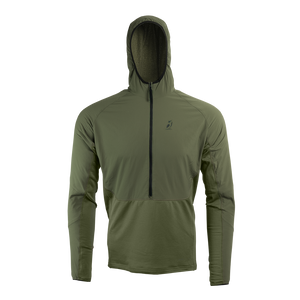
[00:00:22] Joe: you about one of our double launch items that we're going through is the altitude Sun hoody. I believe is the official title but it's more than just a son hoodie and We will get into that. So if you could tell us, Bring them or Jason. How did the what did you set out to accomplish with this hiking shirt?
[00:00:49] Tayson: it's been a minute, I It's actually I'm realizing it just trying to think back to the origins been. So busy around the office. I you know, didn't think too much about this before we hoped on the podcast. But Man, trying to think back to like where this project started. I don't know if you know jump right?
[00:01:14] Brigham: uh, well we have For those unfamiliar with our brand, or our product line, like, we previously this year, we launched like the turn, the turn hoodie, which is a Merino wool Blended. Really lightweight hoodie. you know, like think of it as like a lightweight performance fabric, so it's not not a hoodie that's gonna keep you warm but like base layer type, really lightweight, and It has slightly different application than this but
[00:01:45] Brigham: as we started developing that we also thought it would probably be good to have like a synthetic alternative to sort of the same concept that would be like a really light like really, really lightweight hot weather hiking piece or running Feast kind of a more, maybe a more performance focused. Hot weather piece with with long sleeves in a hood because with with how light we can get Fabrics, wearing long, sleeves and
[00:02:21] Brigham: a hood for sun protection. It's pretty practical so you can get the sun protection without worrying. About sunscreen putting it on where you're wearing on gear and just as greasiness of sun protection. So, and then kind of the, you know, I know a little bit of my thought process was just thinking of like, well, what what's like, the hot weather hiking shirt that I want to hike in? And, you know, that's
[00:02:52] Brigham: like something with long sleeves and Hood. That's really, really lightweight and breathable. That doesn't make me hot, but that protects me and is just really comfortable, okay?
[00:03:00] Joe: So, I remember I interviewed you for ads for our gift, paid for this, for this piece and
[00:03:09] Joe: you were talking about setting out and making them, basically, your ideal hiking shirt. So, we had outdoor vials. I believe we still on our store and I may be wrong about this half, like our cotton T-shirts here with our logo on it and perhaps one would be mistaken and thinking that that is made. Specifically. But this is actually our hiking shirt right here. This is a. How light is it? It's four
[00:03:37] Joe: ounces four ounces. And so is that the large size for four ounces or
[00:03:40] Brigham: you have a large is like four ounces? Yeah.
[00:03:44] Brigham: So, I mean, like they're between a medium and large is probably like less than a quarter of an ounce difference. So it could be Plus or minus a tiny bit so really like, yeah,
[00:03:54] Tayson: yeah. I mean for, for comparison I could typical cotton shirt like the one I'm wearing right now. It's even a little bit thicker fabric. I would guess that this shirt in a short sleeve weighs eight ounces. So it's half the weight in a long sleep with the hood. Most people's, you know, regular shirts that are like a lighter weight cotton, might be more like six you shirt. So you're you're whiter than
[00:04:19] Tayson: almost. Any teat regular t-shirt, you're going to have out there, but you've got long sleeves and a hood. So it is an incredibly incredibly light Fabric and and to kind of go back to what Brigham was getting to with with
[00:04:31] Brigham: where this project started is. We Do It
[00:04:34] Tayson: All Points in time, just kind of cast a lot of lines in the water and start probing on research. And I think that's essentially what, you know, take this off as saying, all right. What what are most people using right now? And a lot of people are using these Sun Sun, hoodies and polyester, Sun hoodies, and synthetic Sun hoodies. And so, we just started to reach out to our fabric suppliers and
[00:04:57] Tayson: say, you know, what do you got in this type of parameters? You know, something that's, that's roughly this light, you know, send us, send us fabric swatches, maybe and then we'll, we'll see if there's any that we actually want to test and prototype. And so it was really just kind of more of a yeah. Like this is an important part of the earring system and we were trying to build the best
[00:05:17] Tayson: layering systems we can. And so let's just start testing fabrics and we tested some Fabrics.
[00:05:23] Brigham: Yeah, yeah, we did. It's funny because, like, I gotta say, like I was not feeling a lot of freshness in my memory when we first started, but now it's just starting like talking about like two minutes like thought processes like come back and like Back into the front of my, my memory. So I am, you know, I'm remembering other factors. Like, what I said, like a good, a good hiking shirt and
[00:05:48] Brigham: ideal hot weather hiking shirt. Well, the other if you find the right, Warm weather super lightweight hoodie. It actually like can cross over to different purposes like a primary base layer when you're starting to layer because It's a thin breathable Fabric. And if it's, if it's designed and fitted, right, it'll it'll, it'll be close enough to the body, that it actually Wicks moisture off your skin. And so, you know, I'm remembering
[00:06:17] Brigham: some of that, you know, some of those things where it's like, It's it's not as quite as simple as just like a great shirt to hike in because you know, when we look at fabric weights of fabric constructions and you you know, you realize what they do. And so I guess when I said we kind of want it to have a synthetic Hot weather hiking shirt or hoodie, you know, the reason
[00:06:40] Brigham: for that is you know a polyester. Dries incredibly quickly especially in this weight class and construction of fabric so it just it works moisture and it breathes so well yet and then it dries really quickly. So it really does make for a really good hot weather piece and that goes for not just hiking but like running hot, the very active, like physical Sports type, you know, things if you were to go
[00:07:09] Brigham: play tennis and this or go for a run cycling, mountain biking. I mean there's just kind of where, That comes into play. So
[00:07:18] Joe: there's a lot of applications for this. I'm wondering for those out there who maybe bought the the turn, where does the turns functionality and or overlap with this the altitude Sun hoodie, and where does the altitude Sun hoodie shein in comparison to the turn?
[00:07:41] Tayson: I've spoken to this on some videos. I think talking about base layers and just going through some of that. And what I'd probably say in my personal opinion and bring my might have a slightly different opinion, there's a lot of overlap and there's a lot of preference so you do get to ultimately make that choice. But for my my perception, what I prefer is I prefer to use the altitude Sun hoody
[00:08:06] Tayson: when I'm doing higher level exertion activities, meaning a much more likely to be sweating. I mean that's the biggest one. Because this polyester will Wick faster drive faster, essentially. The term actually has a nice firm against the skin. It's more comfortable. It's Probably better at temperature regulation and it does dry incredibly fast for a Merino wool. New Yarns technology the way that they, you know, knit their yarn and stuff. It is
[00:08:39] Tayson: incredibly fast for wool drawing piece. However, wool is going to be hydrophilic. Meaning, it's going to pull moisture into it, it's not going to dry quite as fast still. So this polyester will dry faster. So, what I have found myself doing a lot of times is I'll just call you it. What the trip is if it's high exertion I'll tend to lean towards taking the altitude. So anytime I'm trail running anything
[00:09:02] Tayson: like that the altitude is going to be preferable for me but I do love to sleep in the turn because next to skin, it's so nice. It's so good at temperature regulation. It's warm. When you need to be warm. It's cool. When you need to be cool or just a moderate level, backpacking trip. I like the turn a lot. But that's, that's kind of where I draw the line. And in a
[00:09:24] Tayson: lot of times that actually means that I'm taking one for like a sleeping setup, like, maybe I'm packing in the turn for sleep in or something, it's only what five ounce is. Maybe your six ounces. A little bit
[00:09:36] Brigham: under six. I think it's still incredibly light. So if I
[00:09:39] Tayson: am going to take to, I have found myself taking one of each and kind of applying them differently on the trip, but that that's probably the biggest. Differentiator is just the level of exertion is what determines, which one I would take.
[00:09:50] Brigham: that's, there's a lot of overlap in my Preference with, with Tyson's, I would Echo a lot of it is like the physical intensity of a trip and I guess the ambient expected temperature of the weather. So like if I know like if it's just gonna be really hot or
[00:10:08] Joe: honestly if it's which we're in which we're in the southwest, we're in the desert. So like that's pretty bad is
[00:10:14] Brigham: one. Where is like let's say not hiking or backpacking if if for whatever reason I my schedule didn't allow me to get up before the sun rises and go for a run and I know I'm going to be running in the sun. That's kind of like, my thing is like really, really high intensity, high temperature. Physical. That's that's where I'll go with this because it does. You can feel it like breathing
[00:10:41] Brigham: and cooling. You know, pulling what off your skin
[00:10:43] Tayson: and cooling off. Yeah, with the fabric being as light as it is to make the hoodies as it is, I've had I mean a base layer is the fundamental piece, right? I guess it's that it's that it's a primary piece in your layering system. So I've just used it, you know, in the winter a lot as well. But to kind of before I move on, just that comparison though to some of
[00:11:08] Tayson: these other applications I've used it in. I would just say The other factor is. Obviously Marina wool is going to have better odor. Defense. I guess like you're going to develop more odor in this. This over a five-day backpacking trip than you would in the turn using Reno wool. Merino wool is antibacterial by nature. And so you're going to reduce odor over a long period of time with that. But typically for
[00:11:35] Tayson: us, if we're doing a high exertion activity we're just everyone expects to be smelly and so it's not just one more thing to note there but you know, to just kind of build on what Brigham was saying with some of those applications. I've definitely done. This is something. I actually don't lost in testing too is I'll bring two altitude hoodies one for how to hike in and one to sleep in or
[00:11:58] Tayson: something. And I specially like to do that in the winter. And sometimes I use the turn, you know, maybe quite often, but but a lot of times in the summer, even I'll do this because let's face it. Like, we might be trying to do 25 miles a day and just crushing miles and it's hot or whatever and you get to camp and you just sweaty right? And once that sun goes down,
[00:12:15] Tayson: especially out here in the desert or if you're up on the mountain, it can cool off, really, really fast. And the fastest way to regain warmth would be to shed this piece. That's that's now wet put on a dry piece and just instantly. There's going to be additional warmth there and so because it's only four ounces in a dry so quickly and all these types of things. Two of these make a
[00:12:35] Tayson: fantastic layering combo for sleeping in one and exercising in the other or you'll see us on like, some of the longer trips on the at trip. We just did, you'll see me part of the part of the trip. I'm in a gray one, and the other part of the trip, I'm in a blue one. You know, just you'll see that quite often with the way that I've been using it because it
[00:12:53] Tayson: four ounces being able to switch in and out of a wet piece to a dry piece at night and vice versa. It makes a massive difference for comfort and it's just a very small weight penalty to be able to rotate like that.
[00:13:06] Joe: So, I have here a list of features that this has. And by the way, if you're on, if you're watching us on our Live Ultralight podcast YouTube channel, you can actually see. We actually have the altitude hoodie here, so we might be able to point some of this out. Jason. Yeah. It, we don't have an official UPF rating because it was too thin. Is what I was told, but it should protect
[00:13:31] Joe: you from the Sun. Pretty well.
[00:13:34] Tayson: Yeah, we're gonna get that question. Like what's the upper is the sun hoodie? Right. But if you can see on camera, just how thin and how light this is, It's a piece that's very hard to do the PF testing with. So we the rating came back inconclusive. So we've only got real like only I say only but really we've got a ton of field time in this, which is where, you know,
[00:13:59] Tayson: our our experience comes with this. And we've had this For those of you that have been at, you know, 12,000 feet in the direct sunlight, that's an incredibly intensive Sun, that will cause sun burning at a much higher rate than if you're at the beach. In fact, I was just at the beach less than a month ago and I couldn't believe like, how little sunscreen I needed because I burned very easily
[00:14:19] Tayson: but I'm used to being in the desert. I'm used to being a high altitude. I just couldn't believe how little sunscreen I need. First is up on those Peaks and so we've had this you know up on the Peaks day after day just had an extensive amount of time, whether it be, you know, anywhere and everywhere and it's worked very well to protect us from the Sun, but yes, we don't have
[00:14:37] Tayson: an official up for reading on it. Yeah.
[00:14:40] Brigham: It's just Sprout on that just a little bit. So when tasen talked about us, you know, researching fabrics and testing different Fabrics, When? when we first got this fabric to test, we had a had an altitude hoodie sample, made with the fabric and and tested and Warren were really had a lot of positive opinions about it and good you know, good internal feedback but when we Start at that point. We thought
[00:15:16] Brigham: well let's send this off for third party testing. So we we had it sent to third party testing which is, you know, we don't want to internally do our own testing because that there's opportunity for bias. So you have something like this third-party tested by industry standards. And then they basically came back and said that it's inconclusive because of the fabric is too thin and too light. They can't basically get a
[00:15:40] Brigham: reading off of it, right. But that's where our testing because when we got that bit of information that's where we thought. Well, let's keep testing Fabrics but we're really gonna have to feel test this a lot in the Sun. And so that's basically what we did knowing that, you know, we can't put a UPS number on it because the third party testing couldn Conclusive number for us. So we had to have
[00:16:03] Brigham: confidence that we could wear this for extended hours in sunlight without any any effect. And so that's what we did. We set out going for runs in the middle of the day, doing all our. You know, I use this for all my hikes, all my outdoor activities, all my exercise outside and basically internally in the office tasting and others did the same thing. And then, you know, I actually would ask people
[00:16:28] Brigham: on our company trips to wear this, just because I were just trying to make sure that we're doing our due diligence and You know, so that when we launched the product we can confidently say like you're not going to get burnt by the Sun by wearing the shirt because we know there's not to be that number attached to it. So
[00:16:44] Joe: which is interesting to me because I've never gotten burnt and I'm a redhead so I burn immediately when I walk outside I'm sure period. so, Because of how light it is and because of the coverage. I feel like that. Yeah.
[00:17:00] Joe: Protecting more than anything
[00:17:01] Tayson: else. I'm similar to Joe. I burned very easily and it's worked great for me. So I'm one of those guys that if you're kind of wondering On The Fringe side of things and you know it gets towered a lot and I don't want to harp on this too much longer but it's Tower a lot like, oh like there's a 50 you know, there's a 50 plus 50 plus mean and Specially, like
[00:17:22] Tayson: with our turn, right? Or turn has a 36 UPF rating. And Essentially like that. UPF rating is very significant, right? Because at a 36, UPF rating, which isn't the 50, right? Because if you're like, oh no, I need a 50 UPF. Rated Sun shirt before. I'll touch it. Essentially, even if the 36% level, you're blocking like 99.9. Something Percent of harmful Rays. Right. So it's it's danger 100% even at a 36
[00:17:55] Tayson: rating. So that's just something to note too that I don't get too hung up even if you're shopping for a different shirt on needing a 50 UPF shirt because you're going to get massive protection with any UPS. Sure. Or like you said and I you can get sunburned potentially through something but like it's
[00:18:14] Joe: It's never happened to me my entire life and I've been a redhead my entire life.
[00:18:18] Brigham: I would just say, you know, we we deliberately, you know, tested this days on end, how many many, many, many many many many, many, many hours of sun, exposure, to ensure that it does
[00:18:36] Joe: its job. It does provide our skin from
[00:18:37] Tayson: my, my guests, too, on why it might have been inconclusive and now we're speculating, but is in this fabric, if you were able to see this, essentially, for if you pull up a picture of this, it's got this grid look where there's kind of like a Center Square and then on the outside of that, there's just really thin separation now that thin separation. What's really incredible about that is that's like smallest
[00:19:03] Tayson: Breeze. You will feel straight through this so it just it breathes so. Well, I've had this happen time and time again in the mountains are like, man, I'm hot. I'm starting to sweat and then like literally the tiniest Breeze will kick up and you instantly have relief. That's how breathable this is my guess though. Is that, you know, if you were to put this on something and never move something like, could
[00:19:24] Tayson: probably prick through those little sections, a little easier, but where it's on a body. And it's constantly moving, that's probably why in the field that offers such good sun protection. But on a test, a lab result, testing, it's inconclusive as because, like, even looking through this with my hand, you can kind of see through this fabric. But really, what I'm seeing is just through those little tiny holes per se of where
[00:19:46] Tayson: it's thinner. So it might be, but in practicality doesn't really mean anything. It's not gonna sit on your skin and never move, you know, in the field. So
[00:19:54] Joe: so we have on here, it's 100%, polyester, like we said, it's quick drying breathable. Moisture wicking. Excellent, stretch, excellent. A Measurement Brigham to go back to previous podcast about fires in the arms and
[00:20:12] Brigham: no, not in this case,
[00:20:14] Joe: not in this case. Excellent. So, a lot of excellent is our subjective. Measurement.
[00:20:21] Brigham: Yeah, in fact, one of the after we made a few prototypes of this, And found some other Fabrics. We had, we had the hoodie made in some other Fabrics too and one of them we thought might have some potential and we spent quite a bit of time in that one too. It was a little bit heavier and thicker Fabric and I had a lot of people take that in fact That was
[00:20:48] Brigham: actually the if when we went to The High Line trip. Everybody was wearing this, that sample? That's all white
[00:20:57] Tayson: hoodies. Yeah. We had other ones and
[00:20:59] Brigham: yes. so we and basically, you know, it was almost a unanimous like no-brainer decision, that everybody preferred, the comfort, and the feel and the stretch of this fabric versus the other fabric, and so that was, that was a significant factor in like, Feeling confident that we should go with this with lens fabric because it is it does when you put it on, it's so incredibly lightweight. You hardly feel that it's on.
[00:21:28] Brigham: But but it is just very Stretchy with your body. As you bend your elbows or reach, you know, it's just it's very comfortable.
[00:21:35] Tayson: I had the altitude the actual Fabric in a black hoodie and then I have that other Fabric in a white hoodie and even though the white would be you know less hot per se in the middle of a day. Or what's up soaking as much? Yes,
[00:21:51] Tayson: I'm pulling in all the heat, you know? I was still preferring to use the black one because it was so breathable that it's always windy at high elevation. Right. So even though it was like potentially absorbing more heat through just Sun absorption, just the difference in how breathable that fabric was, or this this altitude. Hoodie was like it offset it, plus the Comfort was like the icing on the cake, so by
[00:22:15] Tayson: the end of that trip, I was just using the Black version of this over the other Sun hoody just out of pure comfort and breathability of the
[00:22:23] Joe: piece. That is something interesting that we do offer a black version of this. And most people would think, you know, some honey, why are you doing that? That's just gonna soak up the sun, which is true. because of how I guess light and breathable the fabric is that's You will hardly feel a difference. That's the idea. It's yeah. I mean, obviously the
[00:22:45] Tayson: probably the absolute best color for the absolute, you know, coolest feeling on the mountain. That's going to be like this lighter gray. The blue is also very light. The black we still wanted to do it because it won. It looks so sharp and two in my mind, it's such a versatile piece that you're going to use this piece year round. And so, if you're not using it in the dead middle of
[00:23:09] Tayson: summer, the black still makes a ton of sense to use in the fall to use in the winter to Exercising, you know, because that's the thing about this piece is like, once we got it, you know, we started to use it for a whole lot more than hiking started running in. And we started, you know, exercising day to the gym. You know what I mean? Some people. There's just, there's all sort
[00:23:26] Tayson: of traveling in this piece, you know, there's all sorts of applications for it and I think that's really where the black comes in. I think most people, especially this price point, most people will either will, that do order one will end up ordering another and potentially another because of the price point, we brought it in. But to just, they'll start getting in the big man. I'd rather be wearing that doing this
[00:23:47] Tayson: activity, then this shirt. Yeah, I I did more testing in the
[00:23:54] Brigham: black prototypes than any other color that we ever made and that's in like all the summer conditions out there and I never, I never once felt like I wish my this you know, this was a different color because this hot is just too unbearable. in fact, I never I can't ever remember even thinking that Any that I was experiencing any discomfort related to the hotness of the fabric. So you know it's
[00:24:26] Brigham: in terms of actually UPS protection, the darker, the color, the more protection. It gives. So that's To be part of it because it's under protection, you know? Hot sun on the skin, actually increases your body temperature. So
[00:24:43] Joe: tell us about the design of the hood and collar. On this piece. Well, I mean
[00:24:54] Brigham: One of the piece to be as light as possible, which means we, we didn't want to, like, make any kind of like adjustable hood or anything like that, but we wanted the hood to be usable and comfortable yet. Not distracting and not. Height, that it was. Yeah, uncomfortable. So we did actually a lot of like small shaping and tweaking of the hood to to get the right amount of like Contour. Following
[00:25:25] Brigham: or, you know, the hood following the shape of your head and neck without compressing against your head and now feeling constricted. So that when you do move with the stress of the fabric and the shape of the hood that your that it's going to move with you and not feel like it's getting hung up and then same thing, like, with the collar We wanted a collar that was a little bit higher
[00:25:50] Brigham: in the front. So it wasn't kind of leaving that that white top of the chest skin exposed to the, to the sun.
[00:25:59] Tayson: We could shave off a few more ounces off this. If you guys all grew beards because you wouldn't the front collar there and earlier, yeah,
[00:26:06] Joe: you can do a big
[00:26:07] Tayson: v-neck and it'd be just this would work.
[00:26:12] Brigham: But yeah. So so the, the front collar height that is there was quite a bit of deliberate design there where we want it to be the right height when the hood isn't on, but also be the right height when the hood is on. So if it's too tall, when you put the hood on, then it's like trying to either like Get over the that point of the chin or get caught under
[00:26:36] Brigham: there and then it's kind of pulling the hood the face opening a little bit and that's distracting and uncomfortable. So we really spent time dialing in the collar height and that the face opening Heights. So that when you do pull up the hood, it does bring it up, so it protects your neck, even though the, you know, the top of your chest and the front of your neck, it's protected. And then
[00:26:59] Brigham: When you take the hood off, it still is protecting that top collarbone area. So
[00:27:03] Joe: Raglan sleeves. What are they and why are they what? Why do we put those on our? So
[00:27:13] Brigham: I think you know an active piece especially a piece that's going to be for like very active activities. Your mobile, you're moving around and then incorporating backpack. The Raglan sleeve is where the seam instead of being on the top of the shoulder. Like this, the seam like a regular t-shirt. Yeah. Basically the the whole sleeve, Piece. Comes all the way up to the neck. So there's no inner interruption in in the
[00:27:45] Brigham: pattern piece so it's how the sleeve is
[00:27:47] Joe: connected to the rest of the shirt. Yeah.
[00:27:49] Brigham: And it keeps the seams forward of the shoulder and back of the shoulders. So on a shoulder strap, situation gets not, there's not going to be chafing or rubbing on the top of the shoulders, but it also really helps with comfort and Mobility because that's, that's all one kind of three dimensional piece and you just get better range of motion without reaching the point where you feel the Fabrics start to bind and catch.
[00:28:15] Tayson: For those of you on a pair of pants that know, like what a gusseted crotch is to me, it's like the equivalent to something like that for a t-shirt. Just that does help with range of motion movement, and then like Brigham said, you are taking that seam right out of like the friction point of the top of the shoulder which kind of like with the pant, right? Like if you're doing a
[00:28:35] Tayson: lot of mileage in a non-gun, you can sometimes feel that seam start to chase more. And so it's just overall more comfort, more mobility.
[00:28:44] Joe: And the the last on my features list here. This is a pretty simple piece and it's meant to be that way. Last time I simple on my, on my list here, is that true flatlock scene?
[00:28:58] Brigham: Yeah, just they're, they're just designed to be as flat as possible. Not all not, all seams are Made the same. A lot of that goes into the type of machine, that's used one of those, the two pieces together, it can cut them in different ways, so it stitches them together and cuts them at the same time. All it means is we we made the piece with the flattest, seams that you can get.
[00:29:28] Joe: All right, so what kind of testing did we go through? I know it was like that, you went to Highline and that's probably the easiest place where you can see some of the old footage you guys were talking about the white, the white hoodie, everybody everybody on the mountain in those in that footage, I mean, that you can see on our YouTube channel, live, upper finals, YouTube channel, everybody's wearing the same
[00:29:51] Tayson: white hoodie in the last year. Anytime you've seen me that I'm not wearing a turn hoodie I've been wearing this, so anytime I'm wearing a black hoodie or Brigham's, wearing a black hoodie, you know, anything long sleeve. We've probably been wearing this. So we took it on Skyline last year. We took it on Highline last year. I took it on multiple personal trips. You know, seven-day trips into the back country in
[00:30:17] Tayson: Colorado. I took it onto winter condition trips and October November here in Utah. I also took it on multiple Very extremely cold trips throughout the winter, but I mean, it's been a ticket to Mexico. I've taken it kind of everywhere. So it's it's been through the wringer of being a high altitude at a time in summer, fall winter. It's been, you know, traveling it's been ran. And, you know, I don't know.
[00:30:46] Tayson: Like I'm All right, maybe let's like just pick like Brigham, maybe just pick if you've got a story in particular where you used it and it stood out and maybe I'll just share one particular because it has kind of just been everywhere. So it's hard to.
[00:30:59] Brigham: Yeah I guess. I mean the Yeah, because it's a lot more than you want to highlight Trail. It's in fact that's probably less than 20% of the testing probably less than 10% of the testing but you know my standout experience is one would be like the Grand Canyon earlier this spring. You know, when we did the kind of the rim to rim to rim overnight, where that was It was it was
[00:31:27] Brigham: actually not as hot as normally as that time but it was still hot conditions at the bottom just long, long days and
[00:31:35] Joe: was a fast facts just
[00:31:39] Brigham: really hot exposed to the Sun the entire time. And yeah it works. It works phenomenally at that point I wasn't like testing, it's all testing but I don't know. It was it was a known quantity at that point but that's definitely a great like example type trip for for that piece.
[00:32:05] Tayson: Yeah. I would probably say just to just to go out on kind of a different limb of things. On the 41 below freezing video, this is like was my choice as to hike in and this type of a piece. So I hiked in Solo in that video wearing this piece if I'm remembering, right? And I again, I strictly chose it even for those type of conditions because I had so much confidence
[00:32:40] Tayson: in its ability to dry. So I'm heightening with that plus of Ventus over the top. But when you get there you're still going to be sweaty. And in those type of conditions, you know, you want to be as dry as possible, anytime that you're not dry. It's opportunity to freeze. Once the freezes, you know, that moisture is not coming back out of the pizza. It's got to stay quick drying. So now
[00:33:02] Tayson: in that scenario, I had so much confidence in it, that that's what I chose to hike into. So I hiked in, you know, the temperature start dropping below freezing, the winds picking up but still wearing that piece and dried out extremely quickly while still putting up my Camp. Even though you're You're hiking and snowshoes uphill for like two hours or something like that. So you're definitely sweating and the sun's still at
[00:33:24] Tayson: that point. So it's warmer temperatures and but yeah just developed a ton of confidence for its ability to dry even in those type of conditions. And you know I said I probably in bed like after all it was all said, then I switched into a turn hoodie I think to sleep if I'm remembering, right? But I didn't need to this piece of dried out that quick. In sub-freezing, temperatures Sub-Zero, temperatures, Fahrenheit,
[00:33:48] Tayson: that it was it was just an incredible piece. And so I I've utilized it in that type of scenario a lot and just have a lot of confidence in its ability to drive, you know, go back to Highline. You know, we were getting dumped on so much moisture after. So I was like, I'd like these days we're getting baked by the Sun. And so we're getting the testing of in this piece
[00:34:10] Tayson: of just getting Baked by the Sun and then the flip side. It literally flip the script on us to where it's snowing and raining on us for like the next two days. And this was this was what I had, you know, out there. And I was basically at that point I I kind of ditched the white one and was spending all my time in the black one which was what this one
[00:34:27] Tayson: ended up. Being that we went with fabric wise but just having the confidence that that piece can Wick moisture, evaporate the moisture. Sometimes you're getting like 20 minutes of sun in between like storms like the clouds part. I mean, and its ability to dry quickly enough to get you comfortable again before the next Onslaught comes in and stuff. So just developed a huge amount of confidence in its and its ability to
[00:34:50] Tayson: perform as a base layer should. And again going back to what a base layer is a base layer is really a moisture management system and so many ways and so pulling moisture off your skin, evaporating, it is really, you know, primary function of a base layer and this piece. That at an incredible rate and it's light enough that I typically carry two and just can swap it out. If I choose to
[00:35:12] Tayson: or, you know, there's just all sorts of options with this piece. So, definitely add some extreme situations and it's always pulled through. It's been a its Definitely a staple for me at this point. All right guys. Well if you want an excellent
[00:35:25] Joe: hiking shirt, please go check out the altitude Sun. Hoody it is you can find the link in the description of this episode and by going through that link you let taste and know that people actually do. In fact, listen to this podcast
[00:35:40] Tayson: you got it. You got to give them a pitch if you
[00:35:42] Joe: want. No, I mean the pitch, I would say those two. That one of the coolest Parts about this piece, is there there's comparable
[00:35:47] Tayson: pieces on the market. I think we dialed in the fit better than anyone. I love the state of the piece for base layer but the price point is truly phenomenal. Again, coming back toward direct to Consumer business model and and you know, we didn't design this for a price point. We designed this testing all the fabrics and Just picking the most performance, Focus fabric, but the cool thing is when we finally
[00:36:11] Tayson: got to quoting the piece, it was like, wow this is this is an incredible piece for what it is and and we actually you know, took a slightly lower margin on this just to make it even that much more attractive. But we really think this is a piece that's that for a price point of forty, nine dollars. It's it's, it's hard to rival and matches. So I would I would just Want
[00:36:34] Tayson: to throw that out there. It's incredibly well priced piece too. All right,
[00:36:37] Joe: well feel free. You guys to check that out, feel free to send us your comments. Questions about backpacking. Cool. I'll just Choice, outdoor stories or ideas for future episode topics. If we think it'll bring value to our audience, we will read it out on the show and you can send them by commenting on our live. Ultralight podcast YouTube channel, or you can send us an email at Live Ultralight podcast at gmail.com.
[00:36:59] Joe: Please send us your positive. ITunes review, iTunes reviews. We will read those out on the show. And if you're not subscribed, please subscribe to us on iTunes Spotify YouTube or wherever you get your podcasts. Thank you very much.