[00:00:00] Joe: Welcome everybody to the Live Ultralight podcast powered. By Outdoor Vitals. I am Joe and I am here today with Brigham,
[00:00:12] Joe: I'm Jason. And today, we're going to be talking about What goes into designing? a Ultra Lite, trekking, pole tent with the launch corresponding with the launch of our new trekking, pole 10 here, and Outdoor Vitals 40th, one person, and two person tracking full tents. So We're gonna go. We're gonna dive deep into the design process of the 40s. What you can expect from the 40s. And I guess any sort of 40
[00:00:46] Joe: is related to talk. We can get into but This podcast is all about inspiring you to get outdoors and like, your packs so you can live your life full of Adventure. And I think that the four is, I'm sure that taste in Brigham will, will agree is a great way to do that to lie in your packs. So, tell me first like, what is a trekking bolttech for the anyone who doesn't
[00:01:10] Joe: know, like me that that's even a thing. And how does that exactly? Lighten? Someone's pack say if they're backpacking or fastpacking, as we've been doing a lot recently at our
[00:01:26] Tayson: I mean, I can start off with the easy part. I'll bring him take the harder part, but so there's kind of three tiers of tents out there. There's free-standing, which means, if you didn't put a single stake in the ground, it would still stand up. You've got semi freestanding, which means you've got to, like, stick out a few corners. But it still has poles, and still has a general shape and then
[00:01:47] Tayson: you typically are pulling out a couple corners and that require stakes. And then you've got non-free standing, and a non-free, standing would mean, it doesn't come with poles or doesn't utilize poles, or you basically have to use stakes in order for it to stand up in some way. So this would be categorized as a non-free standing. There's no polls that come with it. It requires trekking poles for its support and structure
[00:02:11] Tayson: as well as the stakes in the ground. So that's that's kind of part. One of it is that you don't have to carry polls but then maybe part two of why this piece is a little bit different to explain is just that it's it's not a double wall. So I'll let him talk about that.
[00:02:28] Brigham: Right most freestanding tents, not all but in general in the backpacking. Real most like three season backpacking free-standing tents will have And interior tent and an exterior fly or could call it a tent. And then the interior is made up of a floor to protect from moisture and other things from the ground. And then generally, you know, the walls and the roof of the Interior tents are mostly mesh or a combination
[00:03:00] Brigham: of mesh and you know, another fabric like polyester and nylon. And then the weather protection for precipitation is the exterior or the second layer of the tent. That just covers the the Dome shape or whatever the tent shape is. And then it connects down at the corners down by the ground to the same points of The tent that are staked out or not staked out, but so that's generally like a double
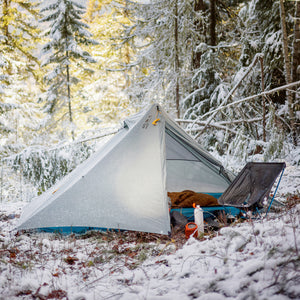
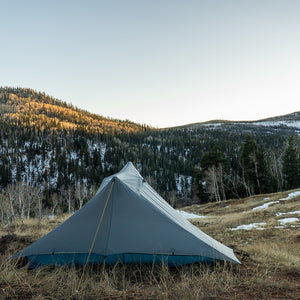
[00:03:27] Brigham: wall. Our the 40 is 10 or a trekking bull tent. Like ours is basically, it's a single wall meaning that there's not two separate pieces. It's all one piece. The tent is one. One piece. That contains a floor walls made of mesh. Um and then, you know, a nylon call it a roof, right? The fly portion of the tent that protects the inside from from rain or snow. Yeah, it's a Single
[00:04:04] Brigham: wall tent. Okay. Um, what made you decide that you
[00:04:09] Joe: needed to make a tracking full tent at Outdoor Vitals. Our Dominion is quite popular. Our Dominion is the freestanding non trekking poles. All right,
[00:04:20] Tayson: I think it's just the ability to get lighter out there and, and We're massive, Believers and trekking, poles. So we already had those and when you're trying to get Ultra Lite, you know, being able to double up on uses and purposes as always a big thing. But yeah, the Dominion is a great tent. It's very light for a freestanding tent, but when you get into this category, it's like a totally different
[00:04:47] Tayson: category of weight you could say. So They're literally like half the weight inside of a Dominion 10. So it's it's it's it's a pretty incredible, jump for weight savings, the same. And when you already massively recent trekking poles, that makes a lot of sense, too. So that's the biggest thing for me is, I mean, a lot of people, you know, talk about things like, oh, I just use a tarp or something
[00:05:12] Tayson: like that because it's so light and so small. I don't like carrying a big tent or the polls or whatever, and Is like it really. Almost feels like you're carrying a tarp. It's just that significantly
[00:05:24] Brigham: light and small, so yeah. In a little bit of context that might help you Joe or anybody else of, you know, in, you know, in our realm of backpacking. We're, we're always trying to be as light as possible and as functional as possible, so we're always analyzing we talk a lot about gear on the podcast, obviously. And, and a lot of what we do as a company is trying to Live Ultralight
[00:05:49] Brigham: or, you know, Focus as to try and take as little as we can to still Have the experience that we're after. And so, in whittling down pathway, it's like a never-ending Journey or mentality of just trying to be deliberate and careful about what you take with you and to with that goal of caring as little weight as possible with your other goals met as well. And so, There's a lot of people.
[00:06:22] Brigham: Backpacking Community will be familiar with the term of like the big three. Or it's a core items in backpack. And those are those are the main the most significant pieces of gear that you generally need to have to go on a backpacking trip and walk for miles and stay in the in the back country. So those items are your backpack. And your sleep system, you could break that into your sleeping bag
[00:06:47] Brigham: or quilt, or your pad, but those three or four items are like your big three, right? And you can gain the most weight savings by carefully selecting from those items by being very careful about what items in your big three you use. You can get the most weight savings or weight loss. Addressing those because they're a big items, right? So if you're talking about a backpack, you could compare 145 liter backpack
[00:07:15] Brigham: that weighs, let's just say, even it out two pounds, versus one, that weighs three and a half pounds, they could cost the same amount of money. So for the same amount of money you've taken away, you can take away, say, a pound and a half, or a pound a pound. With just one item, you can do the same thing with your your sleep system, whether so if it's their sleeping bag by
[00:07:38] Brigham: choosing a down sleeping bag with a higher, fill like an 800 or higher, fill power and you can even do the same thing by going to a top quilt. And you can save in one of those big three items, you can reduce your pack weight for similar amount of money, by one to two pounds, just in a sleep system. And then you can do the same thing with your tent. So you
[00:08:00] Brigham: get the most weight reduction or weight savings by carefully, addressing your big, three items. And so with the tent like taste and says, like you can Cut your tent weight in half. By addressing, you know, going from a freestanding tent to a trekking pole tent. And like he already talked about like we all believe in using trekking poles. And when I say, believe it means they provide us with a tangible physical
[00:08:32] Brigham: benefit. Meaning they make us more stable. They make our joints hurt less at the end of the day. And so it's assumed that we are all always going to be backpacking with our trekking poles and so being able to integrate a tent that uses trekking poles to hold the tent up and then Stakes. We're able to knock one to two pounds, off our tent weight. That's just a little bit background on some of that.
[00:09:01] Joe: How long has trick and pull tints been around? I definitely never heard like I didn't hear about it before coming here and I just feel like
[00:09:10] Brigham: I don't know. I it, I mean, when did they gain popularity or how long they've been around to this River?
[00:09:15] Tayson: Like been more of a, if you know the answer to either of those?
[00:09:19] Brigham: Well, I mean, it goes, I mean, it can go back hundreds of years to when people had skins, right? Or if you go back to Frontier times, when people were using canvas, right? Well then we're using a stick, okay? One end of the tent, which mimics, we only have
[00:09:35] Joe: one point at one point. The there was the there was, there was a new segment of outdoor gear created after people just got rid of the walking stick and then started manufacturing tracking polls. So post manufacturing truck. People
[00:09:51] Brigham: probably between 20 and 25 issue
[00:09:55] Joe: because I guess you could probably use those trekking poles and then you would have just used a tarp and like some like creativity with a rope and figured out a way to Give yourself a shelter now, that way. So, I'm wondering when they started like manufacturing, these things where it's like, wholesale like what we've made here.
[00:10:13] Tayson: Floor roof, everything I would say. They started to gain a lot of popularity though in the last 10 years and
[00:10:20] Tayson: a whole lot more popularity in the last five years. And we're seeing a massive Trend right now with companies that do surveys of like through hikers and things like that, where it's significant year over year
[00:10:32] Brigham: growth. Yeah. Like you're noticing
[00:10:34] Tayson: year over year growth. In fact, we just came off the trail from hiking the at and I would say 40 plus percent of all tents out. There were trekking pole tents that we saw. So it's just becoming more and more and more popular for sure. So I mean, but I'd say last five years it's become quite mainstream and it's just seems to be climbing more.
[00:10:58] Brigham: Yeah for sure. I mean what starts you know you know I said 20 25 years ago that's like the Advent of something. Right? Would usually starts as a very Very, very, very niche. Category or product. A couple decades later ends up, being much more mainstream.
[00:11:17] Joe: Yeah, it's called schema and variation is how I've heard that thing called. It's like new idea happens. And then it takes that, that's the variation and then the scheme has to slowly through. Okay, so what is it about the 40s that makes us special like why did it take us? Well, no number one like what was the process like beginning to end kind of what was the General process. Why is it
[00:11:44] Joe: taking so long? And what what did we set out to do with the 40th from the beginning, I guess, probably the best.
[00:11:53] Tayson: Player start, I think number one. 40, s is a name. Because a Latin base. So yeah. So 40 is comes from the
[00:12:03] Brigham: original Olympic Olympiad motto in Latin, Sidious Altius 40s which means faster, higher stronger. So 40 is that's where the word 40 is comes from, and that's all. So why? As other languages developed, you know, the term Fort and things comes from. derivation of you know, strengths strong hold So
[00:12:29] Tayson: serious, we set out to do this. That was maybe one of the things just to start out with its just remember that name because the 40s tents are extremely light. In fact I was just thinking about the first two person tent I ever backpack with and it was about a six almost seven pound tent. And now like a 40 is two person which actually has Probably more square footage of room inside
[00:12:53] Tayson: of it. You know, you're talking to pounds, right? So just massive different there, but So it's extremely light but we didn't set out to make the lightest tent. What we made was the most performance driven tent. In our minds, you know, being heavily weight conscious and so 40 is to us was was kind of this idea that a lot of these trekking pole tents. Push the limits of ultra light and sometimes
[00:13:19] Tayson: for the use cases that we sometimes put stuff in, maybe they could push too far. So, you know, in the development of our tent I'm sure you guys have seen the follow us a while. You've seen us taking on snow loads and severe winds and Peaks, and taking it to the desert. And it just has to perform in all of those scenarios for us to be happy and really it's become our
[00:13:41] Tayson: Fortress and we've developed a ton of confidence in it. But we essentially wanted to push limit of how light can we make it but it needs to perform and be storm or the and and not be something that you just are constantly questioning whether you could take it to this scenario or not.
[00:13:57] Brigham: I think that last statement of like questioning like we want to we want to be able to generally go backpacking anywhere. That's Really accessible. Like, we're not. with going to North Pole expedition going to Nepal or the Himalayas is not reasonably accessible for us, but in general, Mass called Mass Market backpacking. I mean, we want to be able to take our tent On any backpacking trips say in the United States or
[00:14:29] Brigham: North America, right? Maybe not certain parts of Alaska, but but you know and be comfortable doing that. But we also want to we also don't want to hunk around at a ton of weight too. So that that's that's just a pretty important point is like you
[00:14:45] Brigham: know we want we from the outset of the project was to Yeah, just think about, we want the weight Savings of a trekking pole tent but we also want to have confidence in it where we go, which could be anywhere. And like Jason said, like the desert. it's just really hot there and saying, but at 12,000 feet there's no trees and there's always a lot of wind and there's always You know,
[00:15:14] Brigham: the threat of freezing conditions and stuff like that. So, being having confidence and being comfortable, using this tent and pretty much any backpacking scenario
[00:15:25] Tayson: So that may not affected things like fabric choice, that affected things, like, where we put guidelines, how many guidelines are a little storm points that are movable and all those things kind of came into consideration because yeah. There's there's a significant amount of nights a year that I'm that we're all sleeping at 10,000 plus feet. Or there's times that I've gone to Alaska or do you know different things where like it
[00:15:46] Tayson: needs? Like those things all build into that finished product of having a lot more confidence in it than, Than. You know might have an even lighter weight Fabric and did you as many storm points?
[00:15:57] Joe: I mean, did you guys go through like the competitions?
[00:16:02] Tayson: Like there. I mean, you've got to be aware of everything that you can find out there and know it. And Not, but you know, in the end, really what it boils down to so much for us, is just the performance aspect it and that comes into the design too. As far as like, one of the things that,
[00:16:23] Tayson: One of our competitors do per se is they make an extremely light tent. Fabrics are extremely light, but they also do things like, all right, there's a head-end and there's a foot in and the foot end is like, 21 inches wide. And if you couldn't pitch your tent in a way that allowed your head in to be uphill, you know, you would have to cram your head down into this tiny, little
[00:16:45] Tayson: foot space and it would be really tough when you're when you're my size, when you're over six foot you know specially and so when it comes down, designing our tent, we wanted to make it. Yeah. Where do I go ahead? And that's fine. But the nights that I have to switch and put my head in the foot and it still needs to work very well, you know? So there's there's considerations like
[00:17:03] Tayson: that, we're just means performance in the field. You know, in real world, scenarios is where we're trying to test and build the product for.
[00:17:10] Brigham: Yeah. I think some of the like, some of the cool behind the scenes backstory about like the development as it went over was, I mean, we always, we always want to start with like Our objectives and what we want to accomplish. So like we don't start with the name of a product obviously, so we don't say like, well, we want to design a 40 as 10, and that means it's strong. So
[00:17:33] Brigham: we have to design a strong tint, actually, the name came when the tent was basically, but what was interesting is we have the objectives and what we wanted to accomplish and we tried very many, many many, many different iterations of slightly, different shapes measurements, Heights, length width, and then, but they all at every level were, like tested in the field in Probably unexpected worse than we wanted, or thought conditions and that's
[00:18:09] Brigham: great like that's great. And that's what refined and changed every iteration that we went through until we get to kind of like We've got the general. We've got like, we're like 80 or 90% there and now let's then we just go. Go go with the tent, take it everywhere. And what's interesting is that when it came time to name it, All it really only took reflection back over time to people's experiences.
[00:18:39] Brigham: Whether it was tasting me or other guys on the team and The very common theme that. just kind of surface organically naturally and people's own minds was like the confidence in the tent that they would have these this idea of it like Feeling like it's this refuge and this like you know in horrible weather like in the uintas like it I think several of us talked about it being like man that's
[00:19:08] Brigham: like our last stand in this. Right by this mountain pass. And so like a lot of that. just, Mental effect that I had on people, that kind of drove the name in the end because it, it proved itself out what we wanted it to be. And so naturally, I felt like the name. Worked itself out pretty well, because everybody felt the same way about the tent having had those experiences when they're
[00:19:36] Brigham: just like, Soaking wet and cold, and it's windy. And within 20 minutes, they need to be out of the wind or they're going to be hypothermic. And so like, we all experienced that through through the development of the tent. And so it's pretty cool that that ended up that way with the name that it has and a lot of the testing. So, so
[00:19:58] Joe: how long of a process was this? I know that this town has been done for at least a couple months. And a lot of people because we were still making YouTube videos and you'd be out there on the trail, there'd be a wide shot or something. Like Comments going. What's that tent?
[00:20:18] Tayson: What is that? What do you use? That's the thing is, I mean, we've been so wrapped up in the development of the tent for so long that most of our YouTube videos, do have the 40s in it, you know what I mean? Like, 90% of them. So and we, you know, price We snuck Snuck information out about it so early on because it was we were very close at one point to
[00:20:40] Tayson: having it all done and then covid hit. And we basically lost our tent manufacturer and that drugged out and took a long time and then we had to rebuild the tent with the new manufacturer and you know it all worked out to be good though because yes we potentially could have released the tent. I don't know almost a year or a year and a half ago at this point like or was
[00:21:01] Tayson: around. Yeah, like the first version but the thing is, you know, part of the good of it was that we continue to improve upon it until we've got this version and, you know, just being out on the trail with it. The last month I spent Abnormal amount of time in April, with me on the trail. The improvements we made have been awesome. So dancer your question, it's probably been three plus years
[00:21:24] Tayson: of development. Built to get to this stage but the good of that is three plus years of extra Rd extra tweaking extra fine tuning, you know, someone asked me actually asked Brigham on a podcast. He was doing with me and asked, you know, what's the hardest product to develop? And I think Brigham's answer was 10th because they're, they are, they are, truly can be quite difficult at times to develop in a
[00:21:50] Tayson: different ways, but thankfully we've got an awesome partner of ours. Now on the job when we worked with and everything's been been going quite quickly since then, but yeah, we had like this massive issue in the middle of the Prostituted. But yeah it's been awesome because you know some of the tweaks that we've been doing in these final stages of even been, you know, increasing some of the Headroom in it and,
[00:22:14] Tayson: you know, increase in the ability for it to pitch easier and more talked. And, you know, I appreciated the heck out of those when I was just on the ATV because I could pitch it faster and one of the times it started raining on us, right? As I was setting up the tent and You can set up in the rain without getting anything inside. But then I sat inside of it for,
[00:22:33] Tayson: you know, Maybe an hour and a half or something like that. I just had Plenty of space, even in the one person to spread out, I brought my whole pack inside the tent, not even the best of you'll inside the tent, blew up the pad doubled up the pad sat on it ate food, you know, he's like, it's nice because that wasn't in the first ones that, that amount of Headroom and
[00:22:52] Tayson: some of those things. But we're able to build those in and not increase the weight. And so we just made a better finish product, even though you guys have had to wait for, like three years for
[00:23:02] Joe: this thing. So I do have I have stats in front of me right now of each of these things. So the weight of the 40 is one person, the best way is 1.6 pounds. If you include steaks and chords and stuff sack with it, that is one pound 12 ounces, the two-person tent. The base weight is 2.25 pounds with everything included. I think there might be a typo in here. I don't
[00:23:29] Joe: know what the actual weight is when you include like the stakes and the stuff sack, but I assume it's like the first one person. It's about another four ounces. Probably. You have. Do we have a place where they can see all the stats on these things? I assume right on
[00:23:46] Tayson: our website. Yeah. So we're currently taking pre sells on the 40th for Live Ultralight members. So for our members of our membership, you can currently pre-order it at a big discount, 65 dollars off of the tent either one of them. So, if you do want to see the specs on it, you'll be able to pull those inside there. And yeah, you'll be able to pre-order it a big discount and they're not
[00:24:09] Tayson: a long pre-order cycle. These are done basically, well, they're finishing up right now. They're basically moving into shipping to us. So, It's not like a Kickstarter type pre so it's gonna be six plus
[00:24:23] Brigham: pro. Yeah, I would point out tasting said it's available to pre-order if you're a member At the membership, is an open membership. So anybody can sign up to become a member to get the tent. So you don't have to be like an existing member now, like you're not restricted from signing up as what I'm saying. So if you are, if somebody is really interested in the tent, they could consider joining the
[00:24:50] Brigham: membership to get the tent right away.
[00:24:51] Tayson: Sign up, get the tent cancel, it's all optional. Uh yeah.
[00:25:00] Tayson: You want that because you
[00:25:02] Joe: know, we were encouraging They're welcome to do it. It's that way, but but they won't because they'll love it. Okay.
[00:25:08] Joe: Um, tell me about the, what it's made out of the 40s tent. Like what are storm points? What? Oh yeah, let's let's start with the cloth. I guess. What does it mean? Out of? What can you tell?
[00:25:21] Brigham: We've done. Fabric podcasts, you just call the cloth.
[00:25:24] Joe: I'm sorry, the sound, right? Tell us, tell us about picking the fabric. And actually all like the hardware involved with the tent. Why did you pick what you've picked here?
[00:25:42] Brigham: We? Decided to use a 15 denier ripstop nylon. That's for us, we found that to be a good balance of the durability and the strength that we that we want and balancing the weight. So not being, you know, being kind of achieving the the strength and durability. As we have. Happy with with the weight. If we went lighter than we wouldn't have been happy with the objectives that we had in the
[00:26:17] Brigham: beginning. Yeah, that's that's the fabric. There's a lot of fabric on the tent so that's a majority of the ten we use like a it's a, you know. No. See a mesh for the inside doors and the ventilation walls panels. That's
[00:26:33] Joe: a big part of this. Tent is the ventilation, right?
[00:26:35] Brigham: Yeah. So on the 2/10 are slightly different in design and shape. We can get into that in a bit. But yeah, so materials. Then we use, you know, guidelines with bright yellow guidelines that are high Vis with reflective properties and then line, lock tensioners at the corners YKK, zippers,
[00:27:02] Tayson: lots of lots of lines. So
[00:27:05] Brigham: the yeah, I was testified that I did want to just Add when you were talking about, you know, the product weight and things. So one of like one of our objectives, you know, for having let's just sum it all up as it's called like storm where they miss. For the tent. For storm worthiness, we just want to set people up. You know, as soon as they receive the tent like it's ready
[00:27:32] Brigham: to go and no lines needed, you don't need to add extra line or anything. So there's a lot of line on these tents. So all the corners, the vestibules, they have long lines and I can get into that in a second but like so there's a lot of chord on this tent and our tent includes eight Stakes. And you know where you only need six to set up to 10, but going
[00:27:59] Brigham: back to wanting people to have a storm worthy tent, the second they receive it. so, some of the things that go into that are If you get hit with a storm. In the Appalachians or above the tree line in the Rocky Mountains. And you have a temperature drop and you get soaked because of the range is hits and you didn't have time to put on rain jacket. well, you're now on a
[00:28:28] Brigham: your basically on a clock to get yourself protected from the elements because if you're on a clock for getting it, The ideal tent site doesn't exist everywhere. And so we didn't want to build a limiting tent, we wanted to build a tent that had As much adaptability and ability to. get options work wherever you are find the flattest spot, you can as soon as you can and have, you know, I would
[00:29:01] Brigham: say our tent probably has an extra 18 to 24 inches of line compared to some options out there and all that means is If you want to sleep where it's flat. So if you have to extend according to an extra 15 inches so that you can sleep on that flat spot will then we want our customers to be able to do that. So we have long guidelines, long Steakhouse lines, and that,
[00:29:25] Brigham: you know, I guess somebody wants to be, you know, really Graham conscious. cut them off at the end, come off and Be selective about where you go and just be careful about that. But but our tent gives people the option better tent site options and there's no head end or foot end. Because again, that that places a restriction on your sleep, on your shelter system. So, you know, and then having the
[00:29:54] Brigham: two extra Stakes there, there's a point for having those two extra Stakes. We have around the tent, what we call Storm points. They're little, they're little reinforced d-rings. That extend out from the bottom edge of the tent, and then we include two detachable guidelines for the storm points. You basically snap over the d-ring and they have a line lock tensioner on them and that, you know, you can reinforce or put two
[00:30:25] Brigham: extra stakeouts, the end of the tent or the side of the tent that wind is blowing from blowing the most the heaviest wind. And so that reinforces, it creates more tension on the body of the tent. And so that's all included with the tent because we don't want you to have to buy an extra two steaks and buy an extra two lines and buy extra line to replace the existing lines. So
[00:30:51] Brigham: that you have longer lines. So, the tents come set up to to Really handle a lot of weather. You otherwise wouldn't be able to do without having to just go out and Source some extra stakes and lines.
[00:31:06] Joe: I'd like to add just the observation that since working. Since I've started working here, pretty much everybody on the team, except for May has changed over from using the Dominion to using the 40s and it's now become pretty much. Everyone's like First Choice when it comes to like, what tent? They bring on our back, everyone starts
[00:31:29] Tayson: hanging around the design Department. It's time for it for a trip and just starts bugging to see if there's an extra 40s around. Its
[00:31:37] Joe: a fake. The reason I have been slow to is because I've slowed a tracking poll like the except like I've never been a trekking pole hiker, I think Derek in the office was the other person who wasn't a trekking, pole hiker. Now since the tent has become one but
[00:31:53] Joe: now on I had a pretty good like slip and fall on the Grand Canyon trip. And then the trekking poles became my way out of that. I was keeping the truck pulls in my backpack. I wasn't, I'm not gonna use them and then suddenly, I wanted the stability of the trekking poles. Now I'm starting to see I'm like, maybe next time we go out, Maybe I should probably try one. Yeah. Try
[00:32:18] Joe: one of the 40s and I definitely, because I've had to do the photography on it. I like, I've set it up and with the one person, especially when I put that thing up by myself by this, like River areas like oh, no, this is This actually
[00:32:31] Joe: goes up pretty easily. This is a lot. This is a lot more intuitive than I thought. It was just setting up the tent. I thought it was gonna be a hassle to put up because, you know, like balancing everything out and everything like that was a bit of that, like to make it photo worthy. You know, pulling all the lines and making everything like flush and everything like that, but it's
[00:32:52] Tayson: like your second time, setting it up to never set up that one person. Yeah,
[00:32:56] Joe: so first time setting that up
[00:32:58] Tayson: the More scattered up the less. You'll even say that much too. Like it's I said, this in a video that we filmed, it's probably not public yet. I said, you know, I think I could set this up as fast as you can set up a freestanding tent. I stand by that specially if they're speaking it out like they should be because people don't and then the middle of the night they get
[00:33:18] Tayson: wind and then they're getting hammered and have to go put steaks up, right? But if you're going to make it Stakes in and do it right? You really can set up quite quickly and and yeah,
[00:33:30] Joe: what surprised me wasn't the intuitiveness where it was just like, oh, I put this here and then have it kind of staked already. And then I like put it up and then it brings it makes the line really hot and I just like I don't know, I didn't have to think about it, nearly as much. Yeah,
[00:33:45] Tayson: I mean in the build more needs
[00:33:47] Joe: to be fair. By the way, with the Dominion, the first time I said of the Dominion, I was like, what the heck? Why are there ends two different sizes in my own right size? Like they're yeah. So there was. Yeah, and I had never I had never used a tent with only a single like, single pole, I guess so like Straight ones, just so. Good. Yeah,
[00:34:09] Joe: somebody did the Dominion. So
[00:34:10] Tayson: actually this was easier for me to set up on the first time with no training. That's interesting. Then the minion was. Anyway, yeah, no, that is interesting and to build on Brigham's point a little bit further, just with like the extra line length that we provide and stuff like that. It really does make all the difference in the world because we're setting up in deserts. And sometimes there's rocks around or you
[00:34:33] Tayson: set it up on top of the mountain. But even out on the at is just really fresh for me like there's a lot of roots, you know, and you're trying to get around them. And so sometimes those extending this, this corner just needed an extra foot to be able to get A better stake in the ground and and stuff like that and it really does just make it more forgiving. And I
[00:34:50] Tayson: have to stake in less because let's say I do pitch it and I the ground is uneven and it starts to get like a weird maybe a little crease on It or a lot of times, there's so much forgiveness in those lines. You can kind of lose in this line and tighten this line and just tweak them enough that you can totally get the correct pitch without having to restate either. So
[00:35:08] Tayson: it's it is really quick. and then two, I mean, there's there's so much with this tent that's that's useful, but like, you can also kind of pitch it a little higher and get extra ventilation, or you can pitch a little lower, if you're expecting a ton of wind like, there's It's like there's, there's maybe like a small bit of art for me, even with pitching the tents not that you need it,
[00:35:28] Tayson: or need a lot of experience with it because you really don't. But the more you're around that tent the more confident and comfortable you get in, you get with it. And yeah. And then you know, they're Sinners when there's some areas that I like to go that are like, you barely step below. 12,000 feet. And in those scenarios, I will be bringing, you know, extra storm points which, you know, we will
[00:35:52] Tayson: offer an extra Stakes because I'm probably just gonna do every storm point with a bunch of extra Stakes. Knowing That at any given time I could be away from my tent and I could have something role in that, could cause a lot of grief. But if I've got all those in, I feel a ton of confidence around it and that's way lighter than packing in a much heavier tent with polls and
[00:36:13] Tayson: such. So, so there's that. And then going back to that initial point where you said, oh I didn't like it because I didn't use trekking poles, we are working and eventually we'll have options for some polls. That you can buy that will just snap in. They'll just be the correct link that you can pop them into the tent, you know, obviously, there are only going to be like, you know, 40 inch
[00:36:33] Tayson: type length, polls or whatever they are, but so they're not specifically trekking poles, they're polls for the tent. Yeah.
[00:36:40] Brigham: To be a fixed
[00:36:41] Tayson: length. Like this retractable pole. Basically,
[00:36:44] Joe: if you guys want a good pair of polls, we do offer the confidence levels, through our live. Ultralight membership link will be in the description of this episode as well as a link to our page for the 40th. So you guys can go check it out and go to more detailing. See how many centimeters tall a certain section of attendance if you want to kind of go into that stuff, all the
[00:37:06] Joe: stuff that Brigham and taste and have been whittling down to, as far as like, getting this tent ready to go and ready to go publicly. Is there anything else about this tent that you want people to know? Yeah.
[00:37:22] Tayson: When I get a text off to pop out.
[00:37:26] Brigham: So we've talked about like some of our, our objectives, right? I think we've covered that, but There's things that can only. Get designed into a tent from basically experience. So, one of the things, one of the terms or things I try to consulate, think about as empathetic design being like design from experience. So, how many, you know, we've talked about getting caught in the storm and wanting to hurry up and set
[00:37:59] Brigham: up your tent and just get in there and get um, but I think there's probably a lot of people that have that can relate to this, where if you are caught in a storm and then you do hurry up and Set up here. Now you're dripping wet and your backpacks dripping wet, you're everything is just wet but you just want to be dry. You know. We wanted. The tent to be like
[00:38:31] Brigham: not just this tiny little Refuge that you crouch down in and curl up in the fetal position and don't dare move because there's water everywhere. And this, this came through just like multiple several events over the years of testing the tent where we would have to get in the tent. In a hurry and soaking wet and everything's wet backpacks. Wet shoes are soaked. And like if you get in the tent, you
[00:39:03] Brigham: know, you're trying to just like change out of your wet clothes into your dry clothes, blow up your pad, get out your top quilt, but you don't want, you know, you don't want the rain to come in, but you want the protection. So you zip up the best of Buell Those are all things that come to mind with our tent design, in terms of space and usable space and vestibule space. Our
[00:39:26] Brigham: tents have large vestibules and that's because, It's like an indirect process of the storm. Worthiness. If you're going to get caught in the storm, we want you to be able to keep your wet stuff out of the tent. That is one of my favorite things about part of having a storm where the tent is If you have to get in the tent soaking wet fine, but we want people to have the
[00:39:50] Brigham: option to leave their backpack in the best of Buell. Even in the one person tentek at two, backpacks, easy in the vestibule. But being able to leave that backpack out there and keep the inside of your tent, just dry as possible. Where and then, as you're changing out of your soaking, wet clothes, You're not bumping up against the roof and the walls and, and just having that space to just get comfortable
[00:40:20] Brigham: psychologically, that gives a very, very quick like boost of confidence and morale. To get out of the wind and just get dry and stay dry and not worry about, you know, your your wet things, inside the tent, getting your dry, things wet and, and all that. So that's that's one thing that that I think will be very noticeable when people get these in their packs and out into the field is like
[00:40:52] Brigham: the one person has a large vestibule, and on the other side, it I wouldn't call it a sort of like a vestibule. It's not meant for like access to storage but it it's an overhang that overlaps the back wall of the tent for ventilation. So we want a lot of ventilation there. Now, the two person tent is a double door, double vestibule, So now you're talking two people and two people's gear,
[00:41:18] Brigham: so same scenario. Two people soaking wet climbing into a tent. You don't want them climbing over each other and you don't want them. Passing wet backpack to go out into the vestibule, right? So like that scenario was also proven in our field testing throughout the team. What's even better? Is the double door
[00:41:38] Joe: situation. Yeah. I mean that two person tent is like so most most multi-person tents, still only have one door, I'd say in the industry that I'm aware of and the fact that you guys have like, it's yeah. So you can go through the two-person tank because there's actually two doors available to you. Yeah.
[00:41:58] Tayson: And so for two, best two whole vestibular areas for two different Backpackers.
[00:42:02] Brigham: Yeah. So like in the storm scenario like that's that's why it's that way that's that's why the design is as it is is for that. You're soaking wet two, guys. Just needed to just get in the tent and get dry and not be dripping water all over the place and getting everything wet. That's not storming, the advantage of that is. There's always going to be a weather side and a non weather
[00:42:26] Brigham: side of the tent. So open up the non-weather side and you'll have like, massive ventilation with that two person tent. So, that's kind of how we counted.
[00:42:36] Tayson: I think we gotta talk about the ventilation side of it, too, because people get really concerned when you say single Walton, Like, oh my gosh, a single little tent, you know, I want the double wall for the ventilation. Well, The Way We Built This is that there's mesh. There's mesh on the two, like the head in the foot end. There's mesh. And then on both the sides, there's massive panels with mesh.
[00:42:55] Tayson: So, like you mentioned on the one person, let's say the side, you're not getting in and out, it's just this big mesh wall, essentially. And then on the door side, it's a ton of mesh. And so even sleeping in tons of humidity, and having it rain on you that night, waking up the next morning. Like it vents extremely well, and I think that's cute and I think one of the things, you
[00:43:21] Tayson: know, there's our sum potential advantages of a double wall tent and they say like, oh you're not going to brush up against the side. Well, you know, the space is the same, it's just now you are limiting, you know, three inches off of the roof so that you don't touch the top. You know what I mean? But, like the same amount of compensation essentially, builds up and inside you just kind of
[00:43:42] Tayson: have this little barrier that helps you avoid touching it or if it falls, a Falls onto the mesh and maybe the mesh catches some of it instead of having it fall through. But I would say that ventilation on these is just superb, it's very rare, you get an abnormal amount of condensation inside there and even when you do, it's Super manageable and then kind of going with the space thing. You know,
[00:44:06] Tayson: one of the last nights, I had on trail, they started raining on us. We pitched the tent and there are, and I've seen him out of spiders out in Virginia, I cannot believe the amount of spiders. So I wasn't about to leave my pack and stuff out my vestibule even so I was bringing my pack into the one person tent with me with all of my gear, everything that wasn't going in,
[00:44:26] Tayson: the bearing was in there with me and there's space for it. I would just take everything out of my backpack. I put that down where my feet went lay it sideways my feet would go on the pack. Everything else could easily fit up around my head. So yeah, there's there's space in this thing which is part of why I just thinks it's soaking amazing that the weight that it comes in at
[00:44:46] Tayson: all. So you know there's a little bit of a can't to the polls and, you know, there's there's just Elbow Room and just space inside of there that we've we've very purposely build into the finished product. Helps, when you've got to be in your tent for a few hours or, you know, some people that might be hiking a through hike. They might just say it looks like it's gonna be raining all
[00:45:05] Tayson: day. I'm gonna take a day's, you know, zero day. And when you take a zero day, that's a long day and a tent, you know. And so that that's when that extra space really matters, that's where it's 100 times better than being under a tarp, which some ultralight guys want to do, is you just enter a tarp? Also, it kept me safe from all the spiders out there. But also it, you
[00:45:26] Tayson: know, it was it's still an extremely light, shelter that in your hand, feels almost like you're carrying a tarp more than your carrying a tent. It's
[00:45:36] Joe: just like a piece of cloth because you tell me about. Like, so the one person tent has an interesting design feature and it's like, one side is completely Square towards the door. And the other side is almost like, bold out.
[00:45:49] Tayson: You know what I'm talking about. Care about the difference in the back. Wall of the floor.
[00:45:53] Joe: Yeah, the floor. So yeah, how it works. Yeah, Arc is a better word than bulbs. So
[00:45:59] Brigham: yeah, this is just a hard thing to like verbally describe. So if you were to set up the tent, And look at the front door of the tent. Unzip it. Roll it back and look through to the back of the tent. Okay, you're going to see the floor, the floor has vertical walls, on that back side of the tent. The vertical wall is kind of like a shallow Arc shape. That's what you're talking about, right? Yeah,
[00:46:26] Brigham: yeah. That's to work in conjunction with the overhang of the back. I'll just call it vestibule. So, we wanted the back vestibule, we played with different heights. To achieve the ventilation we want, but also like not have rain, come in. So it's basically how those two work together, prevents any kind of like, Splash In from, from rain drops.
[00:46:52] Joe: High enough to give you a good airflow, but because of the curve that
[00:46:58] Tayson: check out the art on the on the bathtub floor. Yeah. So that's partially for visibility and security by raising up the back of vestibule higher. We get more airflow. Batteries up the back. Tired, you can see straight into someone's tent. So we kind of did this compromise where we brought up the back, a little bit of the of the vest. Not the, it's not a vestibule, but the back side, overhang and
[00:47:22] Tayson: then we brought up the bathtub for a little bit higher to make sure that you've still got full privacy in there. We're getting maximum ventilation and and also keeping the weight down because if we you know, we're we're trying to also achieve like a one-time the vestibule one clear to the ground more. So and that's more weight and then by pulling that up, we could get more roof height but not sacrifice
[00:47:42] Tayson: having more Fabric and sew it all played in together to be the lightest weight. Most vented option is still provides, you know, visible security, if someone's walking my air
[00:47:52] Brigham: protection. Yeah, so balancing the visibility from the outside this, the Privacy with the rain protection and the ventilation. Yeah.
[00:48:01] Joe: Um, anything else you want to say about the tent?
[00:48:08] Brigham: Well, the only other, the only other thing that we've covered is like the one person tent doesn't look the same. It's not a one-person version of the two person tent, right? They have the same, like a lot of the same features.
[00:48:20] Brigham: Very, very similar except for the 40s one. If you look at it from the head or the foot, and you'll see that the uses two poles, but there are different heights. The purpose for that is Win shed. So, achieving, when you have differing angles that the wind hits it sheds, that wind a lot better from every direction than if the two poles were at the same height, now, with the two person
[00:48:49] Brigham: tent, it went, you can still achieve like a really desirable win shed because it's more of a It's got different shapes coming from different directions because it's like symmetrical, it's got the double vestibules, so it has like that Windbreak. Whereas, on the back side of the one person tent, it's not a vestibule. It's just, that kind of that overhang. So that's, yeah, it's just a handle. The win better. Yeah.
[00:49:20] Tayson: There's one extra tight point on the two person to help this shut some of the window a little bit more because it's a broader, it's a broader panel. So
[00:49:30] Joe: All right, guys. Well
[00:49:31] Brigham: what else what else
[00:49:34] Joe: without going into like, you know, however many centimeters it is, it's a section of the tent. I think we've got I
[00:49:44] Joe: think we've got a good a pretty good idea of this. You guys have been working on this for a long time and As a company, we're very proud of this. This product. We hope you guys will check it out again. Links in the description below if you want to learn even more about 40s, tents, we appreciate it. If you go check those out and pre-order. Now, guys, if you could leave a
[00:50:11] Joe: comment on our YouTube channel or leave a review on iTunes, we sure would appreciate it. Subscribe wherever you're listening to this. Whether it's on iTunes, Spotify, YouTube, wherever you get your podcast. And so we got a lot of cool stuff coming up so stay tuned for that and thank you for listening.