[00:00:00] Joe: Hello, everyone. This is the Live Ultralight podcast, power, bi Outdoor Vitals. This podcast is about inspiring you to get Outdoors. Showing you how to lighten your pack build your confidence. So you can start living your life full of Adventure. This week, I have the pleasure of being able to interview, Christine Reed. Christine AKA Lady, Unicorn is a Backpacker Runner and author whose book alone in Wonderland Chronicles, her solo, through hike of
[00:00:23] Joe: the Wonderland Trail, which is a 93 Mile Trail. That circles Mount Rainier and the events from her real life, that shaped her into the person she is. Today, I read it last Friday, it is a it's a I honestly believe it is a well-crafted insightful and often very painful Memoir that had me asking myself who has lived semi nomadically over the last couple of years. What is it that I have tried
[00:00:48] Joe: to find Christine. Welcome to the show. How are you today?
[00:00:52] Christine: I'm awesome and love that review. I'm sorry to have caused you so much pain.
[00:01:00] Joe: Oh I well, I mean I was just like, okay, we were sent this book. I'll read it. So I read it, you know, pretty quickly and like one city. Yeah.
[00:01:10] Joe: And I was not ready for it to go. Where it went about chapter, I think like chapter 3 or 4 in the book and I was like, oh, this is a very different book. From what I had assumed, just from, like, picking up the book. And I was at, I was, I was roped in, I was like, oh no, this isn't just like, a travelogue kind of memoir thing. I thought it
[00:01:31] Joe: went places that I think our important places to go, I would warn the people who are gonna go check out this book. That it is, it is it gets heavy. And so be ready for that. And that's honestly part of the strength of the book. I think it's not just like, yeah, it's not just like, A regular old travelogue kind of thing which is kind of what I was expecting. Just being
[00:01:59] Joe: sent to backpacking book, The Office.
[00:02:02] Christine: Yeah, I like to say it's, it's a human story with the backpacking scenery. Yeah,
[00:02:08] Joe: it's you use the the trip as a framing device. For. For a memoir and I yeah, I really like it. So I'm glad to have you here today. So a lot of this is covered in the book so we can kind of brush over this a little bit. But where did you grow up and what got you into the outdoors?
[00:02:29] Christine: Yeah, so I was a military brat. I grew up between Florida, California, Florida, California, and then my family moved to Arkansas. So I was in college. By the time we were living in Arkansas. And I kind of, I guess I sort of call that home at this point, but I had never really done any outdoorsy things. I had been on, you know, sixth grade camp and a few excursions with other people's
[00:02:55] Christine: parents because that wasn't something that my family did. And so, when I got to college and there's this little Hill in, Little Rock Arkansas called Pinnacle Mountain that everybody hikes, if you lived there, and I got invited to go pretty soon after I moved to Arkansas and I thought, this is horrible, you know, I didn't think it would be that big of a deal. We got out there and I was like,
[00:03:18] Christine: this is the hardest thing I've ever done. It's like, you know, 800 feet of gain over a little less than a mile. So it's pretty tough hiking and that was sort of my intro to hiking as an adult. So I pretty quickly wrote that off as something I wasn't interested in. I went to college, I got my degree and then I was working a desk job and I sort of stumbled across
[00:03:39] Christine: a Blog about the Appalachian Trail. was at work, one day just not working and And I thought, you know, this sounds really interesting even though hiking has not been a positive experience for me in the past. I was at a place in my life where I was sort of looking for direction and it seemed like people who had hiked the 80 really got something out of the experience and that it had
[00:04:01] Christine: changed their life and made them realize what was important and all these really kind of elusive ideas, that sounded fantastic and like something I wanted in my life. So I thought I'm just gonna go out there and suffer and see how that goes.
[00:04:16] Joe: So you did 100 miles of the at And I guess what, what do you think you got out of that initially?
[00:04:26] Christine: I think the biggest thing that I got out of, I had 650 miles of the at was just the knowledge as a person that I could do something hard. As a kid, I was really I excelled at school and that was really what my parents were focused on. And so to me, everything that was important was always easy and when I decided I wanted to hike, I realized like this is not
[00:04:49] Christine: going to be easy. And at 24 years old it's going to be kind of the hardest thing I've ever decided. I'm gonna suffer through like I'm gonna I'm gonna go do something really hard just to see if I can do it.
[00:05:02] Joe: Wow. So you have a, do you have a skill that is brought up in the book? You make friends on trail, pretty easy. Was that a Appalachian Trail? A trial by fire kind of thing or What?
[00:05:13] Christine: Mmm, I would say, I did not make very many friends on the at all, but I did do a much better job on the Wonderland Trail. And as I have found myself feeling a little bit more at home in the hiking world, I do find it a lot easier to make friends, but on the at I had just recently lost my mom, I was kind of dealing with some personal stuff and
[00:05:36] Christine: I was pretty antisocial. To be honest, I do have a couple of good friends I met on the at home. I'm still in contact with but for the most part, I kept to myself. But I think that either direction you want to go is totally your choice. If you want to make friends, they're there. They're ready for you. Like it's not hard to do but you can close yourself off from it too.
[00:05:57] Joe: Yeah. The only time I've ever like met someone on a hike was like when there were no camps spots left, someone was like a warrior and then you talk with them throughout the night for a little bit and that's about it. That's socialized on the mountain, without the people, decide the people, that I come with me, you know, right, right. Yeah,
[00:06:15] Joe: yeah. So, um, what, what got you into writing?
[00:06:23] Christine: um, like I said, I was always pretty good at school and so, I, you know, I did write in school and in college and stuff, but I I kind of had this idea. Maybe someday it would be fun to write a book, but it definitely wasn't something. I was like, dreaming of I really decided to write this book, specifically because I felt like there was something I wanted to say and it
[00:06:43] Christine: was something that I wished that someone else had said first and I had not found that book. I've always been a voracious reader. So, I've read many, many thousands of books in my life and and I finished the trail thinking. This is a story. I have not read that. I wish someone would write so that I could read it. And since I haven't been able to find that, I guess I will
[00:07:05] Christine: write it. So someone else can read it.
[00:07:08] Joe: Without, I guess going into the book in too much detail. What do you think it was that you were well, were you setting out when you initially started? This, what what did you set out to write?
[00:07:19] Christine: I really wanted to write a bit of an exploration of the difference and the dichotomy of Independence and loneliness and especially as a young woman, I feel like I was raised with this idea that I should be strong and independent and take care of myself. And never rely on a man for anything and all of these things and I realized you know through my 20s that I had sort of taken that
[00:07:45] Christine: idea of what it meant to be independent. like a little too far and I had found myself in a really lonely place and It wasn't until I put words to that idea and I started talking to other people who were living in Vans and Hiking along trails, and being in the outdoors world that I realized I was not the only person who was experiencing that and and that realization made me realize
[00:08:09] Christine: or it made me. Hopeful. And it made me feel less alone because I was like, well, at least all these other people are lonely, too. In, kind of the same self-inflicted, way, that I felt like I was. And, and realizing that I wasn't alone in my alone. This really gave me a lot of Hope. And, and that made me want to tell that story because I thought, if I go ahead and
[00:08:33] Christine: just speak to the world, I am super lonely out here, doing this thing, then all those people who I haven't had a chance to talk to directly. Well, also know that they're not alone.
[00:08:44] Joe: It is interesting when you are deciding to go out like that, I lived in my car for a few months. and then I I've gotten like I got a job in Colorado where I was like just by myself in the middle winter, in the middle of the night for like six months and I think initially it's really exciting and then it just kind of does like, oh, I wish there were like
[00:09:09] Joe: a few more people around me, this would be nice. So
[00:09:12] Christine: totally if it's it, it's interesting that you like set out
[00:09:16] Joe: to be like you're you're like seeking that alone time. But there is there is a point where It becomes a lot.
[00:09:23] Christine: Yeah, and I have nothing but good things to say about like spending some time alone and like getting some Solitude and being alone with your own thoughts and like there's so much to be gained from venturing out solo and also like there's a limit to the amount of that, in which we need or can benefit from
[00:09:45] Joe: Do you write on the trail?
[00:09:48] Christine: I did not write on the Wonderland Trail. I didn't realize I was gonna write this book until the very last day and so then I quickly like scribbled down a few notes on a map that I was carrying about who I met on what day and like, what I wanted to remember more recently, I hiked the Colorado Trail. I thought that I would write a book about that and so I was
[00:10:08] Christine: sort of taking a little bit more. Dense notes along the way. And then while I was talking Breckenridge, staying with a friend, I lost the notebook that I was thinking. And I like tore her house apart, trying to find it. I was like, I know it's here. I was freaking out and then a few days later, I found it had like slid into the water, bladder pocket, and my back. So, I
[00:10:32] Christine: had it the whole time, but that experience made me realize, like I was like stressing a lot about making sure to take good notes and like, remember everything and I don't know, honestly now that I've sat down in like tried to write those 40 days of hiking, whether that was worth the energy, I was putting into it on trail so I don't think in the future that I will take notes or
[00:10:51] Christine: try to write on trail.
[00:10:52] Joe: So I write, I write things for work and for pleasure and I I've gone out with the notebook and it just can never can never ride a single thing down while I'm out there. I'm like tired or there's something I want to look at or I'm just willing to like lay down and be in my own thoughts for a little bit but I don't want to write whatever I've never been able
[00:11:19] Joe: to. I've also now I've never done anything as long as the at but I've also never been able to read while out there either. I've brought the book along and I'm like there's no way the sun's going down and I'm just not gonna waste my light on this.
[00:11:34] Christine: I think I read eight books on the Colorado Trail in 40 days, Colorado Trail, it's 486 miles. Okay,
[00:11:42] Christine: so I read a time I love to read like that's my like, didn't I also don't like to be outside my tent after dark because I get like spooked out. So I like get it, get in the tent, like six pm like read for an hour, and then go to bed, so that, but yeah, I think trying to Chronicle and experience as it is happening, it changes the experience and and that's
[00:12:04] Christine: kind of what I got from the Colorado Trail. It's like, I wish that I had thought less about. What am I going to write about this later? And more, just like experiencing what was happening? I can
[00:12:13] Joe: imagine that. I can imagine living in your head. Thinking about like what should I write about? Like you're just saying and then all so like Then when you go back to the notebook, like, how much detail should I put in this? What I imagine, yeah.
[00:12:31] Christine: Yeah, and honestly, like I wrote All of a loan in Wonderland afterwards and all of the details that are in the story are the details that I remembered months later and those are the ones that are really powerful anyway, so it's like the little details that you notice when it's happening. But forget later, our often like not really the important ones anyway,
[00:12:51] Joe: so, what was the process of writing this book once you decided to
[00:12:55] Christine: I wrote all the chapters about the Wonderland Trail first because it had just happened and I wanted to like get sort of the chronology and I had the time while I was working on that to try to think about what else I wanted to include. And so I would say that the Wonderland chapters, which is 11 chapters, it's one chapter per day that I was on the trail probably took me. Eight
[00:13:18] Christine: months to write six eight months. And then it was another probably six months of riding the in between chapters of other things. So, it's about a year for the first draft. And then, You know, I did publish the book myself so I hired professional editors I hired her professional graphic designer and then somebody to like lay out the pages and like do all those things. So the whole process took a little
[00:13:42] Christine: over two years. And maybe a year year and a half of that was like writing and then editing and rewriting. But I did a lot of talking about it. It with other people. Because I think when you're trying to tell a story and when you create a memoir, like a memoir is not an autobiography, right? It's not like I was born and then this happened, this happened, blah blah. It's really a
[00:14:04] Christine: collection of Stories on a theme and and like, I've talked about the theme of loneliness and Independence and so as you're writing stories, you kind of have to think like, okay, what stories from my life are gonna help illustrate this point and illustrate my growth through this journey. And there of course they're always going to be things that you like want to include because it's like oh this is really funny or
[00:14:25] Christine: like, oh, you know, people were really like this story but if it doesn't Add something to the journey then it has to get cut out. So it was a lot of like that kind of decision. Making all so,
[00:14:38] Joe: well, like, how many pages a day did you write? What was the
[00:14:43] Christine: I'm definitely, like, I guess the hair and the story like I would write up on a couple of days and then I would not touch it for three weeks afterwards. So, like, on a good day, I could write, maybe two to three thousand words, which would be like a whole chapter. Maybe two chapters. And then, yeah, there would be weeks in between of just like, ruminating and feeling guilty about not working
[00:15:09] Christine: on it. I apologize to the audience at
[00:15:13] Joe: home. But that are here for backpacking stuff to ask about the writing process. know, and you do get a lot of insight about About. The backpacking world and the Appalachian Trail and Mount Rainier. Obviously, what's one of the things that you do delve into in the book is ultra lighters versus First, I guess. Regular Backpackers Now we are an ultralight and ultralight brand, the people who sponsor this podcast Outdoor Vitals, great
[00:15:51] Joe: stuff, check it out. you say in the book that you are not an ultralight backpack and I I would like to ask what is it that As a person I guess who sees ultralight Backpackers probably deals with Ultra Lite Backpage. What is it that has made you decide to like steer clear of that stuff. This in general,
[00:16:12] Christine: I mean a big factor for a lot of people I think is cost and and as backing becomes more popular, the cost is going down. And there's, you know, there's things that I've seen that. I'm like, oh maybe I can afford to get that now but specifically, when I was on the Wonderland Trail, I was still using all of my gear from the 18th 2015, I hadn't upgraded anything. And, you know,
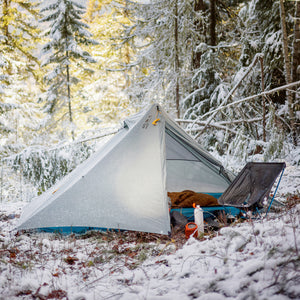
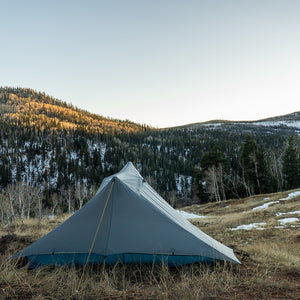
[00:16:34] Christine: since then I have upgraded to like an ultralight down quilt and a super light, Nemo tent and I love those things. But I think there is a line, right? There's a line between the Nemo tent, which is what one pound 11 ounces. It's still fully sealed. It still has a rainfly and a floor. And then there's like real Ultra Lite. Where, like, I ran into a guy on the Wonderland Trail who
[00:17:02] Christine: was sleeping under a staked out. Poncho And like mad respect for that but I don't want to sleep with bugs. Like there's a line, right? There's a line between the comfort of what you're willing to carry versus the comfort of what you're willing to go with out. And And I think there's a lot of people who may be with the ultralight who aren't in that extreme of a camp. But yeah I
[00:17:27] Christine: have I have some like bare minimums which is that my tent will be zipped closed, I will be fully and close and that guy I guess the joke I was making when I was telling that story was the guy said, oh I really liked to wear tall socks because then if I get something dirty or wet I could use the top of my socks as a towel. And Coming from a guy
[00:17:50] Christine: who was not hearing long pants at all, like he was wearing shorts a button down. Socks like that was just all out.
[00:18:01] Joe: Hey guys, I the way that we usually set up our stuff here is like with food and everything or packs, usually around like 18 pounds 18, 20 pounds depending on how like luxurious. You want your trip to be? I do my boss, will, like, cut the tooth, the toothbrush in half. Yeah. And he has all of his like all of his medications in a baggie, like its got like ibuprofen and whatever
[00:18:28] Joe: else he's taking, you
[00:18:29] Christine: just have to know what they are
[00:18:30] Joe: and know and he has a sticky note. That is a guide. That says. What he Brown pink.
[00:18:41] Joe: Exactly. So there's a bit of that here, but no, I think the, the stuff that we make here is, is pretty high quality stuff, but the idea is that you have one good piece that you can use over and over again and it's totally damaged over time basically. But yeah, I was kind of fun to read.
[00:19:02] Christine: Not a criticism about your life at all, just know. It's just people saying you know, and the same guy was like I love eating cold oatmeal and I was like, you are a liar.
[00:19:14] Joe: I've been no. See, they'll take the toaks titanium, like, pot things are really, they're really lightweight. I've been the guy at the office to just takes I've because if we, we do like a single night overnighter yeah.
[00:19:26] Joe: All the time. And I've been doing low carb for like five years, something like that. The whole time
[00:19:33] Joe: I legitimately have just brought a summer sausage up. For like one night, it was just like that was gonna be my dinner was just a piece of summer sausage. I made fun of constantly for that for
[00:19:44] Christine: like you can go without a lot of things on a one night like on a one night. You're like I'll just eat a bunch before I go.
[00:19:50] Joe: Yeah, take a snack. Don't need a break much stuff. Yeah. Like I just want they like so oh you need all this electrolytes. You need all the stuff so they're seeing they, they still want some. Some Comforts, they're not willing to deal with the singular singular, piece of food, but yeah, everything here is like is very is very ultra light. And I I mean I was not an ultralight hiker. When I
[00:20:16] Joe: got this job I was just like a really good and I started like using their stuff like oh this is great.
[00:20:21] Christine: Yeah. Well one of my friends who I had to Colorado trail with was saying like man I wish I just need somebody who had a full Ultra like kit that I could borrow for like a two-day and see like how different that experience. She's a notorious over Packer her pack is always like Bulging and things are like, sticking out the top. So she was like if I could just borrow somebody's and
[00:20:42] Christine: then I would know like could I hack it as an ultra lighter? You know
[00:20:45] Joe: do I actually need right?
[00:20:48] Joe: And you don't know that if you're packing your fears, I guess. Totally.
[00:20:51] Joe: Yeah, all the time.
[00:20:52] Christine: And the more, the more I've backpacked the more Trails I've done like the smaller my pack gets even without upgrading
[00:21:00] Joe: Yeah, so tell me about the Colorado Trail experience. I didn't know about this before we started the phone call.
[00:21:07] Christine: Yeah, so I hiked the Colorado trail from Durango to Denver in August, we started August 10th and I finished September 19th last year and I have to say, I thought I was gonna write a book about the Colorado Trail. And then I went out there and it was awesome. And I had the best time ever and the weather was perfect and nothing bad ever happened. There's no
[00:21:27] Christine: conflict and I was like, nobody's gonna read a book about this. So now I'm having to kind of rework my book concept for the next thing I'm writing. But my biggest takeaway from the Colorado. Trail was like, dude, go Northbound. Everybody goes southbound. The book is written. Southbound the rules. All say you have to go southbound. Don't do it. Go north. It was so much better than
[00:21:50] Joe: what does that change. Is someone who I don't know, like hardly anything about that trail. So
[00:21:55] Christine: yeah, there's a few reasons that I could gather of why people go southbound and one of them is if you're coming from out of state you're flying into Denver and then you can just get directly on the trail and then you figure out logistics to get back to the airport from Durango that's like a later problem. Um, that's one of the reasons and the other one is that the elevation. Like if
[00:22:15] Christine: you start in Durango you're at 12,000 feet pretty quickly like, within two days but if you start in Denver, it sort of like, more gradually takes you. You don't get to 12,000 feet until like a week in maybe. And so I think a lot of people for acclimation purposes, like, think starting from Denver would be better, but I still saw so many people this past year. Get off Trail for acclamation, like,
[00:22:39] Christine: for elevation reasons, even starting from Denver. So I think really you shouldn't be counting on the trail to activate like you should get to Denver a week or early hang out and done her then go to Durango then start and Durango and go that way. And we did my friend came from Boston and she flew out State at my place for a week. And then we went and camped in Nederland, which
[00:22:59] Christine: is at 11,000 feet. So we slept at 11,000 feet, came back to Denver, then went to Durango and started and we didn't have any problems with elevation.
[00:23:07] Joe: I moved to Vail and Avail is a thousand 300, or something like that. It's not even like that. Bad. As far as Colorado is concerned, I Was winded. For about two months. Two, three months. like everywhere I wait if I if I was going upstairs I was like And I was in the best shape I'd ever been in my entire life, which isn't that great, but it's still the best shape I've
[00:23:35] Joe: ever been in. And then like but like Veil like destroyed me for like a few months. I can't even imagine coming from Boston to that.
[00:23:46] Christine: Yeah, and well, she had come to visit me a few years ago and we just went on a hike in Waterton Canyon, which is the Denver and of the Colorado Trail. And it's flat like you're walking on a flat dirt road for six miles and we walked maybe half a mile and she was like I'm really nauseous. I don't feel good, can we? So I was so when we decided we were
[00:24:05] Christine: going to do the Colorado Trail, I was like, okay, we have to have like an acclamation plan for you when you get here
[00:24:09] Joe: for it. I had a guy on this podcast a few weeks ago, who was getting ready for Mount, Kilimanjaro, and he, and he lives in. I want to say, Kentucky. Okay, you would actually go around, he got like the equipment for it. He got like the mask thing, like the oxides, like the oxygen deprivation thing and you would walk around his town wearing this crazy mess. It was pretty funny story about
[00:24:36] Joe: it but I I didn't even know that was possible until I talked like wow could have been prepping for, I've had problems that I had high elevation outside of just Veil and so I've always been thinking about like okay, how can I You know, and I live in Utah which like it's high but it's not like super high. Like you're looking at like, people live between like 4400 and 6000 feet elevation.
[00:25:01] Christine: Yeah, that's like Denver.
[00:25:03] Joe: Yeah, it's, it's okay. But there's still like, once you're up, once you're up there and they ate to 12 range, it's It doesn't matter anymore. It hurts.
[00:25:14] Christine: Yeah. When people I think don't realize how elevation will affect you, which I think is why it's such a problem on the Colorado Trail people coming into Denver and just starting to hike a mediately because, you know, six seven thousand feet will affect you. If you're coming from sea level and I see all the time in Colorado like hiking. 14 years, crazy, people like out there just like, oh, we just threw
[00:25:36] Christine: it from Michigan and we're like, going over this height and I was like, Please don't die.
[00:25:42] Joe: Are you still? Are you still a slow hiker?
[00:25:42] Christine: Yes,
[00:25:45] Christine: absolutely self self-described. Slow hiker and the book. Yes.
[00:25:51] Christine: Yes.
[00:25:51] Joe: Yeah, even though I saw on your blog, you picked up running since Right? I
[00:25:56] Christine: have picked up running. I was running before the Wonderland Trail, not as much as I am now, but I kind of after the 80 I started running because I was like I have to move my body and I don't have time to hide 10 hours a day so I need to figure out a way to like be active. And so I started running and I will say that running had a huge
[00:26:16] Christine: impact on my hiking. So, if you're a hiker, who like, has a hard time breathing and like fast heart rate and stuff like that, like running really can be super helpful. Um, but I know running sound like a fun thing for most people. It's not a fun thing for me. Either. Let me just like put that out there. The funny thing about the book is that actually as I was publishing it,
[00:26:37] Christine: I got a diagnosis which sort of explained a lot of my difficulty with hiking. I have a form of dysautonomia called pots which is short for postural orthostatic tachycardia syndrome. And essentially, it causes your heart rate to go crazy. Like, when you do things like stand up and walk, so the things I'm describing in the book are like just my heart is pounding and my lungs are struggling and I'm breathing really
[00:27:06] Christine: hard and I'm sweating and I'm gross and all these things which you know, lots and lots of people have reached out to me and like, yes, me too preach. So I don't want to like, take away from that because I think a lot of us are just struggling and that's totally fine or not even that we're struggling. But we see other people who it seemed so easy for. And we're like, why?
[00:27:25] Christine: Does this feel so hard and that internal struggle and self-doubt is like a huge part of the book? And a huge part of my personal story and something that I think a lot of people relate to, and I think one of the biggest things I've taken away from backpacking as a rule is just like, you don't have to be good at something to do it. And I think that's something people have
[00:27:45] Christine: really like appreciated from the story.
[00:27:47] Joe: Well, in most people can walk. So hiking's just a little bit, you know, it's a little bit
[00:27:52] Christine: totally. Yeah. Hiking is a very it's a very accessible thing to do but I think so we see so many examples of like what a hiker should look like or what a hiker should be able to do and that discourages a lot of people from trying,
[00:28:05] Joe: hmm. yeah, I I Does that? does running help with the What if what was it called to get pots?
[00:28:17] Christine: Oh yeah. Um, yeah, yeah actually. So I was training for a 50k when I got diagnosed and I went to the doctor and I explained to her like what, my physical body felt like when I was doing hard things and she immediately, what the problem was? She said, oh, you have thoughts. So my diagnosis was surprisingly easy, considering this is something that's like, wildly underdiagnosed, but then I was showing her my
[00:28:42] Christine: heart rate charts from my Garmin watch, and I was like, this is me running 20 miles in the heart rates like 180 the whole time and she was like, uh, people with pots, don't really brought something. I was like, oh, I do like this is, that's what it looks like. And she says, that's what it would look like if someone with pots for 20 miles, but I've just never seen somebody do
[00:29:02] Christine: that. So it's really just like I I learned to suffer. It for a long periods of time with my heart rate 180. But yeah, it does but then she's like, you should definitely keep doing that, because if you've learned how to tolerate your body feeling that way, then like it's great for you to be active.
[00:29:20] Joe: Oh wow, I did not know that was a thing. That that sounds like I don't know like I've I've I used to be really fit like really big Like really big like 300 pounds. I used to be here and slowly gotten better and better shape over like six years. And my heart rate stuff. Like at the beginning, like hiking was really hard and now hiking's not very hard. There's always been kind
[00:29:48] Joe: of a gradual thing. So when you were talking about like you know, you did 600 miles 600 plus miles of the 80 and you're still hiking, you know, slow and you're still have a difficulty of like how So that all that, all that does line up. Yeah,
[00:30:03] Christine: totally. It's for lots of people like you can go out on a trail like the AT&T and be pretty out of shape. And by the time you hiked several hundred miles like your body has gotten used to it and
[00:30:14] Joe: imagine after a couple weeks your body will kind of get used to it. Yeah. People get their
[00:30:18] Christine: people, get their trailer legs. And one of the hardest things for me on the at was looking around and being like, what are these trailers? It was just, you know, and and over the course of many years of backpacking and running and trying to quote get in shape, my body didn't really get better at doing things. My mind got better at tolerating what my body felt like
[00:30:41] Joe: Wow, there you go. There you go, guys.
[00:30:46] Christine: Do hard things, do hard just and just eventually accept that? It's gonna be hard forever. Be a
[00:30:51] Joe: hard things, it ran rim to rim at the Grand. Canyon, so that to be part of a support team of people doing rim to rim to rim, Do you have any Grand? Canyon specific advice?
[00:31:07] Christine: Oh, read death in the Grand. Canyon I read it right before I went and it was like you will die of exposure. Do not separate from the person you are with, like, here all the things that can kill you. And honestly, like,
[00:31:25] Joe: is that like, what is that? Is that a pamphlet? Is that like a published? It's okay.
[00:31:29] Christine: Um, oh gosh, I don't have it here. Oh, most of the national parks. Have a death in National Park book where they essentially, like, it's a chronology of everyone who's ever died in the park and how they died. And there's a little bit of like, don't do this, because this is stupid. And that's how these people died, but it's really informative and I found death in Grand Canyon, like a strange Comfort
[00:31:53] Christine: before I went and ran. The other thing I would say is just like remember it's supposed to be fun. Especially when it really sucks. And also don't be surprised if you get stuck behind like a Mule Train or we got halted, probably five miles from the Finish. Because somebody had fallen off of mule and a helicopter was coming to get them and so they had like blocked the trail while the helicopter
[00:32:20] Christine: came in. And so we ended up standing there for about, well, sitting on the trip for like 45 minutes and honestly, at that point I needed a break so it was great for me, but there were other people who were doing room term to him who were kind of like bent about having to stand there and wait. So just like be prepared, mentally that, that could happen
[00:32:38] Joe: be prepared. Yeah, wow. Okay. Well you're not riding a book on the Colorado Trail, you know what you're doing next.
[00:32:47] Christine: Um, I'm still going to probably tell some Colorado Trail stories but I'm I'm working on a second book. That is also a memoir, a little bit more about being an outdoorsy person and doing things like, hiking and running and rock climbing and talking about identity and when you get to call yourself from Runner and when you get to call yourself a rock, climber and a Backpacker and how we relate to these
[00:33:14] Christine: ideas, Of who we are and when we're quote allowed to claim things as our identity. Which I know is something a lot of people struggle with
[00:33:25] Joe: okay, shooting off the hips, don't give him away. What your thesis would be, I guess. No, I am asking for that. when would you call yourself a Hiker.
[00:33:40] Christine: Um, there's not really an objective answer to that question. I think it's like if you do the thing, you do the thing, right? I know a lot of people have qualms about specifically, the term through hiker. You don't get to call yourself through hiker until you've completed through hike in a lot of people's minds. And then there's like the whole purity of the hike, and all of these other things that people
[00:34:04] Christine: like to get irate about. But I think a lot of those things are about mindset and it's about what you're setting out to do. And, and how you see yourself in that world and I hiked 650 miles of the at and that is not a full, a complete through hike. But I mean, I would have called myself through hiker. I mean, essentially as soon as I stepped on Trails, like, alright, I'm
[00:34:28] Christine: here, I'm here to through hike. I'm walking, I'm carrying this stuff. Like I am literally in the act of through hiking like, why not call yourself with your hiker then
[00:34:38] Joe: Yeah, and at the very least, you say, you threw hacked a section of it. Like, even though that's like, section whatever section hike, I don't know how many states you went. Yeah, 650 miles.
[00:34:49] Christine: yeah, I just feel like there's a really like exclusionary idea around a lot of different sports and whether you get to call yourself a participant in this and I just want to like, That
[00:35:00] Joe: is not a bit, there is an interesting thing. So, part of my background, I'm a meteor guy. Like, I like to backpack, it's always a part of my life and I got this job partially because it was like, oh, he's a filmmaker And he does this, we need guys who can make commercials and make podcasts and stuff like that. So, I got this job based on a whole bunch of different things.
[00:35:21] Joe: As a filmmaker. like, You do have to start yelling at your friends who are, who, let's say graduated film school and having written anything. They haven't made any short films, haven't done anything and you go, what does a filmmaker do? And you go, the yell at him, they go they make films. What does a writer do they write? And if you don't write you're not right or Doesn't mean you have written
[00:35:48] Joe: a book. It means that you write it is like an the active of it. Like, the verb totally
[00:35:54] Joe: is, is part of who you are, if you're going to call yourself a writer or, yeah. So
[00:36:00] Joe: I have had those types of discussions before. Just not about hiking, not about the doors but
[00:36:06] Christine: Yeah one I think there's two this idea. Like okay, I was a through hiker. Once I did that back then and like am I still a through hiker? Do I still call myself that? How often do I have to like renew my through hiker card to like get to keep calling myself. That and same thing goes with running, right? And and I think sometimes we get really attached to these identities that
[00:36:28] Christine: we have like gone through a lot of effort to get. Right. Like I I went out and I did all of these things so that I could call myself a runner. And now it's like is running even still that important to me. Am I still doing this? Because I still want this Identity or like, what's what's the motivation behind things? And like, I don't know. I just feel like there's a lot
[00:36:48] Christine: of questions to be asked in that realm, and when I bring it up with other outdoorsy, people I think it's something. A lot of us are maybe not consciously thinking about but definitely experiencing
[00:36:48] Joe: Oh yeah, that's a cool subject. At that is making me think a little bit. so don't worry this book will hurt you all, so Where can people go and purchase a loan in Wonderland?
[00:36:48] Christine: Um it is available at
[00:37:16] Christine: a loan in wonderland.com. My personal website you can get assigned copy there with like a special edition little postcard set if you want to just get the book from your local bookstore, you can do that. They can get it for you, if they're not already carrying it. It's available. All of the usual online places and it will soon be available in ebook format, but I don't have a date for that yet.
[00:37:38] Joe: Perfect. Thank you. Christine for coming on to the show. I really appreciate you taking your time and I thought this book was fantastic. Thank you for riding this book.
[00:37:50] Christine: Awesome. Thank you so much and anybody can come hang out and chat with me on Instagram at Rugged. Outdoorsman
[00:37:56] Joe: Hey guys. Remember to feel free to send us your comments. Questions about backpacking. Cool. Outdoor stories or ideas for future episode topics and if we think it'll bring value to the our audience, we will read it on the show. You can send those by commenting on our Live Ultralight podcast, YouTube channel, and please subscribe. By the way to that Channel, or you can send us an email at Live Ultralight podcast at
[00:38:19] Joe: gmail.com. We did have a new iTunes review from wheeler. On April 4th. They say great and it's five stars, Great Entertaining and informative podcast. Thank you wheeler for your kind review. Remember guys, if you leave a a nice review for us on iTunes, we will read that out loud on the show, please be sure to subscribe, wherever you get your podcasts, iTunes Spotify, YouTube, wherever and I want to thank again, Christine,
[00:38:58] Joe: for coming on to the show. I do think the book is an excellent read, and I hope That you guys at home will go check it out. There will be a link in the description to her website, where you can purchase the book have a good week guys.