[00:00:00] Joe: Welcome everyone to the Live Ultralight podcast, powered by Outdoor Vitals. This podcast is about inspiring you to get Outdoors. Showing you how to lighten your pack and build your confidence that you can start living your life full of Adventure. I am Joe and I am joined here. By. Jason. And Brigham, right? And today we're gonna be talking about their recent trip up. Mount Delano or near amount Delano, I guess.
[00:00:26] Tayson: The area, the area.
[00:00:29] Joe: Yeah, up in touch your mountains, which is a nearby high elevation high elevation mountain range. And Lessons Learned and all that. If you want to see the video that we made, that'll be on the Outdoor Vitals YouTube channel. You can go check that out, but we're gonna go more in depth, I guess in this and this podcast here. So first, tell me what was the initial goal for the trip?
[00:00:54] Tayson: Yeah, I think it was back in December, after a did a trip, I kind of got into my mind that I want to do another trip like it. sort of looking at some options and Alana kind of got singled out as the best option because we're just looking for something that was Born the intense side for winter Delano is an interesting peek. It is one of the tallest mountain ranges. I guess
[00:01:17] Tayson: you could say. It's the third tallest mountain range in Utah. It's definitely the tallest range in the near proximity to us. When it's funny is I've been on the mountain a lot but I've never actually hiked Delano Peak. I've been on like the Peaks that don't have Trails on them all around. There we fast packed by it multiple times of hiked in there of camp. I'm growing up with my family, a
[00:01:37] Tayson: lot never hiked it and so, and part of that is just because the trail is It's not it's you can do it like from from where you can drive your car to to get up there. It's just not a massive day long type of event and so usually I looking for bigger trips or bigger activities and so the idea came to me like well what if we did it in the winter,
[00:01:57] Tayson: like that would be Way different, as I researched it and I found one guy that had done it. So it was doable, essentially, the written about it. And and just thought, man, that would be a really epic thing. It would push us, we get to test some of our gear that we were wanting a test at a different level. But yeah, I mean, sometimes just fun to planting things that are more
[00:02:20] Tayson: on the extreme side or push your limits or Comfort levels because you always get the best R&D out of it. You'll learn the most out of those experiences. And so, kind of pitched at the Brigham and He took the bait and we put it in the calendar. So,
[00:02:37] Joe: I remember it just being that summoning the peak in snowshoes would be kind of and it'd probably be cold, would kind of be the difficult part of it. But I do remember a couple days before the actual hike that the weather at the weather forecast, has changed quite a bit. You want to talk about that?
[00:02:37] Tayson: Yeah,
[00:02:56] Tayson: yeah. So I mean It's been a minute, so I'm pretty sure it was. Six and a half miles to the Peak from the car.
[00:03:07] Joe: Or was it was, it was
[00:03:08] Tayson: a turn and then another mile and a half up. Seven and a half.
[00:03:11] Brigham: Yeah, it was like four. Then we think it was like or around. Why? Where we would camp? And then another two and a half to the top.
[00:03:22] Tayson: Yeah. So just call it roughly seven miles all the way to the peak but there's a lot of elevation climbing.
[00:03:28] Joe: I want to say about
[00:03:30] Tayson: 3500 feet or something like that. Yeah, so
[00:03:32] Brigham: this the thing about doing like winter winter backpacking, in like the Rocky Mountain West area is In the summertime. What is an area that has lots of four Service Roads and Pretty well-maintained. Dirt roads can take you like all over the place. So this hike in the summertime is like Nothing to bat an eye at. It's very, very mild because can drive so high. It's not like a not like that much
[00:04:06] Brigham: of an undertaking. to, but when it comes winter, all those roads are now totally inaccessible. And so it almost like expands a roadless area to really the only Road you're driving on is the paved Highway. And then once you're off there, you're really What you would call Backcountry it quickly because there's no roads. And so where the route that we had was going to basically start at the pave Highway wherever we
[00:04:40] Brigham: could park and we would just walk up what would normally be a road? But it would be buried in snow. And so that actually creates a significant challenge for snow travel because we're now starting at like, 8500 and feet elevation and the top of the mountains, like, over 12,000 feet. So that's where it became. A lot more significant of an undertaking, more challenging versus this easy. One to two hour Day, hike in the summer. And
[00:05:12] Brigham: then So, as that planning began, that's where watching the weather really came in and we were watching the weather for weeks. and anything past, like a 10 or 12 day, forecast, is pretty, pretty worthless, but it was interesting that when we got to, about 10 days away there was like, Amazing weather. Everywhere everywhere, except the day that we wanted to hike in and it just never changed it. Just always shows snow.
[00:05:41] Brigham: And then And sure enough it it's no right
[00:05:47] Joe: no and then really cold temperatures. Yeah.
[00:05:51] Tayson: Yeah, we live in an area where the wind blows from the north, it just can swing the temperature drastically from the south it's it's quite warming. I was talking to guys ran the senior entire man and he's like I got heat stroke. It was like 90 degree temperatures. I got heat stroke during the Iron Man. Went back to my hotel, slept that night got the next morning, it was snowing. And that
[00:06:11] Tayson: I mean that's what can happen around here. So that's that is like, essentially what happened is it just it just came in this cold front. This this storm hit that kind of Brigham said. I think that is one of the coolest Parts about winter backpacking is Oh yeah, I mean you can erode that typically wouldn't be back country is instantly back countries as soon. As the ground. And it's yeah, just a
[00:06:38] Tayson: completely changes everything with and it's cool because when you get out there, it's like, yeah, I've been here in the summer but you come here in the winter and it's just a totally different experience, you know,
[00:06:46] Brigham: we didn't see a single person other than Where we parked? Like, just meaning cars driving on the
[00:06:55] Tayson: oil. Yeah. So what people would
[00:06:57] Joe: no one else wants to climb that thing in the middle of winter in the
[00:07:00] Joe: middle of a snowstorm.
[00:07:03] Tayson: Yeah, it would have helped if we had the ability to shift that maybe we would have caught like, Tracks or something. As it stood it was it got rid of fast. So
[00:07:16] Joe: Tell us about that. Give us the Tell us what happened from going out to the truck to Camp?
[00:07:16] Brigham: Well,
[00:07:23] Brigham: wish, I mean, we should talk about like the plan. What we thought was, okay, mode of travel and transportation. So like there's You know, we've done as a company, some like cross-country or Nordic ski trips, that's very flat up to mild up and down, terrain. Like that's all the equipment that we have that we have access to and Experience with like that's what we we've done. I've had I've been snowshoeing for
[00:07:53] Brigham: decades which is like very inefficient way of traveling on snow versus cross-country skis but when it comes to Incline and having to climb, I don't have what's called like a an Alpine touring setup which is basically nice floating downhill skis. That have a special finding that you can free your heel so you're heel can lift off the skis and you put what's called skins on the bottom, those provide grips. So you
[00:08:22] Brigham: can walk up a mountain with skis on and not slide backwards. we don't have that, I don't have that, I've never done it so we're just trying to find a way to do this route and that meant for us, most likely snowshoes because the Cross Country Skis have a tiny bit of grip but at the grade that we're going up this route like they wouldn't have worked so no knowing that and
[00:08:46] Brigham: like doing some some Maple checking out the route and the topography A pretty gradual approach that would be totally doable on snowshoes. And Snowmobilers. Do take that trail. but there's just not a lot of snowmobilers around here and so, The thinking was that on snowshoes on top of a snowmobile track going is actually quite easy. You're not gliding long like you would be on skis, but in terms of effort and time
[00:09:18] Brigham: you could probably almost maintain a close to a normal hiking pace. So that's what we're trying to do. That's what we plan on is snowshoes. Probably having some snowmobile tracks to go on. If anything else, it hasn't snowed for weeks be hard. And that means that the snow is settled, it's not fresh powder. And so the amount of sinking that inevitably happens on snowshoes is very minimal. But as the weather made
[00:09:47] Brigham: up it's mine that changed things for us.
[00:09:49] Tayson: Yeah. So we were planting to go all the way in and go hiked along and it would have been would have been brutal, but at the same time it was totally doable. So I mean, we had our kids packed, we had our snow set ups which you know, at least me and bring him with down a bit. If you guys in the office on quite a bit, we've got a pretty dialed
[00:10:08] Tayson: where we've got really light setups that are still super adequate for going below, zero degrees Fahrenheit. And so we got there and and basically took off on the trail, and Like I say, on the way up, we're kind of driving up the canyon and it's actively snowing and we're like holy cow and it's supposed to snow a little bit and then like stop in the afternoon and so like maybe we'll get
[00:10:32] Tayson: some sunshine in the afternoon. That'll help a little bit. But yeah, it was like a lot of question marks going through. I think the first thing Brigham said as we left the offices, Just want to make sure that you're heads in the right place. There's a good chance. This is gonna be impossible. Like like there are 18 inches of recorded snow and still snowing.
[00:10:51] Brigham: Yes. So the in Utah, there's Skew talk.com has a snow reports. So every ski resort every morning at like 5 a.m. lists their their overnight snowfall their 24 hour and their 40-hour fall. And so Yeah, they where we were going had received like 21 inches of new snow in 24 hours. What that means here is that snow that you're going to sink straight through snowshoes are not something that's gonna prevent that.
[00:11:22] Brigham: So 21 inches of new snow and 24 hours means that that's 21 inches of powder that you're
[00:11:29] Tayson: sinking in. So, yeah, so it was, we knew going into it, you know, pulling up in the truck, it's still snowing that it was gonna be pretty gnarly and Kind of are getting our gear on Chase. The mouse off my truck that instantly showed up. It was weird.
[00:11:45] Brigham: That was the weirdest thing
[00:11:46] Tayson: so yeah I like get out of the truck, I walk around the back, look at it. Walk back to the front of the truck turn around and there's a mouse standing on like the snowbank looking right at me. And I'm like, My truck and he starts walking towards my truck like no.
[00:11:59] Tayson: So I've chased that guy off. Yeah. We start off the trail and the first it was like Oh, this is hard, but it's not bad, you know? And we're cruising along and I'm like, take a little video of like the snow. It acted like sand like here in Utah. It's just so dry and fine and stuff that It's like you're walking in sand almost more than anything else. I would say that
[00:12:21] Tayson: like if there's 10 inches of snow in that condition you fall through 75, 80% of it. Like that's only the last 20% really packs underneath you and so I'm taking videos of Brigham walking in his feet and the snow is just like falling around. I'm just like sand and it wasn't too bad. We're like, okay, this is what it is, but we keep Truckin up this Trail. and I keep like checking
[00:12:44] Tayson: my watch and I'm like, far, you know, you keep watching the time and you're like, I think we're going slower than like one mile an hour and just keep going. And so we basically trudge along for about two hours and I say, we gotta stop and eat a little bit and just Because we're not, it's not like we're lollygagging, like we are one of us is cutting Trail. So one of us
[00:13:06] Tayson: is kind of packing down while the other ones going behind him and that helped quite a lot. But we would take turns and switch every 10 minutes to help break the trail. Yeah, we get into hours and and Have a little bit of food and we're just kind of reassessing. It's like, man, we're this is taking Forever. And See that the fat was building. We weren't exhausted or anything that point. But
[00:13:28] Tayson: like you could tell it was building. And and so then we kind of keep going knowing that like I don't know where we're going to get to. Hopefully, we could get up to an area. We call Big John's flat, which was still about a mile or a mile and a half from where we were hoping to be. And which doesn't sound like a lot, right? Like I mean. a lot of us
[00:13:46] Tayson: that are, like Runners and stuff, you'll Crank that out like 15 minutes, you know, or something. So. But in this conditions and it happens so subtly that we're going along it's just getting harder and harder soon enough. I'm like all right, let's switch every five minutes. I can't keep breaking control for 10 minutes straight. So now we're switching every five minutes and we're going and I just start realizing like hey that's
[00:14:06] Tayson: snow. You know, was like halfway up my calf. And then it was like towards my knee. And now every step is going above my knee and at the same time, I'm realizing just how fatigued diamete in, like, your hip flexor. So that muscle. That's like, trying to pull your leg up, right? Because it's like, you're, it's like, you're doing the worst stair, climbers, ever. Like, you've got weight on your feet from
[00:14:30] Tayson: snow and snowshoes and you're trying to pick it, clear up high, set it back down, pick up the next foot. And so it became exhausting To try to move your feet. And in those hip flexors, we're just just fried like they just couldn't. So then I have to start like catapulting. My leg forward with my calf, like trying to like explode my calf to get a little bit of momentum and swing
[00:14:50] Tayson: my whole body to like, get my leg to go forward. And I want to these times when Brigham was breaking Trail. We've got like done with the five minutes. I looked backwards, I say, Do you think we even covered 200 yards in that last five minutes of
[00:15:03] Joe: exertion? You know, and that's for as far as we could go. That was that was kind of
[00:15:10] Tayson: a cap. Yeah. And so, We were kind of doubting whether we'd even done the right thing to get to try to push the Big John's. But yeah, eventually we did and I think it was nearly right out about five hours of just trudging up this Broad right? What would take you literally an hour in? Summer conditions. At the most. And it took us five hours of like sweating working, pushing a little,
[00:15:43] Tayson: little to no smiling. Nothing. Me I think me and bring them like can lock it in but like man, I don't know that anyone else would have been very happy to be there that day. I mean, it was
[00:15:54] Brigham: I mean, there's no other way. No other way to describe it. Is, that was just A cool labor. I mean, Functionally like mechanic, how it works? How what it looks like is You know, your, your your sinking below above the knee, and you're wearing a snowshoe that's 20 inches long or something like that. And so, as you're taking every step, you're not your snow shoe, you're not lifting your snow shoe out
[00:16:23] Brigham: and above the snow and planting it down like it's That. I mean, you would burn out and 10 minutes, if you try to do that and like, just physically, I don't even know if it's possible. So really you're you're lifting your your foot and snow shoe as high as you really can and then pushing it forward through snow. So you're not like going coming down on top of the snow, every step.
[00:16:52] Brigham: Free of all. Wait, no, you're basically dragging your snowshoes. Up a little bit as much as you can and then pushing it through. A wall of snow every step. So it's kind of like, if you were to be walking like, What's that guy on? The Ebenezer Scrooge's, Bob Marley or morally changed the guy that goes with the chains around his ankles and the heavy ball. Like that's probably a lot. What it's
[00:17:19] Brigham: like is you just can't lift your feet that high and you can't move them forward freely. So it was, I mean, it was just five hours of
[00:17:27] Joe: physical work. And you guys didn't make it to the camp, right?
[00:17:32] Tayson: We didn't we didn't make it to our plant Camp plan, know we Made it. About a mile from there. We stopped at big John's flat and Basically, by that point in time typically when we're on snow trips. It's it's a timing thing. Meaning if you don't get to Camp by certain time, You're right, you start to, I don't know, I'll call the danger zone but like, it's just the, it's definitely, no
[00:17:56] Tayson: fun zone for sure. Which is, if you don't get your camp set up before, there's always like a late night, wind that picks up is seems like And and then also like the temperatures just start dropping at a certain time and so if you don't have your shelter up, you know, if you have your sleep system may be set up, or with us we're using hot tents, you know, you don't have
[00:18:13] Tayson: your stove built. All those things become exponentially harder, it becomes exponentially, Less Fun, and more miserable. And so basically, by the time we got their time was up like we'd pushed as far as we could possibly go before. It was like, we need to start working on getting shelter set up. We got there and just started packing in areas where we could set our shelters up, which, which honestly, I was pushing
[00:18:37] Tayson: pretty hard to get there. Because at least, once we got there, we had more big and expansive views. It opens up a little bit into like, a meadow, and you can now you can see
[00:18:46] Joe: the peak. You know Forest. Yeah well and and when we were hiking
[00:18:51] Brigham: up, it was cloudy and socked in with clouds and snow the whole time. She was really, I mean it, you couldn't even hardly call it like a Scenic hike because you just couldn't see, you know what I mean. Yeah,
[00:19:02] Brigham: it was just flavor with not much of a view of anything other than wall of trees. It's great. It was just stopped. Yeah, the clouds broke and right, as we started
[00:19:13] Tayson: to break this, the closet supposed to break it like 3:00 in my time we got there was like five or something. In February. And so the clouds finally broke and it was like, really pretty kind of that moment of like, oh, this is not good. So that was, that was really enjoyable part of it. But yeah. Instantly just start getting to work. So, we started packing in areas where we could where
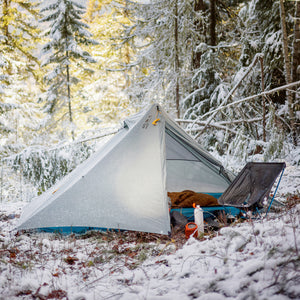
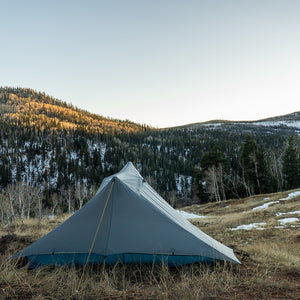
[00:19:34] Tayson: we could pitch our tents. We're using these floorless shelters that we could do hot tents in. So we each had basically, one person tent that have stoves in them. And now it's tough. I still would have liked to have been setting up, even 30 minutes earlier or more because it takes time. It really does the set these types of shelters up because, I mean, you pack in your snow for 20 minutes,
[00:19:57] Tayson: let's say so you've got a good solid base to set up and you set up a tent. This was my first time setting up this tent in the field. That's set up on my backyard. So it, you know, I'm kind of taking a little bit of extra time, figuring out how to tension it. The snow is so deep that you're going and finding four foot branches. Shoving them all the way down
[00:20:14] Tayson: on the snow and then tying your guidelines to those for anchor points. At least that's what I ended up doing is, you know, Stakes for or useless, and snow Stakes would have been all right, but that's Just extra weight to carry. So you're doing, there's more to it, you know than tip. quickly climbing in and so, You get that, you get the shelter set up and then for me, it was like,
[00:20:32] Tayson: all right, I'd like to get the stove set up. And by that point in time you're already cooling off, you're not working as hard physically. So your body core temperatures is going down. I usually, I stopped, you know, put on layers and stuff to try to keep warm thin. But you're also trying to like let as much of the moisture you filled up. Get off of you before you start layering up.
[00:20:53] Tayson: But yeah, by the time I build in my stove, it was still it was still icy cold. The overnight low was, it was projected to be like native 13 and negative 15 degrees Fahrenheit which is We probably know. I don't remember what it is now, but I still look it up like 20 volt, 22 below, you know, negative and Celsius or something like that. I want to say. But yeah, so really
[00:21:17] Tayson: cool temperatures and it was dropping fast, and so that was kind of sucky part. I hate building that stove. On your hands are frozen and you need dexterity like you're trying to put a washer nut on to like this all thread. You know, it just building something with the delicate parts of your fingers and well so cold that you you don't want them out of a glove. And yeah, keep in mind
[00:21:38] Tayson: you're trying to assemble something
[00:21:40] Brigham: made of a material that is like, has extremely high conductivity. So like so titanium so, one of the rules of cold weather or anything is avoid touching any metallic anything with your bare skin because it Metallic anything metal specially Alloys, like aluminum titanium copper. They can metal extremely fast, so they conduct tendency temperature.
[00:22:07] Brigham: So you know, so now you're trying to it's very cold. Your gloves off. That's this metal, this is just gonna zap the, you know, suck the heat right out of your fingers, but it does, but you have to have the dexterity to do it. So that's Always fun.
[00:22:23] Tayson: That's always the part to me. That's like the worst part that that's when you're like why couldn't we've been here just a few minutes earlier in the sun was still shining or
[00:22:30] Brigham: something. You know, that's where I mean it it tastes and I we talk about all the time like every time this happens. Just getting inside. That shelter is. It's like a night and day Improvement of just just where you can feel like basically there's no air movement, so it makes it manageable to take your clothes off to grow on some Wing nuts. Even though it's still freezing cold but like that's where
[00:22:55] Brigham: I don't know Asian
[00:22:56] Tayson: that the air is always circulating. People don't realize that I think that's why they get hydrated. They always get dehydrated a high elevation because they don't realize like Like, the air is always even what that doesn't feel like it's windy. It's windy. You know what I mean? Those high elevations and, and so they might be sweating. But it's evaporating off so fast because the air is always circulating. It's the same thing.
[00:23:16] Tayson: They're like, you climb in that shelter and you didn't even think it was windy but by just encompassing it so that you're out of any type of Breeze or movement, it feels like 10 degrees. Warmer. Yeah. Crazy. Yeah.
[00:23:27] Joe: So it actually I think we we tracked it. I got down a negative 15. And that's -26.11 Celsius, 26.
[00:23:37] Tayson: Okay. Yeah, it's cold. It's all it was my coldest like night that I'm aware of, you know, like we actually were watching temperatures out there for sure, but the good news is after the stove was built. Got back out of the
[00:23:52] Tayson: shelter, for me, at least started gathering firewood. And at this point it was getting dark enough that I had to get a headlamp out but moving around and getting the wood and stuff kind of heated. My my body temperature back up and I was like, so really I only had I would say like 30 minutes ish of like, being really cold and then From then on, I was moving working. I went pretty well. Was
[00:24:17] Joe: there still a hope to get up the mountain? Know. Okay like at that point so it was just go up there. Can't go back. Yeah
[00:24:26] Joe: yeah at that point it.
[00:24:27] Tayson: Well and then the second thing was is like, if it had been 15% easier, 20% easier. And we could have got to that base camp, looking at the face the next morning which we'd already decided at that point. Like this isn't happening, right? But looking at the face next morning, the wind blows so much up there that it blows a lot of the snow off of the Peep so it probably wasn't
[00:24:49] Tayson: that deep if you could have even gotten to the peak efficiently. But I mean we talked about this like it. That was just the worst possible timing like there was no tracks on there the snow hadn't packing it all so we just had everything working against this too to move through that type of train. But yeah, I was so. So we've got kind of giving up Hope on that, it was more.
[00:25:09] Tayson: So all right, let's survive the night. and, Figure out what's new in the morning.
[00:25:14] Joe: Z-man had a comment here.
[00:25:17] Tayson: Yeah. From on the video itself that we that we made
[00:25:21] Joe: cross country, season would have been much better than switched to snow shoes when needed. I
[00:25:27] Joe: don't use, I have used goggles with light colored lenses. You guys should have used four seasons for the love of God. What were you thinking?
[00:25:37] Brigham: Listen to the podcast. So, cross-country skis, we already covered that. They wouldn't really have worked.
[00:25:46] Tayson: They wouldn't have worked for the last mile and a half two miles to the peak.
[00:25:49] Joe: Well, he said bring Hebrews these same. Bring both, right.
[00:25:52] Joe: Well, you use snowshoes when needed Any option?
[00:25:52] Tayson: Yeah, I don't. I mean, I might not know where an ultra like company.
[00:26:00] Brigham: Yeah, we don't know. Yeah, I mean choices, everybody makes choices. We chose to Take some shoes and not carry an extra few pounds of weight in our pack.
[00:26:14] Tayson: There's a chance like bring him has Nordic skis. I don't there's a good chance. I might look more seriously. Like let's black diamond ones for next year for different events. But yeah, for this one it was like we knew that the train was steep enough and aggressive enough that we'd be and that Snow shoes was. As far as the other
[00:26:34] Joe: thing you said Four Season 10, Four Season 10. Yeah.
[00:26:42] Tayson: I will say this, I would Well. Shouldn't be using like a gas stove inside of a tent, right? That's like a No-No but seen it here this for me but in a lighter faster trip, where I know I'm like gonna be setting up and moving tents a lot and stuff like that. Like It takes, it takes a significant amount of time. I guess to put up those wood, burning stoves and shelters.
[00:27:07] Tayson: Maybe I can get a little bit faster at it but sometimes I'm like bin. Depending on a scenario might not be
[00:27:14] Joe: worth. How big is this stove thing? How big is it? Brigham's is a little bit smaller than you
[00:27:19] Brigham: were to take my laptop and add Make it up, two more size to it. Okay, that's
[00:27:24] Tayson: about That's about how big it is. You
[00:27:26] Joe: never want to have that thing pre-packed and just like hanging on the side of your face. No. Now,
[00:27:32] Tayson: they make them really amazing because they'll pack down to something like almost as thin as this
[00:27:36] Tayson: notebook. You know, bigger print. But I mean, it's crazy. Like I couldn't people, I think saw the one video that I did and saw that using a 45 liter backpack and have that in there. Like, I think they're its Mind-blowing that they can compress. That small can beat that light. It's titanium.
[00:27:55] Brigham: Take down, titanium wood, burning stove, that weighs two pounds. Maybe
[00:28:01] Tayson: It, they're impressive. So and and of the two pounds, like a good chunk of it is just the big chunks of all thread that they have, which is like all thread is just a big long rod with threading all the way up and down it. And those that's got to be like 30 to 40% of the total weight. It's like, man. If they could just make those in titanium, this thing would
[00:28:19] Tayson: shave off another half a pound so they're really impressive. But yeah, I don't know. Four season 10. I've honestly don't know that I've even ever owned one. I don't see a massive Advantage for my use case scenario. I mean, there's
[00:28:34] Brigham: again like there's it's Choice, there's pros and Four Season 10. I'm not it's not take four seasons because we feel like we chose this Superior option. We?
[00:28:52] Brigham: Chose an option that we know works for us that we've used in the past and that we have confidence in. And I also neither of us have a Force season 10. so, out of curiosity,
[00:29:07] Tayson: what? Would you ever have interest in a Force season 10 for any style of trip, or would you rather have like a wood burning stove setup?
[00:29:16] Brigham: Um, I would have interest in them. I think they have, I think they have a place. I mean, again, it's like it's choices. So Four Season tent. we would be able to just set up and then you've accepted that you're not taking a heat source. So now you're not taking the time. Freezing your fingers to try and set up a wood-burning stove and a fast. And you save up a ton of
[00:29:39] Brigham: the work that we had to do afterward of Acquiring all the wood and then breaking it down, which was a couple hours of work. So, yeah, I totally. There is there's an application in a trip like this, that sliver of the population will ever do for a Four Season dead, because you just set up on top of the snow, you've done.
[00:30:02] Joe: Um, coldest night you've ever slept in taste and I don't know about you.
[00:30:09] Brigham: What I was in Scouts, I lived in an area in Utah. That has the second coldest recorded temperatures in the lower 408 States. So where's that?
[00:30:19] Brigham: Call Peter sinks. So that's where I grew up in, like, as a young adolescent, Boy Scout like going in doing our winter camps there. And so Like I've had camps below, 20 degrees for sure, but keeping in mind, we would when we would do this, we would like take a snowmobile in and pull everything like, in a sled. So, you know, we had Giant. giant sleeping bags that weighed like, 15 20
[00:30:49] Brigham: pounds. Yeah. That were you know
[00:30:51] Brigham: just crazy crazy warm but yeah,
[00:30:56] Joe: And how did you guys sleep?
[00:31:00] Brigham: Just look pretty good. Yeah,
[00:31:01] Joe: I really. Yeah, I
[00:31:02] Tayson: was, I did, I did a layering system. with, I mean, I had my pad that I layered on a foam pad But then for my bag, I had a 15 degree sleeping bag and a 30 degree top quilt inside of it. And I was toasty, I was, I was quite warm the whole night and slept really good. I think I think I got up the next day and was like my watch
[00:31:25] Tayson: right now. The the Garmin Instinct watching, I think it's like 10 hours or something. Some ridiculous amount of stuff like 10 hours. And I was like, it was awesome. Did you, did
[00:31:34] Joe: you lose any temperature by burning a hole through your back? Very quickly.
[00:31:41] Joe: Lost. Oh, what happened?
[00:31:41] Tayson: Yeah,
[00:31:44] Tayson: that was dumb. So now I don't want to know, basically the very last thing I was doing at night, I like made some hot chocolate and then I cleaned my mug out. Set it on my stove for just a second to just like, heat it up, and then to get the water out of it. So heated it up, pulled it off and I just had it in my hand. And I went
[00:32:07] Tayson: to grab something and I like lean forward and I just touched my bag with it and it just instantly. I smelled it before I even realized it. Just melted a hole in my bag. Just with touching it because I mean, like Brigham said, titanium, It can get so hot so fast like it just if you put it on heat it gets to that heat really really quick if you take it off
[00:32:29] Tayson: the heat, it cools down really quickly but so putting it on that stove for even just you know, the 10 seconds that I did to warm it up to get that water out. It's got it so hot and I just got distracted, you know, it was a little later in the night and I was ready you know, I was exhausted from the hike and How to? A mental lapse and touched my
[00:32:49] Tayson: bag and boom. I just melted it through. So then I have like a two, almost a two inch type hole in my bag. So pulled out the Tenacious Tape repair kit slap the patch on and Set a few Choice words in my mind and myself and went to bed.
[00:33:08] Joe: It just makes me mad because it's like that that bag. I mean they're they're nice
[00:33:12] Tayson: high quality bags that people would be very happy to have, you know what I mean? And then I Just carelessly, put a hole in it, like that. Just me up
[00:33:21] Joe: and we just put out a video about don't do this. You're expensive sleeping bag on our YouTube channel and that's I shouldn't have been the guy we retail that to me that the repair kit, don't we?
[00:33:36] Tayson: Yeah. They're like nine bucks or something members. I'm sure so worth it. So they might be like seven bucks after, you know, they're not much, but they're worth having. I used to trip in a row. Two trips in row. Exactly. Yeah, yeah.
[00:33:48] Joe: So you screwed up something, two trips in a row and and
[00:33:52] Tayson: I have been using a different sleeping pad and by the nature of the design of the sleeping pad. It's not our sleeping pad said yellow, and I've been using where the valve is, for whatever reason, the fabric on the
[00:34:04] Tayson: corner of the valve has
[00:34:07] Tayson: Just worked on the fabric and I need to patch that now. And I'll use Tenacious Tape for that too. So it's something that like it's a staple in my
[00:34:14] Joe: package. So if you want a good discount on that, you can go check out the links below, check out the membership, join the membership and you'll have access to our discounted retail items including that
[00:34:25] Tayson: trail proven essential. It's in another column Essentials proven proven Essentials. I've used it the
[00:34:34] Brigham: harsher the conditions more the more important that piece of Kit is it's like
[00:34:40] Brigham: and we're gonna be easier, the weather you know like the middle of summer. I mean, worst case scenario, you have a bunch of down flying around and you probably just throw your jacket on, be fine. But in this you don't want to lose any down when you're in these conditions,
[00:34:57] Tayson: even in the summer. Like if you didn't patch it, Kind of mess and you'd lose the down and you can't get it back, right? So if I being able to catch it right away in that moment, I lost like two little plumes of down, you know, nothing in the grand scheme of things. But we're gonna I mean I think it's on the agenda to talk about a few other proven Essentials that
[00:35:19] Tayson: made up getting on there such as So kit. And even a first aid kit on the podcast. So you may hear similar let's talk a little bit more about some of those, but we deem is essential and And I've never had to use a soak it but they could something like that. Could really save a trip.
[00:35:37] Joe: How was the trip out?
[00:35:37] Tayson: Well.
[00:35:45] Brigham: So beautiful. I mean, it was just like a bluebird day, not a cloud in the sky and then we really got to see that that bass in the we're in and have it just a panorama from basically like West almost all the way to the east. So we could see the whole approach to Delano Pete, that we would have taken and plus all the other surrounding mountains. It's beautiful and and much easier. Yeah. I mean
[00:36:11] Joe: I it was the snow hard in because of Frozen last night.
[00:36:14] Brigham: No, we just had two people's worth of tracks
[00:36:16] Tayson: so we got it's already packed in and but I mean at Camp it was it was way pretty. I got up and was just looking at Delano Peak and even though where we were at is just gorgeous. It. I mean, you would get up those high elevations and it's just intense. I could see tons of snow blowing off the peak. You know? I mean it was still it's it's gnarly to go
[00:36:41] Tayson: up to those elevations, which I think is why I get so fascinated with it. is, it's You never know. You never know when you're gonna be able to actually like execute on a trip or when you're not and we've got a pretty good record of bumping into weather at high elevation lately. So we'll see if 2022 continues that bad pattern but hopefully not because I mean that's what's just so cool about
[00:37:04] Tayson: to me, what's fascinating about it? You get up those high elevations and Anything can happen and everything will happen and that's what makes it interesting. Anytime that that, you know, every variable and Just nothing you know gets it gets a little more bland not that I don't want to try to plan for every scenario and stuff but like that's what makes it fun is. If you know the outcome before you start,
[00:37:24] Tayson: I think takes a little bit out of that experience. So would you change anything about
[00:37:29] Joe: what you brought or anything like that?
[00:37:39] Tayson: There's a few things I didn't use but I don't think that I would change them. So I always bring like down puffy pants. When I do trips like this and I didn't end up using those at all and I always bring I'll typically bring like a hard shell pant as well and and usually I'll bring like a rain jacket and rain pants. And I actually didn't end up using either of those
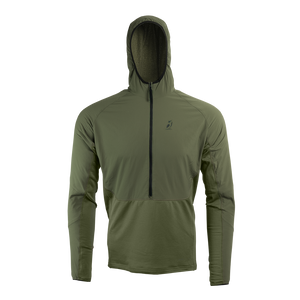
[00:38:05] Tayson: either. I might not have brought the ring jacket because I was testing out like a windshield and that so the other items like I didn't use them, but I still would bring them for safety. But I did use a rain or excuse me, a windshield like a wind jacket. and that ended up being really a good piece for that stereo because it's always blowing like I say like the air is always
[00:38:31] Tayson: circulating up there but you are just trudging through the snow. So you're sweating, you're exerting a ton and so that that really helps like regulate temperature because if I even would have had like the Ventus on, I would have been overheating. and really, I just needed something to keep it so that, When the wind blew, it didn't just like Cuts straight to the skin. And so that that piece actually ended up
[00:38:53] Tayson: being a great piece to have that. I don't know always bring her or maybe haven't used a ton in the past. So that piece was being maybe more preferred pieces that might also just be because It's a newer piece in my system at the moment.
[00:39:09] Brigham: I would second the the win the win jacket. I don't take down pants or I didn't take any rain pants, but I like to taste and I always bring a rain jacket but we hiked in, basically, in a blizzard and, you know, I was not wearing my rain jacket. I was wearing another wind jacket. Just over a light. A lightweight fleece. And I mean obviously sweating, it's not, there's no there's no
[00:39:40] Brigham: getting around like the sweating. but, I would say if I would have even attempted wearing rain jacket, instead of the wind jacket, That thing would come off so fast because I would have overheated. So even though it was a blizzard, the the wind jacket Blocked enough of the precipitation from actually getting through, but I was sweating anyway. And having the breathability was like, I mean, we were the pace that we had
[00:40:15] Brigham: was, Pretty much. It was what it was because of the snow conditions but also because of our own self. governing like, Knowing that we only have the water that we were carrying. And we knew the amount of effort that was taking, right? And so we were sweating a ton and it was work. So just putting that all together. We really had to make ourselves walk. Make sure we were not walking too
[00:40:48] Brigham: fast or trying too hard to just You know, push through all that snow. Like I'd say we really quickly established our rotation of who was breaking Trail and a lot of that was to just control the pace and make sure we weren't over overdoing it because You overdo it and and burn yourself out. So, when jacket, the
[00:41:12] Brigham: one thing I would have taken more of was Liner gloves, I took. So what I took a system have a sweet, I was a great system, it was a really lightweight shell Mitten. And then like a Merino glove liner to go inside there and my hands were warmed the whole time. And then I took a extra pair of like, I'd say Midway wind stopper. Softshell gloves for for Camp. I would have
[00:41:38] Brigham: taken one extra pair of liner gloves. just, Because again wet you're so you're working so hard, your hands are sweating and
[00:41:47] Brigham: so I think just having that extra ounce and a half of
[00:41:50] Tayson: an extra pair of liner gloves and they don't get like wet but they're gonna get damp. There's no way to keep them from Getting damp from exertion, you know, and stuff. But he bring him to have a really cool system. I mean Some people probably seen me in gear videos. Talk about like the little wind Basically a rain Mitten. Is all it is like it's just a rain mitten. But and I've
[00:42:16] Tayson: really liked that specially in summer time blocking wind keeping, you know, rain off, and then you add a liner underneath it and its warmth but bring them basically had like the winter version of that, where the shell was more durable a little bit heavier fabric, but still it's Paul, yeah, Griffith. So it was, but inside of it, there's nothing there's no insulation, there's no material like like a brushed. Fleet there's nothing.
[00:42:41] Tayson: And what's awesome about that is just like he said, he could rotate a liner glove. And the inside would basically be able to be completely dry again. Whereas like the gloves, I was using, they had a, you know, they've got a membrane and then they've got an inner, you know, primaloft or something kind of insulation in there. But once those get wet, you cannot dry them out. I mean, it's just it's
[00:43:04] Tayson: impossible. Even wearing the liner glove in there. Like, you can switch a liner glove and it'll pull some of the moisture out of the insulation. But regardless, what I found is that Sure, seems like. You can't get them to drive back out of them in, your hands are going to stay colder and so I was quite envious of Brigham's setup. I think all I'll switch to that next winter and give that
[00:43:22] Tayson: a shot just for the ability to get the inside of gloves dry again because I am so alive, very heavy sweater. Like
[00:43:31] Tayson: if you I'm just I'm just like the top end of sweating. And so like on that hiking in my hands are going to get a little bit of moist like just just a little bit of moisture, no matter what. And I think that's always led to why my hands my feet get. Cold is just always gonna give a little bit muggy or something in my boot or in my glove. And then
[00:43:51] Tayson: that moisture is just gonna stay there until you get back. I mean, I washed those gloves once in my house, Hung them up to dry for a full day, like, with the opening at the bottom, so that the water could fall right out of the glove, check them, 24 hours later and they were still soaked on the inside. I said to turn them completely inside out. Leave them for another day before
[00:44:09] Tayson: they would drive. So that tells you a little bit about Is how careful you need to be to keep your hands dry. But also, like I said, I think Brigham had a had a system that I'm really interested in now and that was the first time he tried it too. I think we both were like on trail going. This
[00:44:23] Brigham: is also was, I mean yeah, I was For. For the perceived warmth. Meaning like is a lightweight glove liner with them over Mitten. That's just a shell. You most people probably not think that's warm enough for how cold it was gonna be. But my hands were not cold once like not once and it's just works really well. And yeah, we were definitely intrigued by. That was cool.
[00:44:52] Joe: All right. Well guys, for those of you listening out there, feel free to send us your comments. Questions about backpack. Cool. Outdoor stories or ideas for future episode topics and you can do that by commenting on our live Ultra Lite podcast YouTube Channel, Please Subscribe by the way or you can email us at liver podcast@gmail.com, you can also send us positive iTunes reviews and we will definitely read those on the show.
[00:45:17] Joe: And once again, please subscribe to us on iTunes Spotify YouTube or wherever you get your podcast. We did get one comment. I thought
[00:45:26] Joe: was kind of humorous from one of our interviews we had last month. Is from Mark Hamming, take it easy on us, East Coasters. We like to pretend, we have mountains.
[00:45:36] Tayson: Hey, we're gonna try
[00:45:39] Joe: now, we're gonna find out me. Bring him are coming east
[00:45:41] Tayson: and like, A month and a half. Nice, I'm excited.
[00:45:44] Joe: Can we talk about where you're going? Sure. Yeah.
[00:45:47] Joe: Okay, where you go?
[00:45:48] Tayson: We're gonna. Yeah, we're gonna try to get out to 80 Trail days and you're in the area of damn. And you've always wanted to talk to Brigham. Come find us. Oh yes, you
[00:46:00] Tayson: talk Fabrics. and then right after that, we're gonna we're gonna jump on the at, and We're actually going to the goal is to play Fast pack and try to cover 100 miles. Oh nice.
[00:46:12] Tayson: So we want to, we want to get out there. We want to we want to understand more of what you guys. deal with on trail, I think it's great for for us as a design Department to be able to Empathize a bit more, bring him to spend more time, you know, in that type of training I have. So I'm excited to just To do that. But yeah, hopefully, we'll understand a little
[00:46:31] Tayson: bit more about the East Coast hiking and stuff so expensive on the 18th.
[00:46:35] Joe: All right. Well, awesome. Thank you to those at home for joining us and thank you Jason and Brigham for coming on back on the show. Thanks for having us.