[00:00:00] Joe: So what really goes into your? Backpacking gear. Find out. On this. Ultralight podcast powered by Outdoor Vitals, this podcast is all about inspiring you to get Outdoors. Showing you how to lighten your pack and build your confidence that you can start living your life full of Adventure. I am Joe, and I am here with outdoor, vitals lead. Designer, Brigham, and this is going to be part two of our conversation about getting
[00:00:30] Joe: really into the nitty-gritty of what goes into your backpacking gear. Last time, it was about fibers and Yarns, you can go back a couple episodes, guys, in the feeds. If you have a listen to that and check that out. Today, we're going to be talking about fabric. You ready to bring him?
[00:00:49] Brigham: I hope so. We'll see how I respond. All right.
[00:00:53] Joe: Well, again, this is kind of like part of our training as employees of Outdoor Vitals which is, I guess if you don't know, is a ultra light backpacking gear company, based here in Cedar City Utah and in order to kind of get a better handle on. You know dealing with customer service and stuff like that. Brigham made a presentation or a couple presentations for us in order to know that in order
[00:01:24] Joe: for the people who maybe don't design the products to know what we're talking about,
[00:01:27] Brigham: when it comes to things like fabrics and Yarns and
[00:01:33] Joe: all this stuff that that makes the gear that we, that we make here and also gears As a whole and the outdoor industry. I don't know if there's any of any type of fibers that we don't use here at outdoor. Vitals, maybe cotton Do we use cotton
[00:01:53] Brigham: not really, no, really. I mean there are there's plenty of fibers. We don't use like Silk, okay? We
[00:02:00] Brigham: don't use bamboo or Lyle cell or rayon.
[00:02:02] Joe: We're not going to make like a silky jacket. Probably not.
[00:02:05] Brigham: Oh, that's too bad
[00:02:06] Joe: now but it's good to know what those things are and what they do. So we're gonna get into it even more. So I believe that there are two different types of fabric is that correct? yeah, there's
[00:02:19] Brigham: Generally sorry, let's keep it relevant to to what we do or you know. Yeah
[00:02:24] Brigham: kind of like what we like to talk about. So I would say there there are. There are there are three types of fabric categories or classifications that are relevant, but but there are definitely two of those that are like the most prevalent throughout any of our products are really any You know, outdoor backpacking related product but yeah.
[00:02:49] Joe: Okay. And what are those?
[00:02:51] Brigham: Well. so, the one, the one that I I wanted to add because it is still a significant one to be aware of is called, they're called non-woven. Fabrics. so again they're they're a textile so it's some kind of arrangement the fibers and that Arrangement is just very random and or if they're not inter, they're not interlacing or interlocking or, you know, it's not a specified over under Loop through Loop type thing.
[00:03:30] Brigham: Basically, a bunch of fibers are kind of laid down in the smashed and You know, either kind of stuck. smashed arrangement with heat or chemicals, or bonding or all of the above or other, you know, other additives or resins or glues, and where, where that does apply is, a lot of insulated products, especially like sleep sleep system products like top, quilts under coils, sleeping bags, On the outside, you see some nice
[00:04:04] Brigham: looking Stitch lines with some baffles that all the insulation is filled in there, but between those Stitch lines, there's like a non-woven baffle material. The actual baffle is the material inside that separates the different chambers. So, most of the time, those are a non-woven fabric because they're very light, they don't have to sustain, you know, they don't need much functional property and they're very inexpensive to make, but they are a pretty
[00:04:33] Brigham: integral part and critical part of a lot of backpacking. Gear. Other non-wovens out, there are, you know, like a lot of people like to use at Ground sheets. So, cut up a piece of tie back. There's a lot of Dynamo Fabrics that are, they're really non-woven. It's, they're not necessarily like An entire sheet of dyneema Yarns over and under each other. So we're saying
[00:05:00] Joe: there's non-woven there's woven which will get into and then there's knitted learned it, right?
[00:05:06] Joe: So the non-woven, what kind of applications would that have? What is there any other applications that would have in the outdoors sides? Like Apples for sleeping bags. Yeah,
[00:05:19] Brigham: apples ground sheets. Like I said, some of the Dynamo stuff, you know, there's tarps made out of some Dynamic stuff and is there like what are the pros and cons of
[00:05:34] Joe: Type of fabric like that.
[00:05:36] Brigham: Well, one of the benefits, there's that they're inexpensive to use. Or make sorry, right? Just
[00:05:46] Brigham: there's not a ton of like machine calibration or any of that. but, but the cons are, there's a lot of benefits or functions that you don't get out of a non-woven fabric, a lot of, you know, proper and we'll get into some of these terms properties and functions and lot of performance that you don't necessarily Engineer into a non-woven fabric.
[00:06:13] Joe: Okay, all right. Well, I guess we can go into the the ones where you have way more information on
[00:06:23] Brigham: Okay, and that they they're just used, you know, basically 10 times more. So yeah.
[00:06:29] Joe: Woven fabrics. Two sets of yarn and Yarns are made of fibers, right? From the last episode, two sets of yarn that are interlaced at right angles to each other and there are different. We've patterns that are common, I would guess, right? So we, what's a warp yarn,
[00:06:54] Brigham: So that refers to the direction of the yarn is a range. As it's being woven. So the warp yarn, basically is a range in the direction of travel. That it's woven, you know, think of you got all these yards, strung out and align that longitudinal direction as it's heading for the weaving machine, and then out of the weaving machine and onto a role. Think of that, like, if you're driving down the
[00:07:21] Brigham: highway, you're driving the direction of the warpy Yarns. If somebody blindsides you running through a red light, they came from the filling yarn or the weft. Okay, after the filling. So they came from the 90 degree angle from the side. So that's why, okay, so a warp yarn is just
[00:07:43] Joe: The initial Direction and then the filling yarn goes in between. Yep,
[00:07:47] Joe: okay, um, and I'm sorry for those listening to this on the audio podcast. you can check out some certain patterns, I guess common patterns or common weaves A plain weave which is just like one to one on warp yarn and filling yarn a basket weave, which looks like a two to two kind of a pattern. Right. Yeah
[00:08:12] Joe: and then I have on here at 12
[00:08:15] Brigham: foot so the thing about like, what was all these weeds? Some of it, some of the purpose of having different weeds is aesthetic, but a lot of the purpose of different weaves is functional. There are some weeds that are stronger than others or have different properties than others. Different strengths and weaknesses. Like a twill is a very is a very strong weave. Jeans are like the most common. You know, one of
[00:08:46] Brigham: the most common applications of a, twill of a, twill weave and a twill pattern, which would be
[00:08:52] Joe: very hard to describe. Yeah. You weren't looking at a if you weren't looking at a image, like, I am, but basically you have the warp Yarns. Let's see, yeah. The warp guns going up. And then it's kind of an odd pattern where like the The Filling Yarns will be going under for a couple and then over one under for a couple over one. Yep,
[00:09:20] Joe: that's just a little, it's a more complicated pattern. Yeah.
[00:09:23] Joe: Um, so I would be interested if you're willing to kind of go off on these things. Like what are of these like three different common weave patterns, what are the pros and cons of each of these? And what are the common applications? So let's say a plane wave. Well, the the
[00:09:39] Brigham: pro is that they're just very simple, easy, easy to manufacture, easy to dial in and easy to engineer. Other properties in
[00:09:50] Joe: which easy to engineer easy to make equal slightly cheaper. For the consumer,
[00:09:56] Brigham: probably. I mean, some of them the difference in complication is the fiber, the work to work that out in terms of the large-scale textile industry like is The work has been done that. It's almost so I'd honestly have to ask one of our Mills and yeah. Hey, Ya sent to sent breakdown of, you know, if we were to change this weave to such and such weave, what would that do to the
[00:10:28] Brigham: cost? I couldn't tell you accurately. Okay off and but probably the more complicated than then then that's possible. But really it just comes down to calibrating the machine. So is it the same type of machine that makes for the most part? All right,
[00:10:45] Joe: but I didn't it for some reason that might be a specific different machine but
[00:10:51] Brigham: it's not like It's such a more advanced machine that it's going to be massively more expensive to the end user. So, but in terms of, you know, benefits or disadvantages. Yeah, disadvantages of plain weaves as they're, they're relative to other stronger weaves. They're not the strongest, they don't have like all the best tear resistance or abrasion resistance. but that's that relative to the objective of the product, okay? So that's basically all
[00:11:25] Brigham: I'm saying is Because a twill weave has better, abrasion resistance and strength than a plain weave. Why are we not using a twill weave in our tent fabric, right? Yeah, that's just, it's a non-issue like that's not what we're really referring to.
[00:11:48] Joe: Well, now I'm curious
[00:11:49] Brigham: like, you know, Twilight like 12 works really well. You know, one of the reasons is because like jeans, you know, we'll use a 12 weave, they're made of, you know, natural fibers staple fibers, you know, short. Little Fibers. you know just the the nature basically like the some of the strength and abrasion resistant properties come from the the distance a yarn travels under or over the Opposing yarn and those distances. That's
[00:12:31] Brigham: where, Like some of those. strengths or abrasion resistant or terrorists and properties come from
[00:12:38] Joe: but because they're getting some quarter strength based upon the tension between one yarn to another. So my career I have a bit of a curiosity here. I don't know if there's like a mathematics. I'm sure there is some sort of math and automatically way to break down. Like okay you have a certain type of yarn with a certain mix of Fibers Polly, Esther whatever. And let's say they put together with a,
[00:13:10] Joe: let's say, you have the stronger fibers in a plain weave. Forces weaker fibers. in a twill weave. What kind of? if you were to go ahead to head,
[00:13:30] Brigham: Man, what did you say? He said
[00:13:32] Brigham: weaker fibers. Okay, what's the weakest? Fiber,
[00:13:35] Joe: I take care of that top of the weakest, common fiber
[00:13:38] Brigham: weakest carbon carbon fiber. Let's see. some of those that Kind of get weaker when wet. Like wool is not a very strong fiber, okay? So
[00:13:54] Joe: wool vs polyester stronger, right? Maybe maybe.
[00:14:01] Joe: Look at this so hard. You started it,
[00:14:08] Joe: all right. So I'm just saying how much does the weave I guess? Help or hurt the fibers in comparison to just the regular yarn strength or Fiber strength.
[00:14:23] Brigham: It's not like make a break. It's not, it's not the most, it's not the one in all. And I'll be all. Characteristic. Okay, it's
[00:14:31] Brigham: a factor and all oftentimes like The. The weave. Selection is, you know, it's selected for Aesthetics, it's selected because of the type of fiber that there's one that they want to use and then the end use of the product. That kind of determines, you know, the weave. Okay, so let's say you were making another
[00:14:59] Joe: tent Take Outdoor Vitals out of this for a second. What? I mean what kind of what kind of we would be best for? Let's say a tent. I
[00:15:13] Joe: have regular side of the tent just
[00:15:15] Brigham: be playing with plain weave.
[00:15:17] Joe: Why is that? It's
[00:15:18] Brigham: the most predictable. It's most it's easy to work with. It's easier to do other things with and it satisfies, the weight requirement and the durability requirement.
[00:15:32] Joe: So the stretch requirement. Okay, you know.
[00:15:34] Joe: Yeah. All right. So now I want you to kind of break down like plain weave versus basket weave versus 12.
[00:15:41] Brigham: It's just it's just so to Starts becoming irrelevant to. Our. Market, okay? Or like our sphere of what we do and the products that we deal with. But yeah, I mean the changes are either in the number of over and under Yarns you know the number of the Yarns interlaced. and the interval of, you know, whether it's going under and over and whether that is on the warp, or the filling yarn, That answer.
[00:16:24] Joe: Well, I mean, what kind of what kind of end result
[00:16:27] Brigham: does it have? For the user, a lot of it, a lot of Spider-Man, a lot of. That's, that's a lot of it.
[00:16:34] Joe: That's a lot of it. That's a lot of it. So it's special with basket weaves. So,
[00:16:40] Brigham: Let's say there's others too. Okay, yeah,
[00:16:44] Brigham: Jakarta. I mean, there's so many weeks I'm sure. And that's why I
[00:16:49] Joe: don't like in this
[00:16:51] Brigham: training. I'm like you know, just stick to a few that they come across. Yeah, but yeah.
[00:16:59] Joe: Okay. Well, which so the strongest of these three common ones that we are that we've been talking about is 12. Um for certain applications for certain app for certain applications what's applications. Would it not be
[00:17:12] Brigham: The toilet is never used in any of the products we make really correct.
[00:17:17] Joe: Are we all about the plane wave? Then Yeah. Okay.
[00:17:20] Joe: It's what. Okay to the chase here, but the plain weave. I was letting you. I was letting you dig. Yeah. The plain weave. You see it's it's the weight requirement and everything you said wait, requirement or earlier. The type of weave would really. It can, it can it can affect the way. Okay.
[00:17:43] Joe: So That's on that the Yarns and the fibers involved I think. Yeah.
[00:17:48] Joe: Okay. All right. Well.
[00:17:53] Joe: so, should the end user? Not even worry, unless they're worried about Aesthetics even worry about. No, absolutely, no. Okay,
[00:18:01] Brigham: why? I said we're getting a little irrelevant here. Okay. Yeah. There's
[00:18:06] Brigham: the those generally those, those other weaves are are very much not used. In anything that we do.
[00:18:15] Joe: Okay, interesting. All right. But it probably is used on your like regular clothing, right?
[00:18:23] Joe: I'm trying to look at it. Yeah, that's it.
[00:18:25] Joe: My t-shirt, this is the knit one. Okay. And we'll get into knits now with that same like what we're talking about here with our does the type of knit Matter to the end user. When it comes to, let's say backpacking equipment.
[00:18:44] Brigham: it can and to be, you know, the guide things a little bit like knits are generally like and I say generally like 99.9%. Because there might be a point 1%. There may be a knitted backpack out there. But I would be skeptical of it. Yeah. Nits are generally with apparel. And like next skin apparel and upper body apparel, okay? there's, you know, their there's a You've got circular knit and warp knit,
[00:19:25] Brigham: you know? So there's knitting machines that they'll they they knit in a circle. So the fabric comes off in a tube basically and then a warp knit machine is just more like what you'd see with Like woven fabrics, it comes off in a, in a sheet, not a tube. Okay,
[00:19:52] Brigham: there's slight differences in, you know, you know, the circular net generally has maybe a little bit better drape or a little bit better stretch. maybe, you know, there's there's some slight differences there but then but then there's Some improvements, you know, performance wise or other attributes that benefit from a warp knit. Okay. So some of that is in that so we talked about weaving pretty like extensively even though you didn't
[00:20:25] Joe: want to Sew a knit is made by Inner looping of Yarns Loops passing through Loops basically and hooking on to each other. In that way, looking at a lot like horseshoe shaped patterns through everything. Sorry guys, you guys might have to if you guys are really interested in these what these knits type of knits look. Like you'll have to probably Google image search that kind of thing. Could you tell us about
[00:20:54] Joe: you have on here? Yeah, weft knit warp Knits. Um, I guess those are the two that you have. And we can talk about like relevant
[00:21:06] Brigham: applications. Sure. Yeah, so the weft knit that's almost always. I mean in our industry it's almost always going to be like the circular that stuff. Okay.
[00:21:14] Brigham: And It's cheaper. Has its like I said it drape that's like how well or how just like easily it kind of just like hangs over an object like your body. Well, kind of just like adapts to The Forum. Okay. And that's that's kind of what drape is. There's a lot of different Property terms of fabrics. And then again, kind of very similar to that as like the stretchiness of the knit fabric.
[00:21:53] Brigham: Weft knit circular knit Fabrics tend to be a bit stretch here. But they're all so more prone to snacking and running and less durable, but they are quite less expensive to produce warp, knits. Those are those the flat, they're, you know, flat sheet of fabric They're not quite as stretchy, don't quite have the drape, but they're definitely more durable. They're less likely to to snag or run.
[00:22:29] Joe: Yeah. Okay. So when you say, it's almost always the weft net. So it's always almost always circular
[00:22:37] Brigham: not almost always just No, not necessarily. it depends on the product, like If you think, in terms of like, probably, you're more commodity like your T-shirt, like that's a really commodity level product, right? Just like everybody's cranking out millions of teachers, right? Those are most most likely, circular knit because of the economy of scale and trying to keep costs down because people don't want to pay a ton of money for a
[00:23:10] Brigham: T-shirt and that's why a lot of You know, and there's there's quality levels that whatever the manufacturer wants to pay or give to their circular knitting machines. Like if you ever had a t-shirt that just felt like it was like pulling to one side or like the seams weren't You know, symmetrical or one seam, tend to like start going down the side and then work its way around towards the front of
[00:23:38] Brigham: the back of your body and it says I can't uneven tension on your T-shirt that's a low quality circular knit fabric right there. Hmm
[00:23:46] Joe: I got I got the problem where I always go to like a concert and I get a band shirt and like the shirt will shrink but the collar won't
[00:23:55] Brigham: Yeah. Is that where the fiber level I'm guessing that's all. Yeah,
[00:24:01] Brigham: it's comp. The knitting and the difference in, you know, the knitting of the collar, versus the knitting of the body of the t-shirt
[00:24:10] Joe: and it's too bad because with those concerts, you know, you want to be like oh I went to this concert but if that shirt lasts like four months like
[00:24:16] Brigham: it's okay. If your belly sticks out a little bit,
[00:24:22] Joe: Oh, maybe we just have different priorities. All right, so those are the applications of knits
[00:24:31] Joe: almost always apparel exclusive, almost exclusively apparel, is what you wrote down here, t-shirt, sportswear socks, swimwear base layers, sweaters. Like you were talking about the benefits breathability, just because of the way that it's it's knitted. It's not woven. I want to say woven but I know there's a separation here. Like there is yeah. Okay, so that gives it I guess. Oh, all right. So here's it. So, if you're making a piece
[00:25:02] Joe: of a pair of where you don't want it to be breathable, let's say like a rain jacket, okay? Would you want? Would you preferably have a woven fabric on, at least the outer layer of that?
[00:25:14] Brigham: Yeah, for sure. And There, there are very few. Fabric options out there, it's not very common, but they do exist of a knit. Outerwear. Jacket for the purpose of like say rainwear. Like, they do exist. They're just not. So common just because there's Most people prioritize, the other properties of a woven fabric for a rain jacket, but they do exist. There are some Waterproof breathable, Fabrics out there that would be appropriate
[00:25:57] Brigham: for a rain jacket. There specifically They're deliberately made using a knit trying to try and get some advantages of either drape or stretch or breathability of the fabric itself. and for the most part, it's also worth saying Mike it, it's You could generally say like knits knit Fabrics or less durable. Than woven fabrics. But yeah, you're asking about the application. Yeah.
[00:26:31] Joe: So let's say, I'm just saying, breathability versus not so specific. Like with knit. What these are knits because of it just the way that they are.
[00:26:40] Brigham: Yeah. And they're frequent like, they're more breathable. Yeah. And why I say that they're almost exclusively used for apparel because they're, they they function great with the body, right? So they stress. They move with the body, they breathe more. They're more comfortable. They're soft on the skin. Yeah, so most like for you know, athletic wear is going to be knit, I mean, because if you think about doing Dynamic movements and activity,
[00:27:07] Brigham: like you don't you want your your garments to move with you you know what I mean? So that and there's there's just inherent stretch in a knit because of the you know, the looping through looping nature. It allows you know like there's a lot more clearance between all those Yarns, because loops, You know, it's really hard to get two Loops to Loop. Through each other and not you know and not having
[00:27:35] Brigham: not have much space. Yeah
[00:27:37] Joe: so yeah that makes sense to me softness. Comfort shape. Holding stretch less prone to wrinkling.
[00:27:43] Joe: I didn't know that.
[00:27:44] Brigham: Yeah, yeah. Again that's from the the knit structure of Loops, whereas it's not straight lines that take a crease. Yeah, there's just less prone to wrinkling, doesn't mean they can't, but they resist wrinkling much, much better.
[00:28:00] Joe: Okay. All right, so there we have like the general properties of woven fabric versus the general properties knit fabric and I'm guessing I know. Okay. So We have something. Don't we wear it? Like where it's knit against the skin and then is it the Dragon Ball? Well, Dragon Ball is, it's a fully knit. Piece. So
[00:28:25] Brigham: it's fully it's just that the type of structure is different on the inside than on the outside. Got it.
[00:28:31] Brigham: So you know how like with You know. As much as I do not want to go back to talk about basket weaves and 12s because he really started to that. But but, you know, how, like I was saying, there's, there's tons of different weaves, right? There's tons of different knits too. And, you know, just like There's you know, 12 we've, there's different knits. So when I say the dragon wall has different
[00:28:59] Brigham: knit structures on the inside versus the outside, most people have have seen and maybe not even known what it was called, but a jersey knit
[00:29:09] Joe: that Is that self-explanatory? It's on most jerseys?
[00:29:13] Brigham: Yeah. If you like, you know, we know what that feeling yellow. Soccer jersey for kids, soccer or basketball jersey. Kind of. See, like,
[00:29:22] Joe: at the same thing on, like, basketball shorts. Yeah, yeah.
[00:29:26] Brigham: That's that's a jersey knit on the inside. It's not Jersey, it just has more
[00:29:32] Joe: flat direct contact with the skin and that's made a marina wool, right? Yeah.
[00:29:38] Brigham: So it's it's a Merino wool blend on the inside and all polyester on the outside
[00:29:44] Joe: so that the marina will pulls the vapor moisture off skin. And it's Tighter and then the
[00:29:51] Joe: polyester with that Jersey. I'm trying, I think you have talked about this before that, the Jersey knits
[00:29:59] Joe: on the outside. That kind of lets it breathe on the outside, and pulls water away. From
[00:30:05] Brigham: those are kind of releasing allowing because of the more open structure of the Jersey. Once the either, the moisture starts absorbing into the next to skin. I don't want to say later because it's it's not a two-layer fabric, it's called a pie a by component or a double knit type fabric. once the moisture gets into the Yarns that are against the skin and starts, Spreading out and then pushing through, by the
[00:30:39] Brigham: time it gets to the polyester jersey knit, it's a very open structure so it it increases the surface area that the atmosphere of the air outside is able to pull that out. Of the, of the piece. So kind of release a little bit better.
[00:30:58] Joe: All right. So, I'm curious as a designer, like, what your process is for, like,
[00:31:07] Joe: Do you? I'm guessing you because of the just the way we've been talking about this. I'm guessing that there are just kind of industry standards. Most of the time, it's this type of knit. Most the time is this type of weave
[00:31:18] Joe: and that perhaps I mean, unless you're something looking for something really particular, you're generally more interested in the fibers and then the Yarns that make up the piece and you are necessarily Going.
[00:31:33] Brigham: Okay, we're good question. It's a good question. I want to know what your creative process on that especially because like we're talking about all these things. So it's kind of an interesting thought process of like, well, how much actual thought goes in to all these things that we've been talking about? As you know, at the very beginning of product development and a lot of these things, very little tacos into them because
[00:31:57] Brigham: they're just there, they're inherent or they're they're just automatic.
[00:32:05] Joe: Just go. We're making a shirt. It's kind of be. Yeah.
[00:32:09] Brigham: Like with the Dragon Ball. It wasn't like she's we make it out of a woven or a knit, right? It's it's an apparel piece. It's going to be a base layer like that. So a lot of this stuff is just obvious and doesn't really require thought process because
[00:32:26] Joe: other people have already worked this out.
[00:32:29] Brigham: Basically, I mean but at the same time would you want to wear you know a t-shirt made out of our tent Fabric or a backpack fabric woven fabrics, right? There's gonna be a board on you. It's just
[00:32:43] Joe: It's not going to drain a rectangle. So you need the net.
[00:32:46] Brigham: Exactly. That's not gonna breathe.
[00:32:47] Joe: It's not going to feel good against your skin but perhaps for an outer layer like an outer shell, right? Yeah,
[00:32:54] Brigham: so yeah. So, so on that level of things like those, those are really the, I'd even if it'd be hard to even call it a decision, you know, it's kind of like When you're gas tank runs out, you just know that you need to put gas in the car. That's that automatic. You're not just like thinking. well, should I put Diet Coke in the tank or orange juice or, you know, 88
[00:33:28] Brigham: octane gas. I'll just, you don't really think about that, right?
[00:33:31] Joe: That's good point. I think. Well, there are, I'm guessing Jason was one of these people, people who make their own mic, their own outdoor gear. Like those out and home people, I'm guessing they're getting already ready. Made fabrics and their cutting that out. But let's say they were having their first conversation with the manufacturer. This might actually be that I actually, like, go through and be like, okay,
[00:33:55] Brigham: yeah. Yeah. Maybe maybe but then again, if so yeah. it even if I didn't know anything. And let's just say like, yeah, let's just say I hardly knew anything and I emailed a sleeping bag Factory. and said, I'd like to start a developing a sleeping bag. There, they would not their default response. Wouldn't be well, do you want this out of a knit fabric or a woven fabric?
[00:34:32] Joe: We gotta ask the dumb. No, it's good. It's good that way. I know it that way. I really know it. The audience at home. Understand what
[00:34:39] Brigham: I can get into. What what? Where the actual thought time goes? Yeah.
[00:34:47] Brigham: because, And all, I'm going to back up and, like, kind of start some foundational discussion here about like, well, what, like, what? What are textile? What are Fabrics even for? Like, what's the purpose of fabrics? Why were they ever even developed? You know, because you go way back to when people, you know, humans discovered that they wanted to protect their body's um, like what were they protecting their bodies for or from
[00:35:19] Brigham: Protecting their bodies. From harm physical harm, you know, Cuts scrapes. Bad guys, you know, from the environment right? Protecting their bodies from the environment and then they probably at some point. Also figured out that like That environment actually that if they don't protect from the environment, they can either get too hot or too cold and die. So you know, kind of like contact harm versus like ambient environmental harm and basically as
[00:35:55] Brigham: human Humans developed and progressed and learn more. You know, we learned that our bodies have an ideal operating temperature, and if you go much below or much above that, then your toast. So, All Frozen. Okay. Yeah. Yeah. Toast or Ice Cube, so then. Yeah. You're So that's kind of the protection aspect and as civilizations grew and evolved. Then there was the aspect of like wool There's all this human nature of wanting
[00:36:29] Brigham: to conquer everybody and have the only way that was done was to kill everybody else that wasn't you or that wasn't in your tribe or whatever? And so, then there was the the protection from like hostile harm. Too. Like that's in the in the history of clothing or gear like those are all.
[00:36:52] Brigham: Very deeply rooted into what we have today. So, Preserve and protect our bodies. Like that's why Fabrics were ever developed. Because before then it was just animal skins right before man, learned how to create a usable structured called a yarn. They figured out that they could. Kill an animal skin, an animal Tana animal had something that they wanted on their body, but because they're human, they didn't have and that was a
[00:37:26] Brigham: thick skin with a look, you know, a thick coat of hair. So anyway,
[00:37:33] Brigham: Forward, you know, that's kind of the purpose of fabrics that we talk about is to protect our bodies. Preserve our bodies and but also to make life simpler. So going back again and to civilizations, well water humans figured out that we need. We need water to live like we need to consume water. Our bodies need water and then we figured out that like it's not that convenient to just like make sure
[00:38:04] Brigham: we always live by a water source so that when we get thirsty, we can walk over to the water source and take a drink. We figured out that it'd be nice if we could carry the water. and maybe carry it in large quantities to where we have our dwellings or where we live and then, So what can we carry water with? We have all these animals, skins. You know what if we
[00:38:30] Brigham: What if we? You know. bring all the corners together and then Scoop that up and then now we've got a water bladder basically. We also figured out to gather food to eat. Same thing. Like, how are we going to carry all these things? Are we going to carry all these things? So humans over time, figured out, various ways of using again, starting with skins, using skins to carry things and then I
[00:39:02] Brigham: mean. The fabrication of yarn is a massive technological advancement in human civilization and development like massive because now it's just not just I can take this raw material of an animal skin. Now I can like, Arrange this animal skin in a different way and now I can make tons of these Yarns and I can arrange them in a way that creates a simulated animal skin. Something that does all those things. But
[00:39:33] Brigham: I as a human, I made this so carrying things and then humans. At some point also realize that like Yeah, they like having clothing to preserve and protect their bodies. But there's, you know, There's not an infinite number of caves or trees that are you know, have such a dense canopy that you're not ever going to get wet and when you get wet or you don't have shelter shade, like there's that
[00:40:01] Brigham: issue again of preserving the body. So all these Fabrics all these Things were developed for human life to sustain human life. In the form of caring things to make life easier to protecting and preserving our body's and, you know, cover so shelters and things like that. so that's why we have fabric so it has a job to do and now and you know, Now life is much easier so it's more of
[00:40:33] Brigham: a luxury that we can do all these things we can with. Fabrics and other materials to just like to do things for fun. Not because we just need to stay alive. but, so, Terms of product design and the development of a product. We kind of talked about I am not setting any time at all on is it do I need to use a knit or a weave? We can get into like
[00:41:02] Brigham: some nuances of the like the exceptions to that in a minute but like So, let's just say it's basically a given depending on the product, like generally, like the general type of fabric that's going to be used. But what we do look at and this is where the thought really starts is what the, what do we want this product to do? What, how do we want it to function? How does it
[00:41:32] Brigham: need to function? How do we want it to perform? Are there any priorities that we have in terms of Wait or water resistance or waterproofness, or breathability. So you start Assembling this this group of requirements and needs. And wants. And then you're also looking at like, Okay, well here's all these offerings that these are the things that can accomplish that. But but we also see this other problem and we just like
[00:42:06] Brigham: something better. So can we do something? With what's already out there? Can we improve something or can we add something or, or Do something to take it a step further and and Advance, you know, the way that you know, a lot of these requirements are are met. So, That that's where you start looking at. Okay. Like if it's a Peril. Well, it's not just like Yeah, for a base layer. It's it's
[00:42:38] Brigham: a it's, you know, it's an it we do make decisions about. Okay, do we want To use a Merino wool. Do we want that? Merino wool to piece to be 100% Merino wool. Do we want to blend it with something? What does blending the Merino wool with something else? What does that do? What properties does that introduce? What performance gains can we get by? Blending things and and working with things same
[00:43:08] Brigham: thing. Like, if we say we want this, Base layer or this mid layer to be a synthetic piece. It's most likely to be a knit, but like, do we want to be 100% polyester? Do we want? To add some spandex. So it has really, really great and comfortable stretch. There's those things. So we do look at composition and And look at it from a standpoint of like, what we want the product
[00:43:43] Brigham: to do and that's where it's really helpful to know some of these things. And it's it's really valuable valuable for the consumer to at least be aware of some of these things so that they can understand what's being told to them. And so they can apply it to their own experience or their own desires and see like, That maybe something that we explain to them makes sense. Because they've had a relatable
[00:44:12] Brigham: experience and so they can kind of have that light bulb moment where they're like that, that sounds good to me because I've had this happen and the way that this product is now explained to me. They see the benefit. so, early on thought process into those things in terms of like the composition and different attributes and performance things that we can get from, you know, whatever the fabric is You know, and
[00:44:47] Brigham: then there's you know, there's weight requirements. There's yeah, just just stuff like that. And, you know, before I Derail, I get off track or forget what I'm talking about. Like, Are you? Hey are you tracking there? Yeah.
[00:45:05] Brigham: Okay. so, the cool thing about, you know, Fabric and and this is like the once you once we get like this, Set of requirements. Basically, let's just call let's just refer to it all as requirements.
[00:45:30] Brigham: There there's already a ton of options out there and oftentimes, you know, we'll talk with our suppliers and our partners. Communicate to them our requirements and they'll propose to us certain options that they already have. you know, a good example of of this in our own products. That we found something really close to what we wanted. But we we needed to do some. We need to Refine it to our requirements. A
[00:46:06] Brigham: little bit more would be like Nova Pro jacket. There
[00:46:11] Brigham: was an existing fabric option. That metal. A lot of requirements for us. But it didn't meet. it fell short in basically, the weight of the fabric, the fabric was Just too heavy. Like it made the jacket heavier than we wanted the jacket to be And so, but they did not at the time. Make Something different. There was not a different option that still met all the requirements, plus the requirement that we
[00:46:42] Brigham: had. So we just communicated that with them and they said, okay well we'll work on making that exact fabric to meet that requirement. So you know and it's really secret here, so basically the fabric available at the time, had had spandex in it and it was a cool fabric, had great stretch and there's jackets out there made in it, but We didn't want our jacket to weigh. What the jacket, wait, because
[00:47:13] Brigham: we had prototypes made with this Fabric, and I wasn't happy with the weight. And so, When they finally got this fabric developed and made some tests, yardage some sample, yardage and gave us the way of this fabric. It's almost half the weight of the original fabric but they're both based off of 20, D yarn 20 10 year yard, but they had a substantial percentage of spandex in that fabric by removing that
[00:47:47] Brigham: spandex yeah, the fabric weight was almost cut in half and that the end result for the jacket was like a three ounce. Weight decrease. So that met, you know, our needs that. So that's a good example of kind of establishing some requirements, seeing what's out there and then making adjustments and developing something new to meet our needs.
[00:48:13] Joe: And that all that's all part of that. We've gone into warps and knits and the non non knit fabric. The ones, the smash you one woman non-woven, there we go. But with those kind of being like, okay, you want with knits and weaves generally and you said, we were going to talk about exceptions. I'd like to do that generally. They have their places in our industry. I'm like what type that is
[00:48:41] Joe: so maybe I guess like the playground is where you were talking about, like, taking spandex out of the fabric that we eventually used to make or the Yarns that we Aren't fibers. Oh my goodness. Hold on the fabric, the fabric. Okay, take some spandex. Out of the out of the equation that gave us what we needed in our garment. To, to bring to our consumer to bring to, let's say our target
[00:49:13] Joe: audience and to ourselves because these things. Yeah.
[00:49:15] Joe: And by the way, if you're interested in any of our gear that we have here at Outdoor Vitals, there are links in the description, and that's how you can show that you listened to the podcast. If you want to, if you want to go check that out. And possibly purchase an awesome jacket, like the Nova Pro or the Nova UL. Yeah. But So that's generally like where the where I guess the
[00:49:40] Joe: playing around with. Properties is mostly at. It's mostly picking the right fibers and the right Yarns.
[00:49:48] Brigham: Yeah, start. So the cool part about Specially, when you get into, you know, man-made and synthetic. fibers Yarns and fabrics is you can really engineer a lot of function and performance. Into. That fabric to do what you want it to do. I mean, a lot of like most of this, this is not new, like this is not a New Concept. Like it's if you think about, you know, you mentioned A rain
[00:50:23] Brigham: jacket. You know a rain jacket is generally going to be a woven fabric but it doesn't end there. Well it's like well how does that? How does that jacket made waterproof? And then the other requirement is that it has some level of breathability and and a lot of this development has been done decades ago. And so you know in general terms you take a face fabric, that's a woven fabrics. Let's say
[00:50:50] Brigham: it's a nylon woven Fabric and to make it waterproof there's different ways to accomplish certain performance. Objectives, there's different a technology or let's say materials, or Locations of technology that you can apply to a basic woven fabric to get what you want, like a waterproof breathable jacket. So you know, now it's just mainstream widespread, you know you've heard of like Waterproof, breathable, membranes. that's, That's like a non-woven, textile. That. You know,
[00:51:39] Brigham: is is little tiny holes in it. That are too small for liquid water to pass through, but big enough for gas water, vapor to pass through. That is arranged by various methods to the back or the front of a woven fabric. That provides the waterproofness. But then you know, there's all kinds of different Arrangements in terms of waterproof breathable, Fabrics, you know, there's There's two layers and these are common things that
[00:52:16] Brigham: I think. Consumers will see is like if they're rain jacket shopping, you know, you'll you'll see it's two layer or two and a half layer or a three layer. and what that refers to generally is going to be an outer layer, a waterproof layer, and, well then like what's the what's the 0.5 layer or what's the third layer and generally that's often Another layer that is has a purpose. To either protect
[00:52:51] Brigham: the membrane or to provide Comfort against the skin, or moisture wicking ability, or you would call standoff from the skin, so it raises the texture of the inside of the jacket microscopically. So that it's not like, Smooth surface to smooth surface of the skin. And those have an effect of how the jacket feels or how it performs, or how it breeds. And then there's all there's five products of all that will
[00:53:22] Brigham: those things change the weight of the end fabric? and then you're still playing with things like the thickness of the yarn, what the weight of the fabric you know, to achieve weight objectives or durability objectives or You know, and so that's that's that's that's a lot of the stuff that I spend my time. Research thinking about testing experimenting with their. I mean so we have we have a rain jacket up and
[00:53:54] Brigham: coming. This summer, let's say there are tons of tons of this. You don't take that for,
[00:54:02] Joe: there's no harm. There's no Hard dates on me. There's too many tentatively. I mean we have to we have to be happy with the products and things have to be like done manufacturing crazy right now. Yeah, it's like So sometimes you
[00:54:18] Joe: want to get in trouble for saying you're the guy.
[00:54:22] Brigham: Sometimes this year, you know, we have a rain jacket coming and a lot of this thought process has gone into that Ranger.
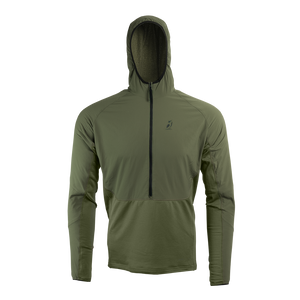
[00:54:32] Joe: so, well, I'd like another example, maybe one more that is Hoodie, okay? Which everybody is commenting upon your particular design of the dentist, by the way, on the YouTube, Out of this. No, it looks like a Ventus. I don't have one of those so I don't know what it is to be fair, I
[00:54:53] Brigham: wouldn't mind having one. I have a lot of unnamed, unnamed items, okay,
[00:54:59] Brigham: that are constantly under evaluation and testing. Yeah,
[00:55:02] Joe: it looks a lot like event is
[00:55:03] Brigham: there's a lot of similarities it does.
[00:55:06] Joe: Um, so let's say the event is so not what you're wearing. What's? What decisions were made for that piece? Specifically. I mean a lot of people like that. I like that one, frankly, except that I jog in it and then I have to wash it before I come to work. Yeah.
[00:55:26] Brigham: Must be really cold when you jog I can't I can't go running in that unless it's single digits.
[00:55:31] Joe: Yeah, it is always. It's freezing cold in the morning. Well, that's single digits. When you Just like 340 degrees. That's about right for the dentist for. Oh, man, I'm also run cold. Yeah,
[00:55:48] Brigham: you know, we all know that reference podcast, number whatever. Yeah,
[00:55:53] Brigham: Joe's in the negative 15 degrees sleeping bag. Thanks
[00:55:58] Joe: Yeah no I wasn't the sleeping bag. I don't think we've probably know but Okay, so what kind of decision so is the Ventus all the way in knit fabric. I'm curious about that is a woven. Okay? So I was wondering that because the Ventus is a little bit, especially on the outside, it's a little bit more, like it's less drapey. Yep. Yeah, yeah. And
[00:56:19] Brigham: that's a good point to bring up the farther away. A piece gets from your body. the more that the more the fabric type is likely to change from a to a woven because it's less, your Apes less soft, I guess against Skin.
[00:56:40] Joe: Um, so like why why did you make those decisions for the Ventus specifically? So
[00:56:46] Brigham: there was with this, you know, very little thought next to no thought, you know, as are we going to do this with a woven or a knit fabric because Those are just inherently already known in terms of like the end product or the product category. I
[00:57:04] Joe: don't think you mean very little time. I mean, like no calculate. Like, you didn't have to calculate that that was already a gift. Yes. Yeah. Very little thought. Makes it sound like yeah. We just put a thing together. Hopefully. Which I know that's not true. Yeah, it's free. It's
[00:57:17] Brigham: true. Yeah, based on where where the the piece is intended to be worn its predetermined or prenormal predisposed that it's going to be of the woven Typer. So, but we we knew that it's going to be an insulated piece. We knew that we were going to use this. You know, continuous fiber. Sheet insulation, she did insulation. So it's not a staple bunch of little. Tiny fibers that simulate down is a sheeted
[00:57:59] Brigham: insulation. That is That uses very, very, very, very fine fibers and as a very thin lofted insulation and so that's where some of the thought came into like the fabrication selection that is appropriate to use with this insulation but that's a appropriate to use with the intended use or the the use case, how we plan and anticipate, our customers will use the piece. So there's just a lot of, there's All kinds
[00:58:35] Brigham: of different variables and requirements. Again, that word of requirements, you know, what do we need to do? When do we need it to do? What and how, so, We also knew we wanted the end and product to to be very lightweight. So, you know, this all kind of comes together. And kind of funnels and really points points us in a Direction. And then yes. So then we, we kind of pass these
[00:59:12] Brigham: requirements along again to our fabric supplier and they suggest or propose certain options that we test, we, we sample and then we make determinations on. If this is gonna do it, we need to or not. So being that this is something that would be worn frequently as an outer layer, sometimes as a mid-layer, when you that as an outer, layer outer layer, you know, a nylon fabric is going to be more