Tayson: Hey everybody, welcome back to the Live Ultralight Podcast powered by Outdoor Vitals. This podcast is all about helping you lighten your backpack and inspiring you to have more confidence so that you live a life full of adventures. You may ask why that's important to us here. I don't know, but that is our reason for being here at Outdoor Vitals is to get you connected to the vital outdoors and help you have better experiences. We know that having those better experiences means that you'll go more frequently and we feel like that is critical in the day and age that we live in. So, if that speaks to you, you're found the right podcast. Hit subscribe and let's dive in. Today on this episode, we're actually going to be doing a Q&A, which I've been talking about. For quite some time and I don't know why, honestly, it's taken us this long to get to this point where we're doing a Q&A, but that being said, let's I'm I'm excited. Um for those of you that that will have questions of your own come in, maybe as I'm answering other people's questions, more questions from from yourself come in. Um you can email us at liveultralightpodcast@gmail.com.
Tayson: That'll go straight to Joe and then he'll make sure to get it that over to me. Uh but you can also go to YouTube and leave a comment. We will pull those comments in and answer those as questions, but oh I hope you guys have been having an awesome 2023. Um at the time of this recording, we're just a little over a week in, but it's been awesome. And I'm very very excited about what's to come. Um had some awesome holiday time, some some time, you know, great time with my family. It's it's been great. I hope you guys have as well. Um I've been able to get out a little bit and I and and um it's been good, but I'm definitely looking forward to some adventures here in January and February. Uh definitely took a break from from I guess just traveling and camping uh in the middle of December there, so it's going to be exciting and from the sounds of it, a lot of you guys are also gearing up to get out there. Um you know, some of you that may be doing through hikes, you're probably already putting together pieces of gear, making making purchases. For others of you, um,.
Tayson: It's it's fun to live in the moment even if you're not a winter backpacker, um, to to to listen to these and and get hyped about it. So, let's hype you up. Let's let's go through some questions and, uh, let's talk about getting outdoors. So, starting off here, I'm just going to just going to be reading these. Some of these are a little bit long, so I'll summarize. I did read through most of them beforehand. Um, so, yeah, we'll just dive right in. Um, from John Perez, what happened to the first 65 episodes? This is on YouTube. Uh, we did not do video recordings of our podcast for the first 65 episodes. So, after that point, we started to record every single one of them, put them up on YouTube for you guys to enjoy. So, if you want those, just go to, you know, Spotify or Apple, um, podcast. I don't I'm not I'm not an Apple user. Uh, don't hold that against me or love me, whatever you want. But, um, yeah, you can go listen to those, but we did not record those. So, uh, but hey, since then, we have now crossed over the 100 podcast mark. So, that's pretty awesome.
Tayson: Especially, uh, pat on the back for all of you that have been that of all those of you of you that have been here from the start. All right, Jayden is asking, would you do an episode on food? Yes, I think you will see us do more episodes on food in this upcoming year. Um, it seems to be a very good topic and the one that we've. Probably overlooked talking about a little bit too much. Uh, Mark Hemming, so I'm just curious if y'all know anyone that's starting to do ultras after they turn 50. I've never had the luxury of doing a through hike, but I have been backpacking for about 10 years now. I started going through UL started and getting into UL in 2017, so I could pull 25 through four 240 miles per day while sectioning hiking Kentucky's Sheltowee Trace. I'm not actually familiar with that trail. I also have found that going ultralight being minimalist simplifies the experience making it more enjoyable to me. Um I'm not trying to boast because I'm old allows me to cover more mileage and enjoy the experience more. I would 100% agree. I think going ultralight just allows for that last sentence there which is.
Tayson: To enjoy the experience more and give you more options, right? Um I'm sure people have started to run ultras at at your age, Mark. I just think that the build up to it may be different for everyone. And so whether you're 30 like me well I'm I guess I'm a little over 30 now. But or or you're 50, I think it's just a process of learning and I'll slip this in here. We are just about to release the member excuse me the one the UL 100 challenge and that would be a great place for you, Mark, to to jump in um because we give a very good training regimen regimen I can't talk today. We give a very good training framework, all right? And in that it really talks about knowing your limits when you're. Pushing too hard, when you're not pushing enough, um and trying to get you to those goal mileages. So I think for you totally go figure out how to run ultras. I think that your build or how many miles you're increasing each day or each week is a better measurement of that um would change person to person. You may find a 50-year-old that can just jump up and run ultras you know right away.
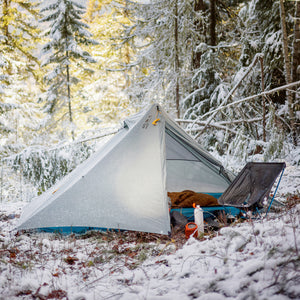
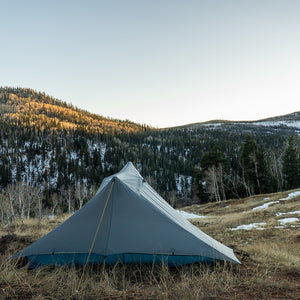
Tayson: You may find you know a 20-year-old that that takes 2 years to build into an ultra. So everyone will be different but by all means you know 50's the new 30, so and I'm and that means I'm 20, right? So now uh oh, I'm going to struggle this one. Glaziered 55, wondering if you all use any kind of footprint under your. Tents and if so what do you use? Uh no, currently and for the last two to three years, I have not used any footprints underneath my tent. I haven't had any issues. Um I think it's just if you're conscious and and really paying attention, I think you're going to be fine. That being said, it's not for everyone and there are times when maybe like once I get there or specific conditions that I would have brought a footprint. Um footprints will be made available later this year. Um for the 40s tents, so if that is something that you're wanting, you can pick those up, but personally, I have not used a footprint for quite some time and I haven't had any issues. All right, next one like that. Would like to hear your thoughts on the.
Tayson: Differences between 40° or whatever temperature when the sun is out and shining on you and when it's overcast or dark at 40°. I've definitely noticed that there's a difference even though the temperatures stay the same say the same. Um yeah, 100% huge huge difference when the sun is out versus when the sun is down. Um I don't know the science behind this, but I believe it's all related to absorption of sunlight. Um right, cuz cuz the temperature is just the the ambient, you know, the air and it's temperature, but um I mean just just experiment, right? I mean walk underneath a tree and then walk out of a tree, there's massive difference and I think that's just the absorption um of the sun, right? If you're wearing a black shirt versus a white shirt, etc. It's it's all the same thing. Um yeah, there is there are some massive differences there and so um that's definitely something to consider. I will say this though as a caveat, I don't notice nearly as much of a difference or and maybe I'm saying this the wrong way, but let's say it's 40° and um you're hiking actively, but it is after dark, the majority of your heat is coming from your physical body and your physical expenditure.
Tayson: Um and in those senses, I've usually done I haven't noticed the lack of sunlight per se, but who's to say that if it was 40° and I was hiking in the summit, I just wouldn't be sweating and trying to keep cool. So, um there's something to it though uh for sure and so getting used to those numbers. For yourself is definitely something that that pays dividends. Um the more you're out there, the more experiences you have, the more confidence you build. So, just get out there, guys. Uh OB General, I'm not sure uh maybe that's a category here. Uh Jonathan Gibson is asking, "Are you looking at manufacturing in the US if cost is ar- is already so high?" Why not at this point? Um man, that's a whole can of worms, but no, uh we're not I mean, yes, we do actually produce a few things here in the USA. Um and we might even build a couple's tiny things, but these are not like jackets and sleeping bags, not big things. These are like our 1/8 in foam pads and and and um some other things that may be coming down the pipeline.
Tayson: Cuz definitely the biggest cost increase, um if that's kind of what you're referring to is the costs are raising, is just the shipping side of the coin, but shipping is still just a fraction of production. Um and with lead times and things like that being crazy over 20 20 and 2021 and even into this year, um the same is it's the same with US manufacturers, right? They're they're having similar issues. Um delayed lead times, etc. And so, no, for us, I personally believe and and am very confident in in this. Um I'm very happy to be able to produce overseas, to be able to produce in quality factories, and to provide a different financial opportunity for people that have no financial opportunity. Um And I don't want to get into like the politics of all. That, but I personally get a lot a lot of value out of helping people in these developing countries. And and you know, even meeting their kids that now get to go to school because their parents have a stable job, um and how that changes generations. So, I love that.
Tayson: Um I personally chose I mean when before I ever started Outdoor Vitals, my goal was to figure out how I could work in Asia because I'd lived there for 2 years, how I could work in Asia to provide better jobs for the people that I knew there. And thankfully, I feel like that's exactly what we're doing today. So, um you know, those people wouldn't know what to do if they didn't have to work 7 days a week and um you know, had had opportunities to. To to provide for their family, you know, and have consistency in work and all sorts of things. So, I take a lot of pride in the money that that that we pass um to those factories and and for the work that they do and um but I'm getting off on a tangent. There's there is another side to the coin and um I I'm not going to go there right now, but um for the time being, no, we're not looking at US manufacturing unless it's right here in our own office. Um Jacob Thomassy, uh any intentions of making a sleeping bag with the same technology as the as the Nova jacket?
Tayson: So, the Nova jacket's like this one I'm wearing, it's NovUL, um has the stitchless fabric, so I imagine that's what he's talking about. No,. Not at this point, and the main reason why would be this is a This would be a comparable piece to a sew-through jacket. Um in a sleeping bag, you really need it to be a boxed baffle. Meaning that where those baffles come together, there is still um, it's not it's not touching the inner the inner and outer fabric are not touching where you'd lose a lot of warmth. Um, instead you need a box baffle where there is a um, like a non-woven material between the inner and outer fabrics that leave the loft fully throughout it. So, yeah, I mean maybe if we were looking at making like a 50° uh, or maybe even in the 40° range of a sleeping bag, it might be an option, but as of right now, no plans. Greg Roberts,. By the way, when will you guys be bringing out the rain pants? Uh, Greg, great question. To be continued. Uh, Tony Harvey, uh, which hoodie performs the best under this rain coat at around 30 to 40°? Dragon wool, turn, or the altitude hoodie?
Tayson: I would imagine wearing the Ventus hoodie under this rain coat is so warm on its own. So, it kind of sounds like what base layers what really what you're asking to put underneath a rain jacket. Um, we have made some some content around that. My personal opinion, my favorite still to this day, is to have wool that I sleep in and the altitude that I hike in. Uh, the reason for that is I'm going to be sweating a lot more when I'm hiking and active, and the polyester the 100% polyester. Material in the altitude is going to dry faster, and um, just just it does great, right? Um, it doesn't sag per se or any of those things um, like some wools can. And I'm not saying I would not hike in a turn. I love hiking in a turn, too, but I'm just saying uh, if you're picking and choosing and nitpicking, right? Like if you can just buy one, that's that's a different question, um, for sure, but for me, what I found best is I I kind of have liked hiking in the altitude a little bit more, and then sleeping in the turn. Or if I'm doing something that's a little bit lower exertion, then I love the turn.
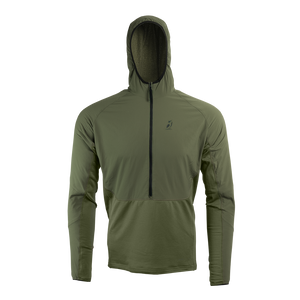
Tayson: I mean, next-to-skin comfort, the wool benefits with odor, um the wool's benefit of pulling moisture off. Your skin. I mean, it is just a very, very comfortable piece. But if I'm doing high output, I stick with the altitude. So, hopefully that helps answer that question. Um Phil Proctor, oh and to go back, the wool the the Dragon Wool piece is going to be best for winter conditions, colder conditions as a base layer. So, you know, three-season, four-season stuff. Um not, you know, but but the other ones work in that those scenarios, too. So, it's really just a bit of a preference uh of how of what weight of base layer you want to wear. Phil Proctor, what are your thoughts on using in conjunction with the Ventus as a layering piece? Um is it sized / fitted appropriately for what or what Yeah, so basically he's asking um can you use the. Ventus with the Vario or do I need to size up the Vario? Um yes, you can use the Ventus with the Vario. It is sized slightly larger than the Ventus. Um they are different pieces and they are designed to fit differently. So, if the Ventus you have fits you extremely well, I would just order the same size in the Vario.
Tayson: Um if you're on the fringe or the cusp, you know, let's say you're you're really stretching out a large in a Ventus, you know, maybe the XL would have been the preferred size, then then jump to the XL. But other than that, if the Ventus fits you really well, stick with the Vario. It is sized larger by a little bit than Ventus. Um Jam is the name. Um you asked, "What kind of soap. Do you laundry your jacket with?" Um I use any and he's talking about the Vario jacket specifically. Um I use whatever soap I've got. I just cut down the amount of soap that I typically use. Um so I'm not putting too much detergent in there, but the Vario, the Ventus, very easy pieces to wash. Um so, yeah. I just use whatever I'm I'm currently using. If you want to take extra extra care of those, you can buy Tech Wash, you know, Nikwax. Some of those are going to be better as well, and you can find those on our website um if you want some more details on those. All right. KJM27434 uh asked, "I'm curious how this would fit a woman when using the hip belt." So, she's talking about the Kody UL backpack. Just.
Tayson: Skip ahead there, and she's worried about the backpack being too tall or too big of a torso and potentially hitting her in the back of the head. I'm going to summarize that cuz it's a long one. Um yeah, it it is something. I wish I I knew off the top of my head like who it fits the best, and we might have that right on the website, but yeah, I think when you get into like the 5'2", 5'3", maybe even 5'4", it's not going to be quite as comfortable in the sense of the the the frame maybe hitting you on the top of the head. Um it's going to work best for people that are say 5'6" up to Yeah, well, torso size is really what we're talking about here, so um I know I. It's very easy to fall into the trap, by the way, of saying like, "Oh, I'm 6'3", so I need a tall frame." That's not true. I'm 6'2". I used to be 6'3" um before I apparently got old and decrepit, but um and I'm not a tall torso. In fact, if I wear a tall torso, it's extremely uncomfortable.
Tayson: Um I am a 100% a medium torso backpack, so um yeah, going back into this cuz she did list some of her torso sizes here at a 16, 17. Um you should be fine with that piece. Um I'm I think I'm right around like an 18 19. Fits me extremely well, but what I would say with this is from the the biggest things I've taken away is you you can fit that onto your back in a. Way that's going to be very comfortable. However, what smaller individuals find is that they don't like to use it as much as a day pack. Whereas like for me, I can use that as a day pack. I I crunch up all the the compression uh little clips on the inside and I'll run that as a day pack and it feels like the size of a school backpack to me. Um but say for Derek in our office, you know, he's always going to bring a Drifter backpack uh for his day hiking stuff uh just cuz it that that pack does feel like a large pack on him at all times. So, um I think it would feel like a large pack. I think you'd be comfortable. If you're getting you know, if you're getting lower than.
Tayson: Like that 16-in torso, then you're probably going to be not as comfortable with it because we don't have multiple sizes. You did ask about multiple sizes and the answer is right now we have no plans for multiple sizes. Um if the Koda UL continues to sell well, more than likely what we'd do is offer a different liter capacity, which would fit a smaller individual a little bit better. All right. Uh Cosmo 75, which one would pair best with the Ventus hoodie for a through hike of the AT? The Nova UL or the Nova Pro? Um great question. I would say if you're doing a full through hike, from what I heard being out on the AT trail, it gets really cold in the winter. So, if you if you think you're going to take if. You're going to be going into the Whites the White Mountains and it's getting really really cold, then to me I would say um you know, why not take the Nova Pro? But I wouldn't take it out at the start. I'd just pick it up at the the appropriate time. But the combination of a Ventus and a Novus UL is also very, very good. So, that's such a such a tough one.
Tayson: Um you could you could get away with the Novus UL would be my my prediction. I think you'd be just fine and happy with that. Um I The The Novus ULs are are I will say we've done a sizing adjustment to them, but they're a little bit tighter, so you may want to size up when you're specifically looking to layer. Uh but use. The sizing indicator on our website. We've updated that pretty recently. It should give you a very accurate estimation on that, but um I think you're going to go just fine with each of those. I think it's really a preference thing. If you think that you're constantly cold when you get to camp and whatnot, maybe go with the Novus Pro. But layering those together, um you know, the Novus UL is is a very warm jacket as well. So, I don't know. I don't know what the lows are you're getting into, but I would have no problem taking a Novus UL and a Ventus into some pretty dang cold scenarios. You know, let's say you're getting down into the 20s at night. Um low 20s, even teens. I think you're going to be good because by the. Time it gets to that those levels, you're getting in your tent anyways.
Tayson: So, um yeah, I think you'd be just fine with either choice. So, I would make the choice that will get you the most use out of the individual pieces themselves. Um Sarah Newman, will you consider making a Dyneema version of the Fortius? No comment except for subscribe to our YouTube channel and you may see some sneak peeks um at some point. We're always doing R&D. I'll just say that. Uh but we're we're a long ways off of of uh anything there just but we're always testing. I'll just say that. Jared Shaw, I would probably leave this on iTunes. My big question is a pack size. So, Jared asked a novel of a question. It's a question. In fact, this this length of. A question may be better off for our customer support. They'd be able to help you a lot, but the bulk of what he was asking is should I pick a 60 L or a 45? He's worried about everything he's got fitting into a 45 L. Um, you know, especially when he's considering bringing a And keep in mind, he's hiking with a partner. So, that was already also a part of his question. But, he's worried about, you know, he has to bring some stuff for a dog.
Tayson: He may have a bear canister and things like that. And um so, my my answer to that is I can use a 45 L pack, our Shadow Light, and it is a large large 45 L pack. Um, I have no problem getting 7 days worth of gear and. Food in there myself. It's Yeah, it's just like it's got the space. When I use a 60 L, I cannot fill it up anymore. Um a big part of that was like when, you know, switching to a 40s tent and a top quilt. Those are two massive things. And so, ever since, you know, both of those changes happened, like there's there's almost no reason for me to have a 60 L, unless I'm taking my child or someone else and I'm bringing extra gear for their behalf. Uh for you, where you're going able to split up the load and you know, kind of offset a few things there, but you are at maybe bringing some dog stuff. I think that you could you could be pretty well off with a 45 and a 60 L. Like.
Tayson: If you got one of each for you and and your partner, um that way too, like, you know, if you are going on your own hikes, you could drop down to the 45 L or or go up, but it's not a massive difference and I wouldn't overthink it a ton. Um weight-wise, you're talking like 1 2 oz. It's just It's not a huge difference. It's just more so that the advantage of getting the right size pack here is that the pack won't get as sloppy, meaning um yes, there are compression parts on it and you can roll the top down real tight, and you can tighten up the top, and then there're side compressions. Um, but you're going to have to pay more attention to those when you're not filling up the pack to get. The pack to stay very stable. And and not, you know, when you're unzipping it or something like that, you're not having It's just a It's just a comfort thing, really. The 60's going to work fine for you. So, if you're real nervous about it, get the 60's, but um but the advantage of going to a 45 is just it's a little bit tighter, a little more stable on your back.
Tayson: Um, when gear's in there, it's going to feel a little bit more solid and and less floppy, per se, or you're just going to not have to like be as conscious of rolling down the pack real tight, using the side straps, those kind of things. So, it's just a preference thing. I don't think you'd go wrong if you got the 60's. I wouldn't over. Over worry about it. Um, but the 45, that is the advantage. It's just It's a little bit of a tighter pack, per se, for for stability and and not having to use those compression uh aspects as much. K, uh retail products. There's some questions on retail products here. Bradley Uh, Dezall is asking, "Those trekking poles look awesome. Design question. What is the deciding factor to go with foam for hand grips instead of cork?" Uh, Bradley, we retail the the trekking poles that we use right now. Um and I'll be honest, I don't have a strong opinion on foam versus cork. I would probably say that I like the cork, personally, just a hair better. Um but I I I to me it's not even enough to be a a deciding factor. I think some of.
Tayson: You guys are going to have strong opinions on this, but to me, personally um, I like the black foam for the look and the aesthetic. I like that it's just a black pole. Um, instead of having kind of that bright cork at the top. But, I think I also think that the cork is slightly more comfortable long term. Um so, I don't know. Don't know. I I I won't say more on that, but the real the real answer there is we did not pick the cork or the foam. Um we picked the Komperdell poles because of their incredible strength and their warranty and their um the way that they weave the the carbon we In fact, I interviewed the CEO of Komperdell who who lives in Austria as well um on the podcast and we. Went all into just the design of those and how good of poles they really are. Um and so, they made a change with the handle, which is why you'll see my poles, which are a year older, having the cork and the newer poles having the foam. Um I think that's right. Or or maybe it's switched. Whatever's on the website's what you'll get, but that's what's happening. Um he had Bradley had a second question.
Tayson: Thoughts on the Garmin Fenix 6 series of watches? I've heard good things, but they're expensive. Do any of you you upload topo maps to your watch for navigation? Uh the answer's no. Uh I have no experience with the Fenix and I have no desire really to have a Fenix personally. Um I wish someone in the office did so they could. Speak on this a little more, but personally with my watch, I'm not I'm not planning on my watch replacing my phone um or replacing my Garmin inReach Mini. My watch is to tell time, to keep timers, stopwatches, things like that, but it's also just to just to track what I'm doing, track my pace, track my heart rate. So, this this Garmin Instinct watch, in my opinion, is the perfect one because my battery life is way longer than a Fenix. Um and then two, it tracks all the things that I care about. If I get a text, yes, it can tell me that I get a text, but I'm not going to like try to text back on my wrist, right? I'm going to get my phone and text back. So, I can really filter what. I want to see on my wrist.
Tayson: Um but then the biggest thing is this thing is just all about performance, right? So, it's all about the activities, tracking those, all those kinds of things. I One time I uploaded a trail onto the watch and about halfway through the hike I I just turned it off because I was not enjoying like navigating from my wrist and and on the trail I was doing it I didn't need to navigate. I knew the trail and so just wasn't a factor. If I was going bushwhacking and and creating my own trail somewhere or doing some off-trail stuff, it would probably be worthwhile putting it on there, but I didn't enjoy it personally. So, with with me I I laugh at my love my wife, but I laugh at her. All the time cuz she's got an Apple Watch and that thing sits on the charger way more than it's ever on her wrist. And it's like what's the point of a tool that always has to be charged and and just isn't You know what I mean? So, for me, I like this because I mean right now it says I have 28 days of battery life, right? Um when I'm tracking things, I'm going to get 20 plus hours of tracking, 20 to 30 typically.
Tayson: And so, it just to me battery life trumps everything else and and I don't need the doodads of the Fenix cuz I have a phone. So, personally, that's why I choose the Instinct Solar. Good question though. I wish someone here in the office did want the the Fenix because they could. Probably give you better info on that of why they do it. So, um All right, Leo is asking about snowshoes. He's He's just asking if we're going to retail snowshoes. Um not this season. Not this season. Maybe next season if the membership I mean the memberships continue to grow and maybe if we get a few more questions like that, we would look at retailing some snowshoes. Um I did get to go out on some some really fancy snowshoes from Komforta last year and need to get back out on them this year. Um those are some expensive ones. They've got some other ones, but we've got some easy options if we did decide that to add that in. So, if you guys want snowshoes, throw it in the Facebook group if you're a member. Um email. Us in. You know, let us know that you're interested in snowshoes and and we could potentially add those on. All right, last question.
Tayson: Uh, Chris is asking, "Hey, great podcast. As you hit as you hit on the Garmin inReach Mini, I was wondering if you were going to do a podcast on the new version of the inReach Mini 2 um, as well. Gators or Oakleys as a solid way to go for eyewear." So, um, I think he's So, the main question there is just the Mini 1 versus the Mini 2. And my personal experience with them, having had them both and used them, uh, I think for a full year now on that Mini 2, is the Mini 2 is improved. Uh, it's improved service. It's improved in the app. Improved texting experience. Um, uses. Less battery. The thing I did not expect or did not realize is that part of why that thing does, like, ridiculously good on battery, significantly better than the first one, is because it actually forces your phone to use its GPS. So, when you go to send text, it's going to say, "Hey, turn on your location on your phone." And and and then you send the text and it's going to pull it off that. So, what it's doing is it's saying, "Hey, you've got your phone. Let's use its battery instead of the Garmin inReach Mini." Which two.
Tayson: Which I didn't care for, but at the same time, um, it's not a problem for me. And I do get, like, ridiculously good battery life with that, uh, inReach Mini 2. So, I've really liked it. I think. It probably is worth upgrading if you have a 1 and you're a very frequent user. Um, you know, if you're not using it all that often, then I wouldn't worry about it. But, if you're someone who's using it constantly, um, in the field, it it gets better service. It just works better. So, I've really really liked it. The the con though, like I said, is I'll occasionally, you know, turn my phone location off so that I'm using less phone battery as well when I'm going big spurts between needing to use that Garmin. I think it'll still pull down messages itself, but it's more so when it's shooting them up for some reason it it wants to know your phone's location is on, so. Okay, those are some great questions. I really appreciate you guys emailing. Those in, writing those in, commenting those. If you've got additional questions, make sure to let us know.
Tayson: Like I said, you can email us at little ultra light podcast at gmail or you can leave a comment on YouTube, but also feel free to leave us a rating on iTunes. That really helps the podcast out. The podcast is growing and I'm happy to say that. You guys are awesome. You guys have supported us for a long time on here and you guys are die hards. Like if you're still listening to this podcast, likely means you're a die hard and so it means a lot and it likely means that you also need to go leave us a five star review somewhere. So, please do so. It does help us for sure. With that though, make sure. You stay tuned. We've got some awesome podcasts up and coming. More awesome guests. I've got a handful of guests scheduled here in January to interview. So, those will be coming and we'll have some some other podcasts as well just in inside the office. We've got our own trips going, so make sure you subscribe. We've got some great content coming and really appreciate you guys sticking around and we'll we'll catch you on the next one.