Tayson: Hey everybody welcome back to the Live Ultralight podcast today we've got a golden nugget of an episode is what I'm going to call it um a shortcut if you will uh that will really help you in the outdoors if you're just new turning into this podcast um this is the Live Ultralight podcast it's powered by Outdoor Vitals and it's all about getting you Outdoors showing you how to lighten your pack and build your confidence so you can start living your life full of Adventure and I would say that this particular one is going to really really help solidify that there's going to be a lot of takeaways there's going to be a lot of learning opportunities and shortcuts there but it's not just about that for us I mean for us here at other vitals.
Tayson: Our goal is is not just to get you out on trail but it's more of why we get you out on trail that is important um we just firmly believe that it will improve your lives physically emotionally mentally and uh it's kind of weird to like tie that into the gear itself but it really is a factor because um of where it can put you so the topic of this episode is going to be about a 10-piece layering system guide that that Brigham wrote now this guide is uh it's big it's pretty massive you can find it on our website Outdoor Vitals I think written out in a doc form it was 36 pages long so it's very comprehensive but what is interesting I think for you guys is as we go through this and.
Tayson: As we outline the the highlights here that will help you have the right layering system it should Empower you to get outdoors more often and a lot of times the most beneficial experiences I've had Outdoors have been when the weather's not good when things get a little bit crazy but I've still been comfortable and been able to enjoy it because of principles like we're going to be talking about in this podcast so with that introduction Brigham do you have anything to add about why this might be a particular podcast of importance for people.
Brigham: Um I think it I don't know the word foundational is maybe I don't know I hate to have that sound a little too significant or too I don't know Sensational but um I think understanding a little bit of buying the why in like our our clothing choices for when we go outside can be really helpful um you know we're not we don't want to just have like an infinite number of clothing choices or clothing items in our in our gear closet or you know whatever and so having some understanding a little bit about you know some some the right way to make certain choices or a good way to make certain choices with clothing can help us to kind of just slim everything down and simplify our our thought process or or our packing process. And help us enjoy the actual time that we have getting out.
Tayson: There yeah I think I think there's some fallacies or false beliefs out there that I I came into this world with of just like bulk means warmth or um you know the more layers the warmer you're going to be you know and and really more does not always mean more a lot of times the more means less uh when it comes to layering and so by understanding some of this guide it really can streamline your your system streamline your pack and I really was pondering that a lot as I was out on the trail this fall as the temperatures started to dip and change I was just thinking about the layering system that that I use which will be founded in in everything we're going to talk about be talking about today but um man.
Tayson: I take so much less stuff I'm warmer on trail than I typically ever have been and when I'm not warm I understand the why and I can adapt something to change that out and I look back at like years of trial and effort and energy and I look at this type of information as just a massive shortcut a lot of experiences that could have gone better you could have been warmer could have been more comfortable it just would have started looking at systems like this a little bit earlier on and had the knowledge of knowing when to use these pieces of gear as well so I think we we teed it up here pretty good Brigham pretty good point yeah I.
Brigham: Would agree I think uh I'm actually I'm not a big believer in shortcuts because I think they're they they stay with us for a shorter amount of time like the whatever uh gains we get from a shortcut I think are a little bit fleeting but like I do I do think if you know kind of applying the the thought process of of this whole thing I I think it is it just maybe speeds up the process which is a shortcut but like I think it's one area that um it doesn't necessarily it's not the same as experience shortcuts of like just having experience of doing things I think it can just get us in a in a right place in a safe place um because it'll enable us to you know just get out get. Out into the into the backcountry and spend more time outdoors and that's where the experience for every individual will reinforce their clothing choices so it's like it's a shortcut on like the context and the why but it's just shortcuts them to get outside faster and then they can you know start experiencing their own lessons learned from their clothing choices.
Tayson: Yeah I think I think we're going to be talking about high level principles right within layering um you know what's the purpose of a layering system why do we even call it a system like what's the point of it being a system um we're going to talk about like the categories within that system but what we're not going to talk about is like the specifics of by this exact piece of gear right because that's where they can build their own preferences they can build their own trial and error right um but these are more like principles that are pretty Foundation pretty foundational and I would say just true right that's typically what what a principle is more just a truth or a matter of fact type of a statement but then the nuances you guys. Are able to dial in on your own experience in the field and we'll hopefully be able to give you or point you in the right direction with that so yeah so on that note Brigham why why call this the system why is it important that we have a system for layering instead of just grab and go with with your gear.
Brigham: Um one because it's founded basically it's founded on like certain understanding of what clothing should do and then when you have that understanding it simplifies the decision-making process and like in packing for whatever the trip is because really clothing in a performance setting or like you know where your clothing is kind of part of your survival system that keeps you active in the back country um it uh kind of lost my train of thought there that's embarrassing but uh I I was thinking two steps ahead too so I can't even catch it I mean let's just go back to your question why the system so this why the system what you understand the context it simplifies the packing process because you understand what your clothing is supposed to do and then you can look at. The clothing that you have and understand if it accomplishes what it's supposed to do or how it accomplishes what it's supposed to do and how that will benefit you or us the users in the back country so how it just kind of sets up some some parameters and things for us to like maybe close Some Loops or gaps or connect some dots yeah.
Tayson: I think the older I get the more I realize the value in a system or a checklist you've probably heard me speak a ton about checklists on the podcast the thing about the checklist that we've talked about so far has just been like this is what I'm taking not necessarily the principles behind it and but it does make me kind of question here Brigham so we've got this labeled as a 10 piece system right yeah does that mean that you're taking 10 pieces out on trail on every trip.
Brigham: No um it's it kind of just ends up being about 10 pieces um and that is basically if you have this um I call it a curated because curated collection of 10 pieces kind of means that there's a lot of thought and deliberation that goes into it so if you have you know basically if you've got these 10 pieces covered you've basically got like the right Tools in your toolbox for pretty much any trip year round to where let's say you're planning a trip in July in like the High Country like you know way up in Colorado where weather's probably going to be like as as mild as it's going to get like in terms of warm temperatures but there's going to be tons of mosquitoes so like there's certain clothing pieces in this 10-piece. System that will help you like stay cool but also help you with the bug situation so it's kind of a just ends up being what I feel is like a really good number to have um I think all your base is covered for.
Tayson: Basically year-round backpacking yeah I think I think a part of this system is it can build over time you know if you're going to do a specific trip you may acquire a piece or two to be able to do that trip well those can stay with you and some of those pieces a lot of them actually if you get the right pieces can be used year-round but um it'll just kind of build over time and it's not like an upfront expensive like oh man I need to go out and buy these 10 different pieces in order to backpack correctly no that's really not what this is about because a lot of what we'll talk about is just the application of those pieces too so.
Brigham: I was just gonna say yeah that's that's a great point because you kind of want to just end up here you want to you want to get to the point where like once you've got about these 10 pieces like you're pretty well set and you can you you it's like a it's a menu really you select for the given conditions or the expected conditions of Any Given trip and knowing that they're going to fulfill their purpose and do their job um so that like we can just enjoy our time out there.
Tayson: Um with confidence it's pretty freeing to look at this and I think I think the promise that we're saying is with this 10-piece system you really wouldn't have to go out of your way to do anything in this in the area the geological area that you've been using it in so for instance like we're in Utah we've got everything from super hot summer desert conditions to Winter conditions at 12 000 feet um but as I look down this list it's like yeah this 10 pieces will like allow me to backpack year round in this climate now that's probably not going to be true if I was to like try to go to Antarctica all of a sudden like I'm probably gonna need some specialty pieces for that but with 10 pieces like I've got a.
Tayson: Year-round kit um that that just like it's pretty frame you just know like I've got it the base is covered so yeah all right I think we've teed this up quite a bit let's continue into um I don't know what you call these you've got three points here about like the purpose of clothing or the purpose of the kind of the main kind of three main goals uh that we that we need to accomplish with our clothing.
Brigham: Um you know which would which would be maintain and regulate our body temperature which is I mean that's one of the three main reasons for clothing is to preserve our body temperature we're warm-blooded mammals and our body temperature needs to be very close to 98.6 degrees um but being warm blooded that means we we generate and emit heat and so we have to manage and just maintain a healthy body temperature we need to protect our bodies from external or superficial or Surface harm um you know from infection from insects from the Sun um from um heat depleting precipitation and so yeah and then like we want our clothing should like keep us comfortable and just allow us to do like accomplish our our trip like do like do the trip that we wanted to do. And and have fun and enjoy our time um safely right yeah I mean you could.
Tayson: You could sit in your sleeping bag all day and stay warm and comfortable but you're not accomplishing you know your trip or the or getting the performance out of your body that you need and whatnot so um so just recap those you've got basically maintain your core body temperature to protect our bodies I like that like even from Sun right um and then to basically enable us to accomplish the task at hand yeah um and I think you know being able to to apply these you know really will really really does I guess enable us to to accomplish all those things and I think that last one though of just like enabling is the key one because if you do your system right you'll feel more empowered to be able to do certain trips you.
Tayson: Know right like there's a lot of people that are seasonal Backpackers there's a lot of people that may only backpack in one climate and these types of things and other trips are just off the table without having this system so um all right one other you know big step I wanted to talk about before we get into the pieces themselves is heat loss um I this is you know as I was talking earlier about like just my layering system and how it's adapted and maybe I'll save some of this this thought for later in the category section themselves but I I think as I understand these different ways that we lose heat more uh the more like the the layering system just makes a ton of sense and I'll just I mean to go through.
Tayson: These right you've got you've got uh radiation you've got evaporative cooling you've got convective heat loss and you've got conductive heat loss um these are all actually quite different ways that we would lose heat right so radiation is just like what's emitted if I'm correct stop if I'm wrong like you're just you're always putting off a little bit of heat and so something like a puffy jacket could help trap that versus evaporative cooling um like sun hoodies right so if you're sweating like that's a that's a mechanism for a bodies to cool themselves off but sometimes a layering a piece can play into that with um like I say sun Hood if it was wet that can actually help you stay cooler and then you've got convective heat loss and this is one that that.
Tayson: Stood out to me the most the last few months um because we've you know we've been testing well one we've been using the toucher rain jacket and that's one that basically will block the wind so that the wind wind isn't what I like what I like to Cloud call it is steal your heat uh that's like this category of con convective heat loss is is heat Steelers right it's not just like it's just like slowly coming off your body it's not anything like that it's it's just the wind or whatever it is it's just pushing the air and it's just ripping the heat off of you um because in a lot of these scenarios whether you're using let's say it's a rain Jack a rain jacket as a shell to stop that that air motion.
Tayson: Or whether it's a windbreaker um the amount of heat that you can retain by just not allowing it to get stolen off of you so easy through through air um is crazy and and that's been like I don't know like if putting that into words I wish I could like help people understand how important that is because it's it's the difference of being able to hike in like three layers of clothing and then like be freezing somehow versus hike in a single rain jacket and be the right temperature and not get a bunch of other stuff wet with sweat or yeah.
Brigham: There's you know in like everyday life I think most people in the Civilized world like um there's actually really good examples that like people are we're surrounded by with like right the second in our homes and um with that are associated with convective heat loss um you know we want um what convective heat like if if air moves across the movement of air across a body with droughts heat from the body so like in our homes we use insulation between the walls and the exterior of the house to create dead air space we want to eliminate the movement of air between two surfaces as much as possible if our houses didn't have insulation there's this you know six to eight inch gap of sheetrock to say brick outside or stucco that's all open air that.
Brigham: Still can move around and that movement of air withdraws heat from the heat Source same thing with our Windows modern windows are vacuums so they're they're two layers of glass that are manufactured where the air is actually sucked out of the window so within those two sheets of glass the air is dead it cannot move and that's deliberate that's to eliminate the movement of air because that movement of air will draw heat out of your kitchen so it's the same thing we're kind of accomplishing we're just doing the same thing with clothing right with to prevent the convective heat loss.
Tayson: And I would say that's one of the biggest misinterpretations too of of like how much clothing you need is related to getting this single point wrong or not understanding you know convective heat loss because you think about it let's say you were to take someone out and you took them to a football game and they sat on the bleachers they're just sitting there and they're freezing right and they're like man I didn't have enough layers I could have taken more blankets I could have taken more jackets but then you took that same person you're like hey let's go walk around the block in the same like right after the football game let's just say like let's go for a little walk around the block and their their mentality is well I need every piece of.
Tayson: Clothing I can put on because I was cold already but just even the simple Act of walking will generate a tremendous amount of heat and suddenly they're going to be sweating in their clothing layering systems right right and so I think understanding these like like that's just a great example because really really at that point it's not so much about like you need to generate and maintain all of the heat because of because you're losing it through radiation but at that point you're over generating the amount of heat you need so you just need it to not get ripped off your body too quickly um which is where like a shell can come.
Brigham: Into play so I think that's yeah I think that's kind of why uh the understanding the the different ways of heat loss is really critical because heat loss is necessary to a degree like heat loss has to exist it's a it's a physical constant um if we as human beings did not radiate heat we would die because we have to release the heat it's hypothetical we can't because we would when you break down bones if you were to just say like all of a sudden mean 98.6 degrees I'm going to just flip a switch and now magically my body doesn't emit heat you die really fast because your body and your brain would overheat and you'd have heat stroke and you'd die so heat loss whether it's cold or hot that's what you're trying to. Manage so if it's hot you're still trying to manage heat loss if it's cold you're still trying to manage heat loss so that's why it's a really important thing to kind of to understand.
Tayson: Yeah and then the last Point here on just the four different ways of heat loss is conductive heat loss and that's that's actual like physical contact or something I think about this a lot when I'm running like our camera in cold temperatures and I'm like holding on to the tripod like almost instantly like if you're grabbing like a piece of metal like think about when you're going to put your stakes in in the cold temperatures your steaks are metal they're super cold and it just pulls the heat off if you're just sit down on the ground and the ground's cold right it's going to pull that heat off of you sleeping pads kind of a scenario like that where you're trying to mitigate that that conductive heat loss from actually laying on top of something. So um yeah I think I think all of those are just really important to understand because all of them are going to have a slightly different remedy to solve when it comes to the layering system so now I mean we set the stage we're basically into the 10 piece layering system so we need to talk about the three categories.
Brigham: Of them okay so one two sentences just to to kind of go back into in terms of context everything we're talking about is in the context of like backpacking or hiking or an active Pursuit we're not talking um this there are principles that apply understanding heat loss is important but especially with what we're about to talk about we're talking about like backpacking or just call it active Pursuits in the back country where it is implied and and assumed that there is going to be body movement we're not talking about sitting on a lake ice fishing for eight hours like that that would drastically change certain choices um but this is where our body is like a component of the system because our body is going to generate and release more or.
Tayson: Less heat as as activity level increases and decreases yeah that's that's not that sitting on an ice or a icy lake uh fishing like the principles would be the same but the layering system that we'll outline might not be adequate or tailored to that yeah um So within this this 10 piece layering system we've got what are called kinetic categories protective categories and.
Brigham: Static categories maybe explain those real quick yeah so they're it's again kind of going into the system where you it's broken into these they're the three collections that have categories within them but the collections are just so you can kind of like now that we've kind of talked about some of the the behind or the understanding why like kinetic static protective they're broken down that way to help to help us just um keep the processes in mind and but it also simplifies it so like within the kinetic collection you know those kinetic that's the the the that references movement and and activity um so clothing that's going to be associated with us being active and on the move and static is the opposite those are you know stationary that's it's clothing that is specific um.
Brigham: And has a specific application for when we are stationary and we're generating the least amount of heat that we will and then protective um is you know to accomplish so you know those goals of protecting our body from you know topical harm of scrapes and scratches and insect bites and bacteria and the Sun and um you know moisture so heat robbing moisture in Wind so I don't know if I like talking about the protective side it makes it sound like it's a doom and gloom out there it can be a scratched and bit and burned by the Sun and um.
Tayson: Okay so let's let's dive through this obviously starting with just base layers themselves um so in that kinetic category uh the first thing you've got on the list here is a base layer top shorter long sleeve crew or crew to your hoodie um with that specific piece I think you've you've maybe broken this in because again I've kind of got I've tried to build this into the cliff notes version of that you've also got lightweight synthetic pants lightweight synthetic shorts so obviously in that scenario you're probably taking one of those yep and then um you've you've got some of those so that's kind of the base let's stick with those two bases let's say we're gonna stick with um just the base layer top and either a pant a lightweight synthetic pant or lightweight synthetic. Short what what are the purposes and principles behind those two pieces in a kinetic system.
Brigham: Yeah so understanding that it's kinetic so we're going to be moving um so we're we're trying to account for conditions that our body is creating and account for the conditions that the environment has dropped on our lap so um with you know maintaining managing regulating body temperature with a with a base layer whether that's you know that's always going to be our first next to skin layer and its primary job is to move moisture away from our body that comes into play whether it's cold or hot if it's hot we want that to occur because that is going to facilitate the evaporative cooling heat loss process which we want that's what we want when it's really cold and especially really cold and windy we want to get moisture away from our bodies and pushed out.
Brigham: Away from our bodies as quickly as possible so that we're not having our heat stolen away from us by the wind from convective heat loss or excessive evaporative cooling so base layer you know that long sleeve or short sleeve that top um that is also in warm weather oftentimes our Standalone hiking shirt called the hiking shirt and so as we go through this we'll notice that there's a lot of Versatility and crossover and multi-purpose application of a lot of these pieces and that is intentional like that's that's deliberate we want this piece to be as versatile and adaptive as possible.
Tayson: Yeah I think I think the cliff notes version of base layers um well that's the top a pair of pants or a pair of shorts is just moisture management you're not trying to get um you know you're not trying to block anything you know like you're not trying to maintain radiation heat you're not trying to completely eliminate evaporative cooling you're not trying to do any of these things but really by allowing your body to facilitate what it's got built in to do already which is you know facilitate it sweating properly and controlling that um and then you know there's tiny benefits and like radio like radiation heat loss but but that's not where you get you're going to get your biggest gains um so really to me it's use this one as a moisture management.
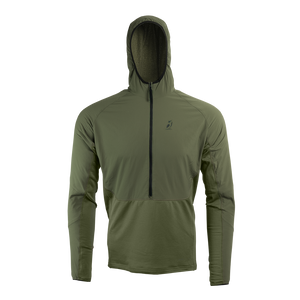
Tayson: That that doesn't we're not going to get into the specifics around like you know synthetic versus a Merino wool versus those things but when you are shopping for this um just know you want it to be something that can dry very quickly and manage moisture very effectively so um so that's that's three parts right there just the top either a pair of pants or a pair of shorts um the next two in the kinetic category here is a base layer bottom so that's a synthetic or Merino leggings or long johns and an active insulation this is for the top uh this would be like a fleece or a breathable lofted insulation I imagine that would be like the Ventus that's what you you're thinking of there like or Ventus active hoodie or a hybrid version. Of that um so what is the the point this is still a kinetic or an active piece but talk through kind of what you're looking for with this part of the layering system.
Brigham: Yeah so the first one was the the leggings uh you know so that's essentially you wanted to do the same thing as your base layer top um when people choose to to use the leggings under a pair of pants um varies very much between person to person like there are some people like me that man I very rarely will put base layer bottoms on under a pair of pants just because my lower half is very warm but there are people that that that's an.
Tayson: I can understatement I don't know I like often ask Brigham you know about this and he never ever ever ever ever has a layer on on his bottom half um unless it's basically for sleeping or he knows he's going to be sitting stagnant for a long time yeah um whereas like myself in these cold cold conditions I might put on something like a dragonwal bottom um that one's probably the the warmest one I've ever tried to hike in so I have some other ones too you know just just always doing R D um that I've that I've liked as well but but definitely you want to think of this as a very light piece if you're going to be active in it but uh yeah you you like.
Brigham: Never I never do I never know that's not how everyone is that's just the outbreak oh it's and that's why I say like there's a very broad use or application from person to person but but in the end you want it to do the same thing as your base layer tops you know for the people that need to put on a pair of leggings under pants they're like but they still need to move so though they need to be breathable they need to get moisture off the skin um and then you know so there's the principles are the same for the leggings and then moving on to the active insulation again um it's something that we want to keep our bodies warm warm enough that we can keep doing the activity that we're doing without.
Brigham: Overheating so it's it's a kinetic it's an active piece but the kind of the function how it goes about keeping us warm and how warm we we need it to keep our bodies changes between this and say like something in the static collection or a more lofted static piece so you know an active insulation there's there's different types and they have they have they all have their their their pros and cons or their benefits or what they what they do better at you know when it or whether it comes to breathability or wind resistance um and so when it's you know really really cold and just hiking in your your base layer hoodie is not going to cut it um and it's but it's say the the wind is pretty dead um it's really helpful. To have like some kind of active insulation on that you can just start the hike in and just hike for hours in without having to take it off because it's going to breathe and Wick moisture and dry quickly but it's going to give you it's kind of just like just gives you just enough of a boost in heat yeah.
Tayson: So so again something like that's going to be like a fleece piece um something that has a little bit of Loft to it essentially um the loftec or excuse me the the uh Ventus uh active hoodie is is one that's going to do something like that that's just going to give you that that light boost in in temperature um but here I mean for this one too it's it's you're just trying to mitigate some of these things take the edge off some of these things you're trying to you know reduce radiation heat loss just a little bit you're trying to reduce uh I would say you're maybe not evaporative cooling quite as much but but convective heat loss you're trying to reduce that just a little bit those two primarily um in this scenario I.
Tayson: Would say it starts to turn from a little bit for the application of these it turns from you're not necessarily trying to like keep your heat from getting stolen but just not get it like dispersed too quickly um in my mind so yeah but yeah it is it is pretty critical because there are definitely times when it's it can get cold out I mean a lot of the times when I'm actually needing to do these it's it's snow conditions when you are actually when you're actually being active and you still need another layer on top of you for like a lofted style layer like a fleece um you're in pretty dang cold conditions yeah so keep that in mind with this particular piece um and those are all of the active pieces before we get. Into the protective pieces that um can or cannot be used depending on your conditions when you're being active or static so protective pieces here we've got waterproof breathable rain jacket waterproof breathable rain pants and a lightweight windbreaker so let's hmm I'll let you I'll let you decide how you want to tackle these categories here.
Brigham: Well um I mean the the purpose the goals we're trying to accomplish with with these pieces they're still the same still trying to we still have to manage our body temperature we still are trying to protect our body and and we still we're assuming we still want to be out in the mountains or wherever we are at the desert or you know like we still want to go through with our adventure um but when conditions call for it um you know if it starts raining or snowing um you know we need to keep the water from contacting our our skin we want to keep our skin as dry as possible so we're trying to protect our body from you know um a lot of the the the convective heat loss um you know and like.
Brigham: We're basically just we're trying to stay dry to stay warm so we're protecting our body from the precip that's coming down it it does you know in terms of the waterproof breathable stuff um it's for sure going to block the wind like it you know it's protecting us from you know the the wind sucking the heat away um but depending on the conditions we're going to choose one piece over the other so the other piece was like a really lightweight windbreaker the windbreaker has like and can give an incredible um uh boost to like just the right boost across a wide range of temperatures that was not very well said but the windbreaker basically you know we want to use a windbreaker way more often than we want to use our rain jacket because the.
Brigham: Windbreaker is going to breathe a lot better but it's going to block enough of the wind that we can just keep going one of the other like core principles of this whole thing is efficiency like we don't want to be stopping you know every 20 minutes to change a layer we want to be able to go as long as possible without stopping when you are stopping to change that layer eventually you you quit stopping to change layers and you get yourself into trouble down the road too you either start sweating and you build up all this sweat yeah or or maybe get too cold on the other end of that but yeah.
Tayson: Like the way that you typically talk about a windbreaker is is basically you'll say something along lines of like there's almost nothing that can provide this much more Comfort or warmth that.
Brigham: Weighs this little yeah across the broadest use case like it's it's it's really interesting when you look at it you know you get this four ounce windbreaker that you know you can use in the summertime but you can also use in the winter time kind of to do the same thing but just in different temperature ranges and different exertion levels um that it's a little bit underutilized or a little bit underrepresented but uh yeah I mean if it's um it's a great piece because oftentimes most people will have a rain jacket and when it's really windy that's the piece that they have that's going to block the wind it'll block the wind but it'll also not breathe nearly as well as we want because then we're we're overheating we're getting too hot we're sweating inside. So now we're we're losing a bunch of body moisture which means we have to filter more water drink more water we're using more resources it's wearing us down whereas like with the windbreaker it's just this really light piece that.
Tayson: Just has a lot of just a lot of applications yeah I can just stop so much evaporative cooling from happening you know and just allow you to just retain just that edge right because anytime you're you're hiking or moving like you are generating a higher degree of heat for sure um you're consuming more food you're breaking more bombs apart in your stomach whatever it's producing this heat and um yeah just that slight Edge I think people would be incredibly surprised by yeah um so I kind of want to share I guess even just to mix this up a little bit just just examples of this because um obviously like the the idea behind protectiveness is to keep yourself dry and it's funny how much stuff just comes back to moisture management and layering system whether.
Tayson: It's you know your base layers getting rid of it or your lack of wanting to trap it in but um one of the things that I see happen the most are the things that that get dumb wrong the most often are people that start hiking in in some kind of a piece let's just call it a rain jacket that is not going to breathe enough and as soon as they start moving you know even just a little bit you'll start to generate enough heat and pretty soon you'll be sweating before you know it yeah and I had a scenario as a kid that I had a jacket that I didn't even really realize it was it was you know quote unquote a hard shell or had a rain protective layer in it I knew but.
Tayson: I didn't think of it that way and anyways we hiked into this area and when we got there we stopped for a little over an hour in one place and I could not warm up I was putting on every layer of clothes I had which really was pretty much everything I hiked in in um and I was so cold I was like shivering I felt like almost hypothermic and really in retrospect all of that was done because I hiked in in too many clothes started to develop sweat and then when you get that moisture trapped inside of your layers um I I can't even explain why or how it does this to this degree but it is like an ice box inside it's like it's almost like it's holding in the cold rather than holding.
Tayson: In the heat at that point you just get all that moisture starts to go cold your body can't keep the temperature of that moisture and now it's got to take the time to either dry those pieces out or something along those lines and so this protective one is is one where a big balance to me comes into play because when you understand this one you have the biggest gains uh with with I would say weight and efficiency.
Tayson: By understanding hey like earlier this fall I was hiking it was about 32 degrees out probably 30 degrees out it had just hailed basically all this hail was still all over so it looked like it had snowed um my breath was freezing I mean the second it was coming out of my mouth um it was really bugging me because I had to hike for about two hours and the like I couldn't see anything because every time I breathe it was just coming right in my face because hiking with the wind and uh is killing me but the crazy thing is I'm hiking in the dark for two hours in freezing temperatures and all I wore was a base layer and our toucher rain jacket um and I was completely fine and this same principle applies.
Tayson: To gloves so I was also only wearing a shell glove not an insulative glove not you know a lofted or basically you know I was just wearing a shell just to stop the heat from getting pulled off me too quickly and what I liked about that is when I got to Camp yes my base layer was a little bit moist but I only had one layer on and me personally part of what I like to do is I'll typically have two base layers or where I have a sleeping layer so I switch on my sleeping layer which we'll talk about here in a second and now I've got a dry base layer against my skin I instantly you know can can get my temperature exactly where I want it I don't have to like dry. Clothing out I don't have to do any of that but but by essentially understanding how to to utilize these protective layers to minimize your heat loss you can get away with way way way less total layers.
Brigham: Brought right yeah for sure and you can get away with not having to change layers so much you can just you just go after you know get after it and stay on stay moving for a lot longer rather than stopping and changing and like that's the worst like to me that's like I'm not with a backpack you guys joke about like I do not like to stop and take my backpack off so like I'm the same way with layers like yeah just don't want to do it so that's why I I pretty I feel like there's a philosophy out there of like how they say like if you don't start hiking cold then you're doing it wrong or something like that it's kind of like a well yeah um yeah because I mean if it's.
Brigham: Really it's uncomfortable to start wearing like dressed appropriately um but if you can just get past the first five minutes like you'll be good for another two hours versus like right um starting out you know comfortable standing still and then in five minutes everybody does the same thing well I've only been walking for five minutes I'm not gonna stop and take off my coat but then they go then they try to push another half hour or whatever and sooner or later they're overheated they're they're drenched inside their jackets soak from the inside and they've sweat and lost all that that water from their body you.
Tayson: Know and yeah so I think I think I think this is an area though like both the active insulation and the protective side here we're dialing it in for you in the field is really important because me and Brigham a lot of times are on the same level like we both sweat a lot we both run maybe similar body temperature situations but we will often see like Derek uh you know from our team here he'll hike a lot in a Ventus active hoodie and I think I often look at him and think man if I was in Avengers right now I would be sweating like crazy and and sometimes I've kind of asked him like are you sweating are you not and he just doesn't sweat as much and maybe runs a little bit colder.
Tayson: Temperature and so he utilizes these same Pieces Just a Little Bit differently than maybe me and Brigham but I think the big important part here is is azure in the field testing these for yourself be very conscious of When you sweat typically you will start to sweat before you can even consciously tell or notice so being overly conscious of it is helpful you won't catch it before you start sweating you know what I mean like it's a reactive instead of proactive approach but but as you're dialing it in you know make sure that that you're just being very conscious of that um because like like break up said that it just once you get layers wet like that sucks now you've got a totally different problem to deal with um but two like that is.
Tayson: Just you know essential ingredients I guess this into performing which is to stay hydrated uh the more water you have to carry the heavier I mean water's the heaviest thing in our packs 99 of the time so um just just very interesting but very interesting to I guess go through the process of of dialing this in now the last thing that you had said and maybe this Falls in a different category though is you kind of said like sun and mosquito protection even yeah I wanna I wanna hear what your thoughts are on.
Brigham: Those well that's where like the windbreaker again for this little four ounce jacket is it's just a great benefit because um a windbreaker doesn't wear off um you know it doesn't rub off and and it's a lot easier to use than sunscreen and you've already packed it in your pack and it doesn't weigh you know you're not adding three ounces of sunscreen to it or sunscreen or bug.
Tayson: Spray bug spray is to me the more significant one because you know I like hiking in in bug spray like to me is it's almost well I have a new experience with it now after ruining a oh yeah like I I guess I hadn't used enough I don't know I basically uh Sons or excuse me mosquito repellent that has deed in it eats away at synthetic uh items but particularly membranes on on rain jackets right yeah.
Brigham: So and that's pretty much Universal I mean you just get DEET onto a membrane and it just starts wreaking havoc like.
Tayson: Crazy heck I had the same bottle of DEET though leak in my truck I'm going to date the plastic on in my.
Brigham: Truck away yeah I've had to eat my watch band before yeah it's I mean yeah you'll.
Tayson: See it like they'll destroy your watch bands sometimes watch faces it's incredibly harmful things so yeah in my mind I'm like that's the last thing I want to have to use is freaking mosquito repellent anymore because it just ruins anything it touches and I'm sure it's great for your skin too right right.
Brigham: Nothing harmful on there but uh yeah the uh definitely um I would say don't don't just not dismiss it um it's very helpful to consider you know your clothing system as as bug protection as well and a rain and a wind jacket the way it's designed to fit is like um pretty trim and athletic but it's not uh close to skin so um it's just this thin you know tightly woven layer that generally um you know bugs mosquitoes especially they can't really bite you through that and it's just just it's a much more comfortable way of like protecting yourself from from insects while protecting yourself from the Sun and it's so thin and lightweight that if you're sitting still like Say You're Just you get to camp and you're sitting still like it's hardly retaining.
Brigham: Much heat right because it's just this thin windbreaker and you're sitting still you're not generating much heat so it often to me is a is a more preferred method of bug protection and then again it offers like outstanding sun protection as well especially like in the winter time where you feel like if you're in conditions or locations where there's snow on the ground and it's a clear sunny day you're going to have your Sun's hitting you from all directions because it's bouncing off the snow and it's coming from you know especially a high altitude it's coming from the sky and you know oftentimes like just hiking in a base layer and a windbreaker like is totally adequate because the sun is warm but it's you know protecting your body from the Sun at the same. Time so.
Tayson: Yeah I want to put in a quick comment here that if any of you guys have questions about the stuff that we're talking about there's two ways that you can ask those questions and I actually want to start doing more uh question focused podcasts you know maybe even quick 20 30 minute episodes where we just answer your guys's your list our listeners questions here so two places that you can ask those would be one these episodes are now available on YouTube so if you go over to YouTube and find this episode under the liberalite podcast Channel you can add the you can add it in as a comment there and then we can respond or we can pull it into a future episode to respond or you can email us at liveultrylight podcast at gmail.com.
Tayson: Again that's live ultralightpodcast gmail.com but if you've got questions as we go through this maybe we go too fast or something or you want a different story to explain some kind of principle uh ask us those questions okay we're on to the static section or category of this so inside of the static we've got the basically static insulation or lofted insulation and then we've got the sleeping set you've got top and bottom listed here now I actually will say this and this is probably I want to ask this question as we go under that under this you know lofted insulation you just have lofted insulation jacket no pants there Brigham what's up with that so.
Brigham: That's because um I didn't include the lofted pants because again this is uh for most of your time during the day or in daylight hours or the time that you're awake like we're we're moving to some degree we're hiking we're setting up camp fairly active in that for most cases like a pair of lofted insulation pants is like a little bit pretty safely outside the realm of necessity especially assuming we have have a tent with a sleeping bag or a quilt where if we if we're static and we're sitting still in Camp we probably just get away with using with using that there is in the actual document that we've kind of referenced here there is kind of a statement in there that says like this is for you know most active backpacking uh Pursuits. Year round but there but it but it will not cover all of the most like extreme cold weather instances and there is the caveat that there there can be like supplemental pieces added to this and that that is one that I would call that.
Tayson: So I think that makes a lot of sense for Backpackers I would say if you're someone who's listening that's more of a sportsman um you know hunt or something like that there's going to be times where you're sitting stagnant outside of a shelter longer periods of time you know rain snow whatever wind like and so that would be a piece to consider in those conditions and we did kind of skip over in that protective category the rain pants but everything that we talked about applies to pants as well in my mind wind pants or rain pants can be used in the same way to reduce conductive heat loss um in fact thinking back one thing that I changed after our 2021 you went to Highline attempt was you know I started carrying wind pants or.
Tayson: Rain pants on a lot more conditions like wind pants I mean they're just so light right like I think I've got a pair that's probably three ounces and if if it's cold and you I mean like I said we got snowed on in August a high elevation you know there's wind there's stuff going on those wind pants like yeah you you're gonna get wet in them you're hiking in them anyways you're going to be like sweating to some degree right but you're just slowing down that heat getting ripped off your body so quickly um so just we talked a lot about like like a windbreaker and I think everyone's probably thinking more in terms of jackets but the same does apply on the bottom half if you wanted to apply those same principles going back.
Tayson: To this lofted insulation I would say yeah for most Backpackers you do have that active or kinetic base layer bottom so you know layering that I will put that on a camp at times maybe you want to sit out and eat outside your tent as a group or something like that but it gets more chilly and so I'll throw those long johns on or whatever whatever you want to call them to sit around Camp no they're not extremely warm you know they're not a lofted insulation and whatnot but they take that edge off and for some reason I don't know why but our legs are typically just warmer likely a lot more blood flow s you're using them or even around camp like even if you're just walking you're probably using your arms and middle.
Tayson: Section your body almost nothing but you're still you're still more likelihood you know if you're using any muscle it's going to be your legs first and foremost so that has to play into it but anyways back to just static uh like a puffy jacket in this layering system um so I mean that's basically the piece that our recommendation is for us this would be something like our Nova line of jackets so the Nova UL if you were to take something like that that's the piece that you're you're only using once you're stagnant um otherwise you're going to overheat in it you're going to sweat in it it's not built to be a breathable piece in fact you want it to basically be not a breathable piece if it's a static piece right.
Brigham: Um so yeah I mean I mean I think everyone I think that's probably the easiest layer for people to just understand you put this on to to eliminate you know that radiation heat loss yeah when you're when your body is only emitting what it would naturally emit it's just sitting still like then you need to layer insulation up on top of it because you're not active enough to to to generate more heat so then you need to you need to throw on your your lofted insulation and uh yeah and I would say this all depends on the the seasonality or conditions the temperature range where you're at but like that it could be that on the particular trail that you're on you know um you could stop for lunch and need to put on your.
Brigham: Your static insulation piece because if it's you you can be really warm moving down the trail in just your base layer top just your hiking shirt but if it's a little bit windy and like 40 degrees you're going to get cold real quick so it's you know if you're going to stop for more than a few minutes in conditions that after a few minutes of sitting still you're going to start shivering just throw just throw that lofted insulation on that's like the whole purpose of the static insulation.
Tayson: It's so hard not to go down a rabbit hole here and talk about like like in that scenario if it's me or you going down the trail we're sweating in those base layers they're wet and then throwing uh a down puffy over the top like you're like oh no don't don't get your down touching anything moisture or you know all that kind of stuff I won't go down that rabbit hole but that's probably a topic we should talk about for the future um I think there's some things to to discuss there but anyways yes use your use your installations anytime you're stagnant that that's needed you know retain that body heat and mitigate that heat loss um one other thing just on going back to the the bottom half there I've had a tremendous success.
Tayson: Using a base layer bottom right mixed with rain pants or wind pants too because what I find at least on my bottom half is it's not so much about having a puffy on there it's about having you know some level of layers on there and then just again stopping that airflow a little bit even even like my Sawtooth pants like yeah they they're not like a puffy right but they also aren't something that completely blocks the wind so that's where something like the rain or the wind pant is still going to block the wind a little bit better than a satu pant and if you had any base layers underneath that it really just compounds and so the last two trips that we've done actually I've done that and been quite happy I know I. Was more comfortable than the people around me actually so um okay we're on the last one here which is another static layer and you're.
Brigham: Calling it your sleeping set yeah I so I I consider this just just one piece right and they might they imagine it might as well be a one buttons on the bus if it was a onesie it might it might be a little bit better slightly less versatile but maybe a little bit better but I mean in terms of the concept it is a really lightweight dry comfortable set of clothes that are just for sleeping now this is an adaptable clothing system it is meant to be very versatile and it there's a lot of logic and practicality to counting your base layer top and bottom as your sleeping clothes um but the to me like the most important part is is that you've got a dry set of clothes to get into at night it.
Brigham: Is absolutely feasible to sleep in damp sweaty clothes and slowly dry those out throughout the night but I consider this a pretty core piece of the sleep of the clothing system because sleep on multi-day like Expeditions is one of your most important Commodities or most important assets is getting good sleep and recovery and there have been you know there have been trips that we've been on where we've gone to bed just wet from sweat and Rain from taking layers off in between setting up a tent and and things like that where like we get into our tent pretty damp and wet and we just want to warm up real quick and and it gives such a boost of a physical warmth and morale to to just get into what I just take is basically us. My sleeping set is a base layer top and bottom um really really four ounces per piece you know what I.
Tayson: Mean like yeah and so um that's a pretty critical piece I'd say it's probably like I'll give it the badge of it's the most satisfying piece of this system it's like the most luxurious it is and it's only you know four to eight ounces you know that range depending on the base layers you choose but at the end of the day pulling off any kind of wet sticky layer here and pulling on like what like my favorite personally is like our turn I love sleeping in our turn hoodie yeah I love it like Merino wool against the skin it's lofted it regulates super well but like pulling that on at the end of the day is it's amazing like it just instant warmth instant Comfort like in in all facets of those words and so.
Tayson: To me I always am going to take you know like the piece I'm hiking in in the day and a piece I'm gonna sleep in at night for that particular purpose now do I want to dry stuff out sometimes sometimes I do I can still do that I'm just gonna put it in a sleeping bag with me or put it in the top quilt with me it'll still get that chance to dry out it just doesn't have to be next to my skin you know potentially ruining any comfort that I could be having while sleeping so it would dry a hair better but most of the stuff that I use tries just fine because of you know my choices with what I'm selecting it's going to dry just fine even if it's not on my.
Brigham: Person so the other pretty important important aspect of a dedicated sleeping set is that it actually it protects your bag so much more which is especially multi-day is actually really important so it's it's one way where our clothing choices can affect other gear items and then your our sleep system is it really is a system so if you're sleeping in clean sleeping clothes then your quilt or your sleeping bag is going to stay cleaner for longer it's going to retain its Loft a lot better you're going to have to wash it less often there's a lot there's definitely some benefits there.