Tayson: Hey, what's up everybody? Welcome back to the Live Ultralight Podcast. Today, we have a trip recap uh to cover. It was a pretty dang amazing trip. I'm really excited to share the details on this trip, but also cover some of the topics such as how to stay comfortable when camping in cold, wet conditions. Um talk a little bit about maybe visiting national parks not in the peak seasons, and a few fun things like that. So, as per the usual, we've got the whole crew on here. Um Tyler, Derek, Brigham uh to come and and share their experiences on this trip. It was it was uh it was definitely a fun one. So, I'm excited to hear how it went for them and uh some of their key takeaways from the trip. If you're new to. The podcast, this is the Live Ultralight Podcast that is powered by Outdoor Vitals, and we bring you this podcast to inspire you to get outdoors and uh help lighten your backpack, build your confidence, and just get you outside more often. Something we truly believe in here is that by getting out more, disconnecting more, getting in nature more, um it will benefit your life mentally, physically, emotionally.
Tayson: Um just has a big, big impact in this tech-driven world that we live in. So, with that introduction, there's one other thing to cover before we dive in. As we speak and as we sit here right now, we have just launched our Black Friday sales event. We did it early this year, so uh if you're listening to this podcast, you do want to pay attention to it. We. Are doing site-wide discounts, 10% off for the general public, 15% off for members, as well as giving free items with every order. So, giving away uh power puttys and also patches. Uh those are just going to be randomly put into different packages uh for any order, if I'm correct. Uh but then also, if you were to spend over $250, you get a free 8-in foam pad. Um if you spend over $500, you get free dry bag with those orders as well as the discounts. So, those are going to stack on top. So, lots of savings to be had. Definitely an exciting time. We've had a tremendous start to this sale. So, uh it's been a lot of fun to watch that come in, and maybe I'll even ask these guys towards the end what they.
Tayson: Might consider uh purchasing on that sale if they were going to buy something during this time period. So, Okay. One more thing before we move on just real quick. If you're at all interested in some outdoor gear this this season at all, now is the time to to check out our sale. We do have installment plan. So, if you're short on funds, it's not a problem. You can you can basically break down the cost of any gear item into four payments that don't have any interest. No no interest at all. Um and if you're waiting for Black Friday sales actually on Black Friday, um you're going to miss out on the best deals. These are going to be the best deals we have this year. And so, don't wait till Thanksgiving. If you get to. Thanksgiving or pass it, you've missed all the best deals. So, now is the really the good time to check out some of the stuff that we've got on the website. We're just talking through some stock outs that are looming as well. So, That is definitely one thing to consider is with this crazy day and age, there could be stock outs at any given time without warning.
Tayson: So, uh waiting isn't always the best answer when it comes to getting gifts. Uh I can attest to that. I am the worst at buying ahead of time uh with my own Christmas shopping and and holiday season shopping and um it's stressful. It's stressful to wait. So, do your guys do yourself a favor and uh order early. Uh so, anyways, our shameless plug that's our shameless plug. We'll. Go ahead and leave that to rest for a minute and talk about what you guys really want to hear about which is backpacking uh some tips and tricks, some things that we adapted and whatnot. So, let me give you a high-level overview of this trip. Uh if any of you guys want to stop me, correct me, change my story when I start, you know, getting off tangent, let me know. But, essentially this trip was about bringing um some PR people, some public relation people, our writers, uh you know, YouTubers, things like that and letting them try our gear, giving them a an experience with it, um and just enjoying Zion National Park. So, as the trip got closer, the weather we just happened to to schedule right on top of a very cold cold snap.
Tayson: And so, we did have to alter our plans a little bit. We switched from doing the West Rim in Zion National Park to do what's called the Virgin Creek, um which is where we drop in from like the Zion Traverse Trail, if you're familiar with that. It goes from the Zion part of the the park to the Kolob side of the park. So, we drop down um and into Kolob Canyon or spring or Virgin Creek Canyon. And uh slept down there, but we we kind of altered that trip to get out of the wind a little bit and to sleep at a little bit lower elevation and hope that it would be a little bit warmer, but it was definitely looming that we were going to have rain, snow, potentially colder, wetter conditions, and uh. In fact, it looked bad enough that we kind of got the question posed to us of you know, should we cancel this? Should we move this? Should we go south? And me and Tyler debated that a little bit, and basically we said, "No, we've got confidence in the gear.
Tayson: We've got confidence in this that that uh we can keep everyone comfortable and happy." And and so, we went ahead and went forward with it, which I think turned out pretty good, but but you guys will find out. So, all in all, the trip was um probably about 13 miles of hiking. So, not a not a massive trip, but you're kind of starting halfway through the first day and ending halfway through the second day. Um but absolutely spectacular spectacular views. So, yeah, that's the high-level. Overview, but let's let's maybe dig into the nitty-gritty on this. Um anything you guys want to say, I guess, before like in the planning stages of this or just considerations that we had as we were as we were planning this trip? I know, maybe for starters, Tyler, you got kind of hassled a little bit when you're picking up the permits on what we were even going in there, right?
Tyler: Yeah, I uh I hassled the ranger plenty as well with with other questions, but um yeah, she just she said a few funny things. The first thing that she said was, "You know what the forecast is for tomorrow, right?" And it's like, "Yeah, we've been watching it for weeks." She's like, "Okay, well, just know that since you're the one picking up the permit, if someone gets down in there and they get cold and they start a fire, you're never coming back to Zion." And I was like, "Okay, I know that." She's like, "You guys have good enough gear?" I was like, "I think we have good enough gear." And uh and so she was she was really staunch um about me knowing that it was going to be cold, there was going to be snow. And rain, and that under no circumstances were we going to be able to make a fire if we got cold. And that was they just did not want to have any any thought of an exception being made for that. So, um that was fine.
Tyler: We knew that we had good gear and that um you know, we were staking more than just being cold on a trip like this by taking lots of influential media people into the frozen desert like if it's it's one thing if we get cold on our own trips, it's another thing if uh if a magazine writer or a YouTuber gets cold in our gear. So.
Tayson: Yeah, we I mean, I guess you could look at that as a risk, but I think it just we had a lot of confidence that we we'd be well off, so we we went for it,.
Derek: Right? There were some definite cons in planning and preparing. Just just kind of like knowing it was going to be cold and debating back and forth whether or not we should reschedule and the fact that we did switch last minute to another trail from the one that we were originally going to go hike. Um but there was also a number of pros digging in Zion National Park this time of year. And I think one of those was apparent early on when we were even just trying to get permits for the backcountry. Zion has become so popular over the last few years and uh it can be pretty tough to get any of the permits, but it was substantially easier to reserve those for this time of year and the types of trip we were doing. So I think there are definitely some pros and.
Tayson: Showed up on the day of, you could have had your pick of any permit. I don't think anyone was going to be picking up permits.
Derek: I don't think anybody is out there hiking that We didn't see anybody.
Tyler: We saw a couple groups on the second day, but not on the day we went in. Yep.
Tayson: So. And some of them looked I mean, they looked like they had backpacking gear like one of the groups. But I I I wonder if they actually were going to stay or if they were going to just kind of call it as is or or you know, but But yeah, definitely easier to get those permits, easier to plan. Um I think and I think that's one of the things just to consider is um you know, take it how you want it, but basically since 2020, um national parks have been slammed. And things like permits and and opportunities in them have have gotten lower and lower, but um they're they're beautiful. I mean, they're national parks for a reason and so sometimes you have to work around you know, hitting the Grand Canyon in the most. Optimal week of the year or going to Zion, you know, and and whatever it is, you know, go to Yellowstone. I don't I've you know, I've been a couple I was pre-2020 when I went to Yellowstone, but you know, I I can't imagine what the conditions are like and so just just keep that in the back pocket if you're struggling to to find times to go see some of these places.
Tayson: It's the same mountain range in the winter as it is in the summer and um in in our case, I think it was, you know, twice as beautiful to go there when we did. So.
Derek: Well, I think there's something to be said to that actually cuz and I'm not going to say this applies to every situation or every place, but there's a number of places I've gone that I mean, if you look online, when's the ideal time to visit such and such destination, and you go in the opposite time of the year. Um those have been some of my favorite places I've ever been because I went during the the I guess not ideal time of the year. You know, one is Zion. On our trip just barely this the weather just made the the the red rocks and the cliffs just look so much more beautiful and and amazing. So much contrast. Yeah, it was incredible. You can't see that on a bright sunny day. Granted, hiking around on a. Bright sunny day is great and and it's still beautiful, but some of the views you get, if you've got the right gear, you know, to me it's well worth going in those off-season times.
Derek: Another, you know, place would be, you know, when I visited Finland, you know, I went in the dead of winter on purpose cuz I had the gear for it, and some of the stuff you can see there Cuz the ticket prices were next to nothing, right? Ticket prices. Things Those things matter, right? But the the things you can see and experience sometimes in the off-season are just because it's the off-season, I guess, to to to make it short, doesn't mean you're not going to have some amazing things to experience and.
Brigham: See. Yeah. Well, I think the opportunity is that if you go in non-peak seasons or the off-season, you're likely to have scenery that is that is not nearly as commonly in like the photography in the magazines. So, like Zion, like yeah, every once in a while like you see pictures of Zion in the wintertime with, you know, a little dusting of snow, and it's it's beautiful, but most of the pictures you see of, especially like Utah's Big Five National Parks, most of the time the scenery people are accustomed to seeing is like, you know, blue skies and heat, you know, that that the whole the picture gives that feeling, so yeah, I think that's another thing to keep in mind is like you're going to you will see maybe a different perspective of of whatever. Park you're going to just by changing your seasons by two or three months. Yeah. I I.
Tayson: Honestly thought Derek was going to say, you know, going to the in the off season going to the Dominican Republic is not all that bad. The water's 5° colder, you.
Derek: Know. But uh Not even that. You didn't.
Tayson: You didn't go to Finland and and, you know, it was still good, so.
Derek: I would I actually as you say that, I wonder if I could even name the five the mighty five or whatever the heck they call those off the top of my head. I just don't Yeah, I don't I just don't like pay attention to like The big five Like I know the national parks. I like to go to the national parks, but I also don't like heed them, right? So, I'm just going to try this. So, Zion, obviously, Bryce, Yeah. Uh Arches, and Canyonlands or are they Those are.
Brigham: Separate.
Derek: They're separate, okay. Just want to And then Capitol Reef? Is that the last one they count as a Okay. Just making sure. So, you got it. Sure. Easy. Easy. Easy. Yeah. Um but I just don't like like focus on them cuz there is just there's just so much out there, you know, to see, but.
Tyler: To like drag Tayson into Zion and he's always complaining about us going to Zion and using wag bags and.
Brigham: I'm always happy that. Do national parks.
Tayson: Yeah. Just the That means the last time I've been in Zion in like the last five years, like the main canyon, we did like a tiny little hike. There's people everywhere. We're standing under this beautiful waterfall or like like overhang and all of a sudden we just start hearing people like yell and scream and, you know, someone like taking a fall or had a had a seizure. That's They're having ended up You know what I mean? But it was just like there's just so many people. It's just a different experience, and so I think I don't know. I could I think I can speak for me and Brigham at least. We don't necessarily seek out some of those places. However, I'd love to go to Zion in the winter. Like I've hiked some of those. Hikes when it's cold out and then it's something in a lot of ways it's better, but Really anytime you're going.
Tyler: To do a back country trip um you're not going to be dealing with throngs of people because the campsites are so limited. So we don't want to discourage anyone from going and doing a back country trip in Zion cuz they're phenomenal. You if you go in the peak times Well, I was just.
Tayson: Going to say national parks, not necessarily our backyard park here, Tyler. You're just going to have a hard time finding from visiting national parks, not Zion. And uh Yes.
Tyler: We get our permits when we get our permits.
Brigham: Yeah. The point The point is if you go a little bit more in the off season, scenery's probably going to be just as beautiful beautiful just a little different than what you would expect in a good way and probably have a lot less crowds and you might not even encounter anybody at all.
Tyler: And the other point is every time I take Tayson, his mind is blown. Even though he doesn't go to Zion on his.
Tayson: Own. What? My mind is blown what? With.
Tyler: How amazing it is.
Tayson: I It is beautiful. They're national parks for a reason. Yeah, absolutely. Um Anyhow, so we start this I don't remember what day of the week it is, but around lunchtime we had lunch at the trailhead and we started hiking in um through trail called Hop's Valley and that was a really pretty trail. Just this long long I mean it kind of starts off just flat and then it drops into a canyon. Just this long beautiful canyon that drops all the way down into Kolob National Park. Um Kolob Canyon.
Tyler: Yeah, Kolob Canyon. Kolob National Park.
Tayson: Mhm. That's confusing. Maybe we need to specify what.
Tyler: Kolob Canyon is like the furthest north section of Zion National Park. Um It's.
Tayson: Not its own national park, but like for all intensive purposes they're pretty well separated. They are like completely separated. Yeah, you can't access Kolob Canyon from the main canyon or the main.
Derek: Shuttle service. So The only The only way you can access it if you start at the main canyon area is if you hike there.
Tyler: Yeah. And and yeah, that's that's the north the northernmost section of the Zion Traverse. The the hike that we did for this trip was about a third of the Zion Traverse. Yeah, maybe not quite a third. So.
Tayson: So we're dropping in there. Um I thought that canyon was really really pretty. Um things to highlight, we were kind of expecting to get rained on on the way in. Um we for sure were expecting rain to come down around 5:00 p.m. And then potentially turn into snow that night, but uh we also encountered you know, a couple creek crossings. I remember I put my trekking pole down in a hole. I mean, and it was just there's just nothing there for like 3 ft deep. So it's definitely in some of that area where you could get, you know, that quicksand or like kind of those weird pockets, which was it was interesting to to see that. Um that is that is one thing to keep your your eye out for out here in the in. The west, but um yeah, I mean, dropped down in it was and it was just beautiful. I mean, we will have some footage on this. It'll actually be a part of a video called um best backpacking candy for the trail or something like that where we freeze dried a bunch of candy and took it on the trip and and tried it out.
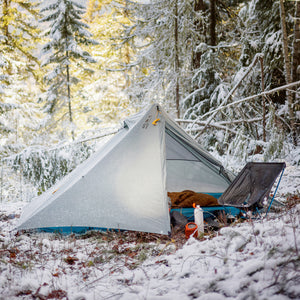
Tayson: Um So if you want to see footage of this trip, definitely definitely watch that video and you'll be able to see just how pretty this is, but dropped down the main canyon or this side canyon, really really pretty. Get down to camp. Um I think we got there around 3:30-ish, something like that, and um but it it just started to rain as we were getting there, and so it was kind of. A it was a bit of a scramble to get, you know, get people's shelter set up. A lot of these people, it was their first time ever, you know, setting up a 40S uh you know, trekking pole this trekking pole shelter. Some of them, I think it was their first time ever using a trekking pole shelter. And so I was trying to give them, you know, some extra help and pointers and I I I regretted after the fact what the first person This is This is just your herd mentality. I think I thought this was kind of funny. Um in retrospect, I just was kicking myself, but like when we very first got there, it was started raining, and so the first person kind of dove under a tree and was like, "I'm going to.
Tayson: Pitch my tent right here underneath this tree for a little bit of extra shelter." And then then then everyone kind of like was like, "Yeah, that's a good idea." And so they found these areas, and I was trying to help them pitch these these shelters under these trees, and you know, the ground's not level, it's all bowed out, like, you know, like big-time bowed out, and you're you're crawling around under a tree trying to pitch the shelter, and uh for for those of you that are pitching these shelters, these shelters are waterproof. Uh just pitch them on flat ground. That's what I did. After I helped them all get their shelters set up, I wouldn't pitch mine on the flat ground. It had a at a very very top pitch. It took me I think. Tyler timed me. What did you say it was, like 3 minutes to pitch my shelter?
Tyler: And 1/2 minutes. Yeah. That was with the.
Tayson: The extra guy outs and stuff, too, right? You counted those, so it's a quick easy pitch, and and uh just something something to consider. But I want to kind of circle back to trekking poles uh shelters at some point in this and and have a conversation on that, but got things pitched. We pitched a couple tarps and and hung out.
Tyler: And talked. On us when we were trying to set up. We had beautiful no rain hiking the whole time until right when we got to camp, and then that was where it started to unload. So, we were all getting kind of wet while we were trying to set up, so it was like a scramble to get it going. And Tayson and I set up our the layover tarps first so that the group would have a area to hang out and and be dry cuz we didn't want to all sit in our own tents for 4 more hours before bedtime. How did.
Tayson: That work for you?
Tyler: What? Setting up the tarps? No, keeping.
Tayson: You dry before bed.
Tyler: Those Those tarps everyone else dry. Those tarps gave us a a lot of entertainment for the rest of the night in in a lot of ways. Yeah.
Tayson: Uh I it was it was a lot of fun. Tyler just had like the worst spot you could have underneath the tarp, so And it kept.
Tyler: Dumping on my leg. But my pants dried out and got soaked three different times through the night, even in the very cold temperatures, so it was good product testing.
Tayson: So we get the shelter set up. We go hang out underneath the tarps. We're hanging out. We filmed the video. Started playing dice actually. Started playing dice for candy is what we started playing, right? I mean we had to play for.
Tyler: Buy in with whatever good stuff you had.
Tayson: Yeah. Couple people threw in some some different candy and started playing and uh that was that was entertaining. That was like a really fun good time. We laughed hard and we played clear till like 9:00 9:00 at night, I think.
Tyler: Yeah. We played a long time.
Derek: Which I mean it gets dark We actually quit at 10:00. Quit at 10:00? Yeah. We got into camp here I think you're a little bit off on when we got to camp. It was more like 4:30 okay and then we got by the time we got things set up it was pretty much time for dinner 5:30 by the time everyone was kind of done wandering around setting up tents setting up stuff inside their tents and then once we had dinner is dice came right out. We sat there for another 3 and 1/2 hours playing dice.
Tayson: The perfect product turning it back to daylight savings time, but Um yeah, I mean we had a we had a great time. We had our dinners there. The the tarp was was much more comfortable to just sit in a group environment and not like go straight into your tent at you know, 6:30 at night or whenever. Um so that was that was a lot of fun. Um Tyler though had definitely the worst spot underneath the tarp. He was in a spot where every once in a while that the water like kind of build up and then roll off of it cuz we didn't we didn't have a like where we pitched the tarps they weren't totally taut and in a fantastic spot.
Brigham: Real That's what I was going to say as comfortable as relative meaning we we weren't sitting out in the middle of an open field in the rain. Yeah. We were protected from the rain, but I would say it was fairly uncomfortable cuz the tarps were like pitched right next to each other sort of overlapping amongst a bunch of juniper trees. With.
Tyler: Like half-inch thick limbs so the tarp.
Brigham: Held up. Branches, but like the branches were low enough that like the tarps were pitched very low for a group of, I don't know, eight people. So, we were all like crouched in there with our knees up by our heads sitting in there.
Tayson: Brigham, the guy with a nice flat rock. He wasn't sitting in a puddle like the rest of us. Well,.
Brigham: You know, it was nice flat rock. It It was a four rocks that my butt held together to act as one to keep my butt 2 inches off the dirt.
Tyler: Also, Brigham's foam pad isn't a multi-use foam pad. It's a sleeping uh pad fastener only. He It only goes in the tent under the sleeping bag.
Brigham: If it's raining and my tent's over there and I didn't want to get up and pull it out from underneath my sleeping bag.
Tyler: You were doing that deliberately because my pad.
Derek: Well, I had a learning experience.
Brigham: Was the You guys and your pads, man, they're filthy. They're filthy. Dude, I.
Tayson: I This is the first My pad No, usually my pad is just fine, but this time my spot underneath the tarp was not the best one. It was ar- you know, me and Tyler had arguably the worst spots. And I was sitting in this hole where I was trying to like dig a hole around where I was sitting to divert water from like draining underneath mine, but uh basically when I finally called it a night, I was like I had basically some water broke over and came right on top of the pad, and when I picked that thing up, it was it it had like it had sat in water long enough that it had actually absorbed some water, and I mean, it was it was like heavier. It was just soaking wet and filthy. I had I did have to shake it out and rinse it off in shower uh over the weekend cuz it was it was it was too it.
Brigham: Was too much. And you guys are going to hate me when I tell you about my seat underneath the tarp.
Tyler: I don't even want to know. I I was so like kind of bunched up like trying to play lean forward that I it was stressing like this inner muscle on my on my leg um to sit that way cuz I was having to hold myself up that way that it like the next week it was sore actually.
Brigham: I I did have a big flat rock but I didn't stop there. I had two smaller rocks underneath it. I had a legitimate stool a very comfortable height no knees up in my face. I was just sitting on the nice little chair. On you? No water. I had my foam pad folded up completely out of the mud on this flat rock so this stayed clean and it was soft. I was living the dream just hanging out all evening and I have a nice seat.
Tayson: How the hierarchy goes here guys? The boss gets the worst spot. These guys all just.
Brigham: That's Leaders leaders eat last. Haven't you read that in Yeah. Well to be fair I I mean I'd done my fair share of work cleaning out all the mud and water and stuff out from underneath this stuff and I happened to find rocks along the way so I took the liberty of using the rocks I found.
Tayson: No that is is true though. I could have done a little more prep work when we started crowding in there to go find some rocks and sit but I we've probably talked enough about sitting on rocks.
Brigham: What the funniest thing about the rocks is.
Tayson: Is not the rust on rocks podcast I don't think. The funniest thing is when.
Tyler: Someone pulled their phone out and they started measuring the levelness of our seats. We were rolling the dice on a on a flat rock. The nicest rock under there was this big flat rock and the dice kept rolling off the side and you would lose points if the wood die got in the mud because I borrowed that from someone that I had to give back clean. So so then all of a sudden the phone comes out and we're like checking the level of the rock every few minutes to make sure it was as level as possible for the dice. It was just part of the.
Tayson: Someone under who I won't name kept leaning on the rock and tilting it, you know, but no, it was it was a really fun time and I think just one takeaway from this is sometimes by bringing something like a tarp for a community area, it can definitely add fun and just more community to the space. Um depending on the size of the group and stuff, obviously, but you know, you might not be able to just squeeze into one tent to hang out, but you might want something like a tarp. And plus, being outside with the tarp was also pretty We kind of had two tarps, so it didn't work out this way, but typically, if you had a tarp, you could pitch it in a way where you could still see outside, you know, see. Kind of the like for us just the beauty of Zion, these big massive walls of and whatnot, so I think that was just one one thing to consider when you're going into these conditions.
Tayson: Um and you know, I think I think a tarp Our tarps weigh like sub 1 lb for sure for our Stone Island tarps, so um it's not a big weight penalty to to throw something in like that, but Um anyways, then we go to bed. How did you guys all sleep?
Derek: Quite good. It was comfy.
Tyler: Way better than at home.
Tayson: I It was funny cuz I don't remember I was We were talking to someone and I was kind of telling them oh, it was it was Dan's videography vi- videographer uh Em- Emmett. You know, just kind of like saying like, you know, if cuz he kept talking about how like, you know, he hasn't had like this amazing night sleeping outside and and stuff and I guess I'm like, well, are you expecting to sleep for like 8 hours straight, you know, and like sleep like you're in an exact climate-controlled environment and a perfectly dark room on a, you know, $1,000 mattress with perfect blankets and like it's just not going to be like that. You are sleeping outside at some point, but uh honestly, what I've been noticing the last few times I've gone out is.
Tayson: That uh when you nail like your sleep system and the layers that you're wearing to get your your temperature right and these these newer pads that I've been sleeping on like I get better longer sleep here than I do at home where my kids could come running in or need a glass of water in the middle of the night or what you know what I mean like or even just your wife turns over and kicks you or something on accident like just solo in my own tent no one's waking me up and I've been getting phenomenal sleep in the back country lately. It's probably says more about what I'm not.
Derek: Getting at Yeah, that's that's what it is for me is kids waking up. So.
Tayson: But I I slept super well. It rained most of the night and I've been enjoying I just that like white noise of rain it's been some of my best night sleep this year has been when there's just a been a light light sprinkle you know. Well I mean you don't want the top of your tent blowing around or something but just that light little drizzle is very soothing. I woke up at like 4:00.
Tyler: And I realized the rain had stopped and I knew this the the snow had started. I flipped on my light for a second and I could see some snow. So then I listened really close to hear if Brigham was shaking the snow off of his tent.
Brigham: I was I I already had my like my alarm set so that if it did start snowing heavy I it's like just an hour interval.
Tayson: That I'll set it just to You did? You had it ready to go? Like it was cued up.
Brigham: Well it's cued. Yeah, I didn't have it set but it never it just was like a really light snow it didn't even accumulate on the tent really but I slept peacefully. Anything I was I was too warm that night it did not it did not get as cold as it said it would the weather said it would and as as cold as I expected I was at one point a bit uncomfortable because I was too warm.
Tayson: What do you think it was like 25?
Brigham: Maybe. Yeah. I don't know I I think it.
Tayson: Probably got to like 20. Yeah. Some like fairly low 30. Yeah. Um, feel like it's usually a little bit warmer in the tents by like 5°. So, it just kind of seemed like so. Yeah, high 20s would be the lowest, I'd say. Um, I did find it interesting that everyone that came on the trip chose a top quilt rather than a sleeping bag. Like we kind of give them the option what what sleep system you want to use. And uh, I think I was the only one in a sleeping bag in.
Tyler: The whole place. I just I think you were.
Tayson: The only one in a bag. I just grabbed the sleeping bag, you know, cuz I I just had them side by side in my closet and I'm like, yeah, sure. Snag that one and then I got there and everyone used the top quilt and I was like, man, I'm the oddball out. This is weird. Um, but yeah, it was just kind of an interesting thing, but we'll talk a little bit more about the gear and and some takeaways from this uh, after we get through just the trip. But we got up that next morning. It was I mean, we slept until like 8:00. So, I mean, we slept in longer than.
Tyler: Hope was that you know, that canyon runs east and west. So, we were hoping we could get a little bit of direct sunlight on our tents before uh, we had to pack them up, but that didn't matter cuz we all woke up at 8:00 and the sun should have been on the tents, but there was still too much fog and clouds and stuff for us to get any direct light. So.
Tayson: Yeah, I think once we realized that, we started getting out of the the shelters and we decided to do a little side canyon hike up to Kolob Arch, which is Tyler knows this, but I think it's the third.
Tyler: Seventh seventh largest natural arch in.
Tayson: The world. Big old arch. It's It's an interesting one because you're so far below. It's about a about uh, 3/4 of a mile up to where you can see it and then once you get up there, um, it's so far away that it's hard to get perspective on just how big it was, but we we stayed there long enough this time that I just started like looking at the little details like how big the trees are right by it and stuff and it is a it is a massive arch. It's pretty spectacular, but I think the best part about this is when we woke up that next morning, especially, there was just a super clearly defined line of snow up on the cliffs above us cuz basically they're cliffs there's like a cliff line and. Then it's just a solid cliff for hundreds and hundreds of feet down to the bottom of the canyon. And right above the cliff, just white beautiful capped cliffs and then, you know, right below is just these orange red, you know, beautiful cliffs and so it was phenomenal.
Tayson: Then down where we were at cuz it's, you know, lower elevation stuff still and there's still leaves on the trees that were yellow and then there's really bright beautiful colors and so we had just so much color and beauty going on. You had the leaves, the red sandstone cliffs were, you know, hundreds of feet tall and then.
Derek: And for a little while blue sky. Yeah,.
Tayson: Blue sky above the snow caps and then it was really pretty. It It really was. Um again, just encourage you I'm sure we've got some Instagram photos up already. Uh go to our YouTube channel, watch that video when it comes out, but it was probably the most spectacular morning you could have in that canyon. It's just as far as views go. Um I mean we've been in that canyon three, four times as a company and uh that was definitely the best views we've ever had in there for sure. Um I like.
Tyler: How quiet the snow makes everything. Like when the wind dies down.
Tayson: Like how it keeps everyone out?
Tyler: Well, that and no, mostly how the snow has like a sound dampening effect, you know, where like things don't echo as much, the wind doesn't sound as loud. And when it is calm, it just sounds extra quiet. And that morning was like that for sure.
Tayson: Yeah. Wet wet damp sand. I mean sand's just quiet in general, too. It was peaceful. It was It was a really really nice morning. I think that's that's kind of the case in both the previous day and this day is when it's super nice, you you know, you sometimes you drag your feet just a little bit more and take your time. Like if we had gone just cut 20 minutes out of hiking in, we probably would have all pitched our tents without it being raining on us. Um and that kind of is what happened when we got to the end of this trail, too. So, we come back, we'd already have packed up our stuff, so we basically threw it in the packs. No, maybe we hadn't, but we've got it in the packs and. Started down the trail and um started to kind of I guess snowing on us. Really, it wasn't rain, was it?
Derek: Yeah, it was snow. Light snow. Yeah,.
Tayson: Kind of a sleet. And started hiking out. It was kind of clouds, got a little bit of of blue skies for a second, and then um as we returned to go up the this other canyon that goes up towards the trailhead where we had shuttled another car to um the farther we went up that canyon, the worse the weather really got. And the last mile and a half, maybe 2 miles of it, it was just a full-on snowstorm coming down on us. Um could have done without it, but it was at the same time, it was good. It was it was it was.
Tyler: Even better.
Tayson: Yeah, and it hit us right as we're doing that climb, so it was like good cooling-off effect, you know?
Derek: Well, it did. Just made me just got your cars dirty. The only the only bummer about that, well, I guess not the only bummer, but for me the biggest bummer about that scenario of how we ended the trail is, you know, we started out the the whole trip with the picnic at the trailhead we we started at, and then we were going to end it with another picnic at this trailhead, which this trailhead is right in Kolob Canyon and kind of at the top end of it where you have some really pretty views on a clear day of some amazing rock formations. But, because of the snow and the clouds being so low, you couldn't hardly see any of it. Plus, everybody was like really cold at that point from the wind and nobody had. Stopped to put on additional layers. Like, we all had enough gear, we could have been warm, but a lot of people just hadn't stopped to do it. And so, everyone at that point decided, "Nah, we're not going to have a picnic. We're going to just leave, eat in the trucks, or Just.
Tayson: Sucks when you stop. You go from hiking uphill in cold weather, you might have the right number of layers on, then you go to a dead stop, and it's like yeah, I either got to throw on more layers or I'm just going to get in the car." And I think most of us just were like, "Let's just get in the car and get out of here." But it was an awesome trip. Awesome trip for sure. As promised though, I want to go backwards and talk to the listeners about, you know, what what things can they do to be comfortable in these type of conditions where it's Let's just call it like sleet conditions where it's like going from rain to snow to rain to snow. It gets everything really wet. It sticks to you really. Well.
Tyler: Huge flat plateau where where there was going to be a lot of wind. So, a little bit of everything as far as weather Um hike in. You know, it's just this huge flat plateau where where there was going to be a lot of wind. So, a little bit of everything as far as.
Derek: Weather goes. I think this is a really really perfect opportunity to remind everybody that we have on our website what's called a 10-piece adaptive layering system. And what that is, it's a it's a guide and you can kind of go through and and depending on what situations you're planning on being in, there's recommendations for what types of gear will be best. And all combined, it's basically 10 items apparel items that covers basically all you need for really if you have these 10, you can handle any scenario in the outdoors almost except for the most extreme stuff. And so, I think a lot of what we're about to talk about is going to fit into that. If you don't get enough out of the following conversation, follow it up, go check out our website, look for. The 10-piece adaptive layering.
Tayson: System. Yeah, me and Brigham did a podcast on that as well. It's already been recorded. It may come out after this one where we where we talk about the principles of that, but definitely applies, you know, I mean it it applies everywhere. So, yeah, let's but but going into this, right? We've been doing a lot of summer, some fall camping, but when you're coming into a scenario like this, what's some of the first thing you guys reach for, you know, or or what are your favorite pieces of gear to to add to your kit this time of year?
Tyler: Well, to set the stage, we were forecast for low 20s at night um with some pretty high wind gusts and rain and sleet and snow. Like, we're pretty much guaranteed precipitation overnight. Um and yeah, so we we just knew it was going to be much colder than trips we'd done previously this summer and fall.
Brigham: I think the what one of the things I guess to to be gained if you like listen to Derek's advice about reading that uh a lot of the my opinion the most important aspect is not the what, it's the why in that clothing system article. Um because if you understand the why, you'll realize that not much changes from summer to winter. Um the concepts are the same uh for what you pack because the why is all still the same. Like, you're still trying to accomplish the same things with your clothing. The clothing just changes a little bit, so I you know, I'm still always going to have something on my lower half and something on, you know, my base layer on the top. And then you're you want to look at what the conditions are. And what those conditions create in terms of challenges for your clothing and how it accomplishes what it's supposed to do. But in reality for me, it just changes very little. It's uh in the summertime, I'm either going to be hiking in a pair of pants or shorts. Um I'm always going to be wearing a long-sleeve base layer top as my next-to-skin.
Brigham: And I'm always going to take um either a mid-layer that is also my insulating layer, uh or I'm going to take a mid-layer and then an insulating outer layer on top of that. And then I'm almost always taking some kind of uh water rain protection. Um and uh especially lately, been taking some wind protection as well. So, that The only thing that changes for me is my insulating layer just gets more more. Warm. Um, and uh that's pretty much it.
Tayson: It is pretty dang amazing and I've been thinking about that that concept a lot of just there's not much that needs to change. For me, when I look at it, it's like I have a couple decisions to make. You know, typically in the summer, I'm going to take either a wind jacket or like wind jacket and pants or a rain jacket and pants. So, I just have to make that decision and then basically underneath that, it's just it's all the same. It's just how much insulation do I want to put underneath that layering system for me for that specific trip. You know, I might go from say bringing a Vario jacket to bringing, you know, a Novus UL or a Novus Cro jacket. Just just upping that insulation category. Um, or maybe I'm bringing a. Ventus and one of these other pieces to add it into more adapt like a little bit more of an adaptive layering system if I need to be mobile or or something in a in a piece like the Ventus. Um, but it is pretty interesting how if you're doing it right in the summer months and you've got a system works in the summer months, it's just adding a couple more layers and and you're you're set.
Tayson: I mean, and and the same kind of goes to gloves and things like that. Like I really like having some kind of a shell um, for my gloves because I've found personally that by just stopping the the wind on your hands, um, a lot of times I don't need a big heavy heavy set of gloves. I just need to. Be able to stop the wind from, you know, and I don't mean like a liner glove. I mean like a like a wind a wind or rain shell on my hands. Um, but being able to use those, I think is is has been it just works the same and and and like your ability to use a shell, whether that's a wind piece or a rain piece, correctly, uh, really reduces the amount of of stuff that think you need overall. So. I mean I I think we covered that pretty heavily in the in this other podcast that we'll we'll hit again. So, um I think that's that's a part of it. I think What about like like the actual gear storage? Did you do anything different with processes? Do you do anything different to keep your. Gear dry?
Tayson: Um you know, just just anything like that that that can build over time, moisture built over time, etc. Anything come to mind for you guys?
Derek: Well, I I did I mean, something I did was a little bit unique and I don't I don't think this is how you would normally hike cuz I brought both rain protection and wind protection on this trip. A lot of that was just kind of trying to get familiar with the two together in, you know, similar conditions and which ones I kind of prefer. Typically, you can use a rain layer or rain protection layer as a windbreaker as well. It just might not breathe as as well, but um I always stored those on the outside of my pack. Easy to grab in like a stretch mesh pocket. And any other layer that I wasn't wearing, that stayed inside my pack so it could stay dry and and and that was it. The only things that. I really um had out there were were those those two things. Um so, as far as storage goes, that that's how I did it. Um a lot of what I was wearing on the trail just was basically a base layer supplemented by either wind protection or rain protection.
Derek: Um except for I guess day two in the morning when it was quite a bit colder than the day one, I did have like a mid layer underneath the rain protection, but.
Tayson: Yeah. One of things I appreciate doing is just making sure that I've got It's nice that the that when you pitch the Fortius, it pitches like keeping everything dry inside the tent as you're pitching it. So, like the inside of your tent isn't like if you have a tent that pitches and then you put the rainfly on second, your tent can get wet on the inside, right? Um which isn't a massive factor, but the thing that I would just that I stress in these conditions is the compounding effect of getting wet. So, a little bit of moisture here, a little bit of moisture here, a little bit of moisture here, all adds up to, you know, basically getting soaked at some point. And so, what I do is I I love, you know, one of. One of the reasons I love the Shadowlight, honestly, what's I just love it is is the ability to like pull my tent out of the very bottom of the Shadowlight, keep everything in there, you know, out of the elements, etc., pitch the tent, and then throw my tent straight or my my bag straight into the tent, and then unpack it with no moisture getting on any of the contents inside of it.
Tayson: Um so, just just being conscious of stuff like that goes a long ways because the more moisture you get, you know, it just starts compounding. And especially if this was a multi-day, um you know, trip. Like for us on this one, it was, yeah, one night. And so, we I think we sometimes bypass some things we'd be conscious of if this was. A three- or four-night trip, we would I personally would be very, very conscious of not getting any layers wet. So, like, you know, on this trip, like, maybe the next next morning I might throw on a Nova Pro, and let's say it starts raining, I'm going to be like, "This thing's got amazing, you know, rain resistancy. I don't think it's going to rain that long. I'm just going to let it I'm going to ride it out." Versus if it's a multi-day trip and or I have even if I had to spend one more night there, I'm never going to allow that. My rain jacket's going on instantly to protect that insulation, make sure that no moisture could, you know, even just get clung to the to the fabric. And then when you go to put.
Tayson: It away, you know, you're compressing that jacket with the moisture still touching the outside fabric. And that compound effect, I think, is something you just got to be really conscious of, and it pays long-term dividends, for sure. Um what about Okay, this is a kind of a new one this year. Brigham, maybe uh explain the benefits of bringing a camp towel or a tent towel. I've seen you use it more this year than.
Brigham: Yeah. Um Well, well. Yeah, for I don't even know. I I just use these little square microfiber rags that you get like at Walmart. And I don't know what they weigh, maybe an ounce. Um but um I just use them to wipe down the inside of my tent. Um even the inside of my like vestibule, uh like kind of the exterior part of the fly. Uh just because it honestly, especially on multi-day, it saves you a bunch of weight here so that you're not carrying all that water clung to the the tent. Um but then in a trip like this one where there's um definitely condensation here at the you're at the the base of a canyon, the bottom of a canyon. There's a creek going by and it rained for hours uh before you. Even got in the tent. Rain transitioned to snow. Um there's no avoiding condensation, but having the you know, the towel or the rag to to just wipe the inside surface of the the the tent it's really helpful because it's just a repeating process. So, you're going to soak the rag dozens of times.
Brigham: So, you wipe a few square feet, wring it out on the ground outside the vestibule, and then just repeat that until the whole inside is basically dry. And then yeah, like on earlier trips this year, I just I did it you know, on the inside of the vestibule, on the outside of the tent, just so I'm not packing out like an extra pound of water. Um but yeah, it's it's a really helpful helpful uh.
Derek: Tip. It works super good. I I borrowed Brigham's um his little rag there um when we did the Uinta Highline. It was the first time I kind of tried that with his rag and yeah, my tent was basically entirely dry inside and out, you know. Well, after I used that, it was really nice to not have to pack it really any.
Tayson: Extra water weight. I think I think it makes a big difference too to just be conscious of that too because if you were to put your tent away wet or even damp like, you know, and then you fold it up, you know, there is a way you can definitely fold your tents to keep the inside away from the outside, not get them cross mingled so that if there is moisture on the outside of your tent, it's not getting inside there and then when you go to pitch it the next night, now you've got moisture inside the tent even though the tent didn't leak, but just it transferred in there during the the roll process rolling it up, stuffing it, etc. So, I think that is um something to be conscious of is that, you know,. That you're going to wipe the inside of your tent and not the outside, fold it up in a way that you're not getting the inside soaked by um touching the outside fabric and and and whatnot. Um I I think this is I don't I don't know.
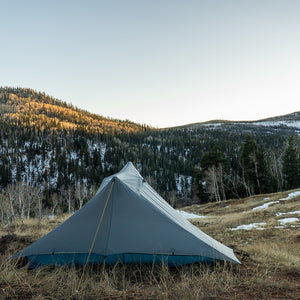
Tayson: I've been thinking about this a little bit lately, but just going back to even just a trekking pole shelter in general, we were all using 40s tents um and just like the expectations and the considerations with it. I think one of the fallacies that gets talked about a lot is that there's more condensation in inside of a single wall shelter and that's not true. You just don't have extra barrier to like avoid touching touching it or if it does, you know, fall off of the outside shell onto. The mesh, it doesn't necessarily fall directly onto you. Um so, I did I just kind of didn't want to touch that, but like um just been thinking a lot about trekking pole shelters and and stuff and man, I I'm like a huge advocate of trekking pole shelters, but I will say there are some some things to consider with them, which is like just getting familiar with them. Like investing a little bit of time pitching your tent, taking it down, pitching your tent and whatnot is going to save you basically half the weight of a different type of shelter.
Tayson: Um and then I think just as far as expectations, um it's really good to see on in pictures and photos like perfectly pitched trekking pole shelters. Um, but in the field walking around looking at everyone's. Shelters out there, etc. Like not trekking pole shelters don't always look perfectly pitched. I think Yeah, I think the the better the more you use them, the more you can get them to to have perfect tautness everywhere with knowing how to adjust a few things and and I need to make a video on on just like troubleshooting a pitch to to fix if you've got a crease going somewhere in it, but um, I think there's some some expectations and things to consider there as far as like it doesn't always look like that like the website's perfect, you know, like perfectly pitched on a grass lawn tent, but man, I I I could not go backwards to a pole tent unless I was compelled by something considerable in the design or specific for a unique trip. Or something like that. And I think that was just on my mind because we were bringing these people that had never used one and so I'm kind of thinking like, well, what are they thinking right now?
Tayson: What are they thinking right now? And I don't know what their experience was with a trekking pole shelter, but I don't know. I don't know if you guys have have any thoughts on that, but um, it was something that was on my mind during that trip for sure.
Tyler: The condensation thing is is definitely like much more a symptom of where you're camped than what shelter you're using and what the weather is, you know. When it gets that cold your your tent is going to capture more condensation from your breath than when it's not as cold, you know. Um, so that alone then the fact that it had been raining, we're setting up on muddy ground, uh, we're next to a stream, we're in a canyon. There was just a lot, you know, so I think everyone got some condensation, but those tents are quite spacious too compared to a lot of the really tight freestanding tents that you get where even if it's double walled, you're still going to be rubbing up into it in those tight little tents, so.