Tayson: Hey everybody, welcome back to the Live Ultralight podcast. Today, um we have a very special guest. I'm very excited for this. Uh we have Justin Outdoors from from Dustin Outdoors YouTube channel. Justin is an outdoorsman from Alberta, Canada, who has a very popular YouTube channel um with 52,000 people at the time of this recording. So, big congrats on that. Uh you also went full-time YouTube pretty recently, which I'll have to ask you a little bit about, but that's really exciting. Um Justin, you typically make videos revolving around uh backpacking trips, gear reviews, and uh I'm excited to pick your brain. To say that I haven't followed you for a while and watched your videos would be uh just a straight-up lie. I have enjoyed your videos. Um in fact, this last winter I was watching. A few more of them as as you're a guy who has done a lot of winter backpacking and and we were doing some winter backpacking and um just really love seeing seeing those videos and stuff. So, I'm I'm a bit of a fanboy, I I guess you could say. Um I've I've really enjoyed watching your channel. So, um how you doing today, Justin?
Justin: Great, thanks. Yeah, I appreciate it. I'm I'm actually I'm actually nervous cuz I've been enjoying your podcast for a long time, too, and and uh feel like I'm I'm a fanboy of of the podcast and um hearing you guys talk about gear and your trips and everything has been has been awesome. And I haven't done a podcast in a really long time, so I'm a little bit nervous uh in that regard, too, but really happy to be here and and chatting with you.
Tayson: Well, you were you were doing a live stream last night, so this is this is just old news for you, sitting in front of a computer talking, going through questions, right? I did not I you know, I did not give you a heads-up on what I'm going to ask you, so that's probably part of this nervousness here.
Justin: Yeah, yeah, I don't I don't I don't know. It's uh you ask you ask the tough questions. I heard you chatting with Devin the other the other day and getting getting deep.
Tayson: That's good. No, I I love podcasting. Um I'm I'm a big like consumer of podcasts, too, and so um yeah, if I can if I can find something, I'll try cuz I I you you in particular, there's there's a lot of levels and anytime you've got something like a YouTube channel, you're just seeing one one level out of the time. Meaning just just what's on video, but a lot of the adventures you go on are pretty extreme adventures and that's that's what I hope I guess to get into is maybe some of that. So for that if you are listening to this, stay tuned. We're going to see if Justin will open up a little on some of these trips and maybe some of the stuff that happens when the camera's off, which I think. Will be really really interesting. So But before we get to some of those stories, I do want to touch on a bit of you know, just a bit of your backstory. So where are you based out of Justin?
Justin: So I'm in Calgary, Alberta. Up here in Canada. So that's if you go north of Montana 5 hours, that's where you get to the city where I live and then we're an hour east of the Canadian Rockies. So we have big mountains an hour away, which is amazing for getting out and experiencing some pretty pretty amazing locations.
Tayson: Yeah, I'm I'm going to come visit you one day. I've actually got an in-law that just married into the family from Calgary area and I want to get up into Banff and some of that. So I was going to go 2020 and then COVID happened and and so that didn't end up happening, but maybe next year we'll be up there for what is it called? The Stampede?
Justin: Yeah, Calgary Stampede. Yeah, it's You want to see rednecks being rednecks, the Calgary Stampede is a good place to go.
Tayson: You know, I put on a sophisticated face, you know, but I grew up in a small town. So.
Justin: Oh yeah, I got my cowboy hat up there. That's same same year. I grew up in the middle of nowhere with the school had cows on three sides and Yeah.
Tayson: So was like growing up were you outside a lot? I mean for me it was like in a small town, that's what you did, but what about for you?
Justin: It was the same thing. Like my my closest friend was a 20-minute drive away. So we had a forest out back and I'd just go out and play in the forest mostly by myself, so it was solo solo tripping right from the right from the beginning and growing up with my family too, my parents are very outdoorsy, so we were going on a lot of canoe trips. I grew up in Ontario out east on the east coast or kind of central east coast, so canoeing and river tripping is is a big thing out there. So, that's what my first outdoor experiences were with camping and back or more backpacking type trips. It was overnight canoe trips.
Tayson: So, your parents are going and doing that with you though?
Justin: Yeah. Yeah, we were doing that a lot kind of growing up and then as soon as kind of entering into high school, doing a lot more trips is with friends and and and groups.
Tayson: Yeah. Well, that's really cool. 20 minutes away, that's a long that's a long ways. Like you just pedaling your bike 20 minutes to get to your friends or I mean what do you.
Justin: It was a lot of relying on parents.
Tayson: Yeah. Yeah. Was it farming or just rural? Like were you doing farming or is it just kind of rural dispersed?
Justin: My parents were it was it was just rural for our family, but then a lot of farms a lot of farms around. It was it was very very agricultural out there.
Tayson: Yeah, that's pretty interesting. Sounds really cool though. I I love I don't know. I like I had a good group of friends, but man, you know, being that being that close is is pretty awesome. I for us it was kind of like we we'd ride our bikes like a mile and then we'd be we'd cross into the freeway and then it was just like that was that was whatever we wanted to do with, you know, there's just so much stuff, but it was all desert, rock, sandstone. Um at least like where we could get access to from our from our pedal bikes, but uh no, that's pretty cool. I have I personally have not done a lot of canoeing. Um I'm wondering why you haven't done any pack rafting or something like that on your. Channel or maybe you have it I haven't seen it. I don't know, but uh.
Justin: I've done a couple of canoe trips that I've filmed. They're just it's just kind of a different audience and so So, a different the storytelling's kind of similar, but um I I just people just aren't quite as interested in that. So, we usually do a canoe trip once or twice a year with me and my friends and sometimes I'll film it, sometimes I won't, but it's uh it's yeah, just just a different part of different form of content that I'm putting on my on my channel, but I'd like to do more of it and just showcase it anyways because it's it's a lot of fun.
Tayson: For for adapting from backpacking to canoeing, do you kind of have more more space or more weight that's that you're able to carry or what's like is it is it feel more low-key or is it like more intense?
Justin: Depends on the trip. There's so these days when I'm going on trips with my friends, we go on rivers where there's no portaging and so you're not having to carry your canoe or any of your gear um around like rapids or sketchy parts of the river, but growing up um it was kind of similar in the sense that you tried to reduce your weight because if you did have a 2-km portage, you didn't want to be carrying 80 lb and with the canoe on your back at the same time, it it gets pretty intense. So, um.
Tayson: Totally.
Justin: But, it's still like oh canoeing's very old school in the sense that a lot of a lot of people are still carrying like iron skillets and like full kitchens out there and then just being like, "You know what? If I have to carry 80 lb in my backpack and then another 50 lb of canoe, then I'm just more of a bush manly bushman." So,.
Tayson: Yeah, yeah. Oh, that's super super interesting. Um so, you grew up, you had a career path that you just left. Tell us a little bit about what what you have been doing um in that in that career path.
Justin: Yeah, so I I went to university for biology and um when I was there, I did a lot of tree planting um as well. So, that was kind of got me outdoors a lot a lot more. I was living out in the bush in tents for for 2 months of the year. And then once I finished that, I um did my master's in biology as well then started working as an environmental consultant where I'm going out getting out there like helicopter dropped in the middle of nowhere driving down bush roads to the middle of nowhere and surveying areas that are going to be developed for either roads or some sort of development. And so as I was I was outside a lot with that and that kind of allowed me to keep in the outdoors. Um throughout continue it after growing up and throughout my life and uh really paired well with the backpacking and hiking and canoe tripping that that I've been doing.
Justin: So um once once I kind of finished once I was doing that when I was doing that um I was doing a lot of the outdoor trips and eventually just kind of YouTube channel got to a point where um it was sustaining itself and I was had enough income in order to leave my other job and everyone was super everyone at work was super supportive and was was following the channel at that point in time and um it seemed just like a seamless seamless transition and you the YouTube thing has been pretty much my dream job. When people ask me about it it's it seems kind. Of cliche to say but I enjoy so many aspects of it from the the creation to the business side of things to the getting outdoors and then the people in the community are just amazing and getting a lot of opportunities to see behind the scenes has been great as well.
Tayson: Yeah. I'm going to before I jump into the YouTube side we got to back up. You said you'd spend up to 2 months out there at a time is that is that what you were saying? So I mean that's a lot of time and I think that people I mean I imagine you're just you're just like intense that whole time or do you have okay. Um that's a lot of experience right? And it's different experience not like just you're about just backpacking but that's just it is all experience right? And it really adds into um you know that situation is kind of funny. Because at the same time I think Joe reached out to you to try to schedule this podcast. Um Brigham, our product designer, and me have have followed your channel for a. While, and he's like, "Wait, you're interviewing him?
Tayson: I just barely emailed him." Like just totally totally uh separate, but you know, I think I think for for those that have spent a lot you know, decent amount of time out there can really see when they watch your videos um you know, the level of detail and level of knowledge you have um you know, spending that much time in succession out there really translate in translates into experience, and I imagine that's really you know, where you get that keen eye for certain aspects of the gear you're using, right?
Justin: Yeah, you you have to a lot of things go wrong when you're spending 2 months out in the bush. Um and we're a lot of time we're about 200 like about 100 to 200 mi away from the closest town. So, um when things go wrong, you're having to figure it out on your own with the materials that you have, and you don't want things So, you get things that aren't going to break, and then if you do if they do break, you have to figure it out, and um you So, you do get that eye for for looking at different pieces of gear or not even necessarily if it's outdoor gear, but just the things that you're using have to work, and you you definitely develop an eye for that.
Tayson: Yeah. What's like the worst thing that you had break or or like worst-case scenario of on one of these trips?
Justin: Um worst-case scenario when when So, I I I was a tree planter, so that's a person who's just planting like little trees about that big um after the they've logged an area. Um after a couple years, I became a foreman, and then you're kind of you're supporting the the tree planters, and I was driving the bus one time, and it was it was after a 14-hour work day, and I was trying to back a bus 50 50 like 30 mi down a bush road in the dark.
Tayson: Back it up the whole time?
Justin: Yeah, cuz there was no way to turn around. And I got about 3/4 of the way, and I backed it right into the ditch, and uh had us stranded there for a little while and luckily there is um an excavator and I was able to on the radio call the guy who who was living just in the bush who's running this excavator and he came and he pulled our bus out with this excavator cuz it was really really stuck and that that was sketchy because we weren't set up to be spending the night out there and it got it was getting cold very quickly. So um yeah, there's a lot I almost died a couple times while I was tree planting. There's a lot of uh pretty sketchy sketchy things, but it was the best. Learning experience that that I've had out of any job.
Tayson: Just some almost died experiences. Not a big deal, right?
Justin: Yeah. Yeah, exactly.
Tayson: What do you What do you mean? Is that Is that like what you got a tree fall next year or you got a grizzly bear hanging out or like what do you got going on, man? Or just cold temperatures, exposure?
Justin: That was that was driving. So it was like the driving aspect. So we had we'd have all the trees in a like 20-ft trailer and then we'd be pulling it with usually underpowered trucks. Um and then I was I'd been working like 18-hour days for a few days. So I asked someone else to to drive the truck um and they weren't as experienced with trucks and didn't set the the the trailer brakes before getting going. So we were going down a hill and then the trailer just started pushing us. We started swerving back and forth across the the road and that's what woke me up. So I was able to reach over and start pumping the trailer brakes, but we broke both axles on the trailer um flat.
Tayson: Oh.
Justin: The tires were flat on the trailer and then two of the truck tires were flat just from getting swung around so much.
Tayson: Just probably throwing it off the bead, breaking the bead on the rim or something, huh?
Justin: Yeah. It was It was bad and like I went and looked at where our skid marks were and we were about that far from getting onto the gravel shoulder which then pulled you right off a cliff that didn't have any guardrails on it. So that was a that was pretty sketchy.
Tayson: Yeah, that that's pretty sketchy, That's that's way crazy. Well, I'm I'm glad you're no longer tree planting and driving around in in underpowered trucks and having to back 30 km down dark roads and that builds some character, I'm sure, which which translates to probably why you're able to just keep a smile on your face when you're doing some of these, you know, pretty intense trips that you that you head out there to do, right?
Justin: Yeah, exactly.
Tayson: So, getting a little bit more like you talked about this transition into into YouTube, why why did you start on YouTube? Like where did that first video come from for you?
Justin: A lot A lot of it was was I was a fan of of YouTube. I was watching a lot of people um just just to kind of get get more knowledge about backpacking. So, I've only been backpacking for and hiking kind of out west for for 10 years now. So, um I was learning, picking up knowledge, and then I realized that I had a lot of knowledge to share as well and a lot of research I I do a lot of research into gear. So, I had a lot of information to share about that that I didn't see out there. It's kind of really in-depth analysis about gear and comparing different things. And my friends were getting sick of me talking about it with them. So, decided to to start the YouTube channel and have. A little bit of an outlet for that. And it just I just really took to it kind of right away. Found it really interesting. Um loved loved the chatting with my viewers in the comments and then um it kind of gave me an excuse to dive even deeper into the gear without feeling like I was wasting my time as well. And and it was yeah, just a lot of a lot of fun.
Tayson: Were your first videos like gear review videos? Like just analyzing a piece of gear?
Justin: A lot of them, yeah. It was um the Ether Light XT was one of the first the Ether Light XT sleeping pad was one of the first and in-depth reviews I did. It just came out onto the market and I looked at it and it was like this thing's going to be super comfortable. And and tested it got the review out, and it I think that's it's been the most viewed review of that pad for forever at this point.
Tayson: Yeah. So, that was your very first video.
Justin: That was like my second or third. It was the first one My first one was like year wishes for 2021 or something. And you watch that and I There's.
Tayson: Wait, wait, wait, wait. Did you say 2021? So, how long have you been doing 2019. 2020? 2019? I don't I don't remember. It was You haven't been at this couple years is all, huh? 2 3 years?
Justin: Three Three years, I think was my three-year anniversary this this spring.
Tayson: That's awesome.
Justin: Yeah.
Tayson: Wow, congrats, man. That's way cool.
Justin: Thank you.
Tayson: Um no, that I I've I have enjoyed, like I say, listening to some of the in-depth stuff that you cover in those. Um obviously, what I feel like I gravitate to more is just some of the trips that you're going on, for sure. And And I think those get a lot of views as well, but um those are as I kind of look through your your most popular videos, it's either um Let's see. Your Your biggest ones are gear lists, you know, gear breakdowns, and then and then some of those trips as well. But a lot of them are really People seem to be really honing in on your gear lists. Um why do you think that is? Like why do you think people like your gear reviews and your you know, that side of. Things?
Justin: I think I think I I And I And I hope this is the reason why, but I I try to come at it from um the mentality of of the viewer and like a problem that they're trying to solve. So, I have I have a bunch of different gear lists. I don't necessarily just put out this is like the gear that I use for like this year or this point in time. Um I put out gear lists for like the beginner backpacker, someone who has never been backpacking before, a gear that I would bring if I was just starting out, or if I was going to go ultra light, or if I was trying to be as comfortable as possible. Um gear that kind of targets a problem that people can then look at, not. Necessarily buy all that gear from that gear list, but that but see like, okay, that sleeping pad is from his ultra comfort gear list and I really need a more comfortable sleeping pad or my backpack's too heavy. They can kind of pick and choose from the different ones and I think um people like that aspect as opposed to just here's just what I use at one point in time.
Justin: They can kind of look at a bigger picture.
Tayson: Yeah. Yeah. I think personally from my side what I also see is just a lot of these gear lists come from like post trip, right? Or like you're on a trip and you're saying, this is the situation, these are the conditions, and here's what I've been using, right? So, your most popular one of all time is the uh like sleep system for -40°, right? I'll tell you right now, that's a very good headline just because or title because no one likes sleeping cold, right? Like no one likes sleeping cold. It's one of the number one reasons that you hear in person of like why people won't go backpacking or camping is like, oh, I I tried it one time and I froze and and I'm never going back type of type of thing. So, you. Know, having that title of -40° uh sleep system is a pretty catchy title and got got a lot of views, a lot of interest, and it's a really interesting video um to watch and to see those layering aspects. I would encourage any of the listeners that that have not seen that video with Justin, go check that out. Um but talk to me I I don't want to make this a winter one.
Tayson: I'd rather bring you back on in the winter to like just focus on the winter trips, but um yeah, Justin has a lot of experience obviously living up in in Canada. You've got uh a a few months of cold weather, I guess you could say.
Justin: Yeah. Usually starts snowing in September and then doesn't stop till June.
Tayson: Oh my goodness. Uh yeah, I don't envy that. I don't envy that at But um you did recently go on some some pretty cool trips. Um one of them I found I found a certain aspect of it interesting, which is the West the West Coast Trail, I believe was the name of it, right?
Justin: Yes.
Tayson: And that looked like a pretty interesting trip. You could look at it and be like, "That was a an awesome trip." Or like you could look at it and be like, "That was a miserable trip." cuz you spent a lot of time in a lot of rain and wind, right?
Justin: Mhm. Yeah, it was And.
Tayson: Oh, go ahead. Go ahead.
Justin: Yeah, it was it was it's uh a unique trip in that a lot it's known for being really rainy and windy, but I did the I did the trail um 5 years ago with some friends and we got perfectly sunny warm weather. So I was really looking for the when I did it this year to go on the trail and experience a little bit more of like an authentic West Coast Trail trip where I was getting that rain and um testing myself and pushing my limits a little bit more because a lot of the time I think a lot of people can relate you don't plan trips for bad weather necessarily, but um I find pushing my limits a lot of fun and uh was kind of seeking that out for this one.
Tayson: Yeah, so describe to me this trail. How many days on trail were you? How many miles total is that trail? Um maybe tell just a little bit about the the details of that.
Justin: So it's it's located on Vancouver Island off the West Coast of of Canada and it's a 50-mile trail. So it's not a long one, but most people take uh about 7 days probably on average to do it just because there's a lot of the terrain's really hard to navigate. You're going through really big mud puddles having to hop between like rocks or logs or roots and then you're on sand when you're on the coast and the sand just slows you down a lot and there's tons of ladders that you're having to go up and down. Um so it just takes a while to cover to cover mileage. I ended up doing it in in 5 days. I think I'll try it again try and do it in 3 days down the road just keep uh. Keep doing it faster, but because it's on the coast you just get crazy crazy weather rolling in and you'll get some sometimes you get tons and tons of rain and everything will flood out and then you get wind just pummeling you off off the coast as well and um it's it ends up it can be pretty extreme.
Justin: One person every other day gets rescued off the trail because of injury or getting stranded and they've had to evacuate the entire trail a couple times due to the rivers just flooding too much and people just not being able to move along the trail.
Tayson: So there's people that are getting flown out cuz in your video uh there was four I think four helicopters you counted or or more?
Justin: Yeah, at least at least four helicopters. There's a lot of rescues that that week just because the ladders get slippery with the rain and people fall off them and impale themselves and yeah, it's gets sketchy.
Tayson: Is that the primary thing is is the ladder situation or.
Justin: Yeah, the ladders and the bridges. So some of the a lot of bridges don't have railings so people will fall slip and fall off the the bridges um or fall off the ladders or there's rocks that you're scrambling over that they they fall off things. Falling off things is the primary way people get injured.
Tayson: That's crazy that that they're I mean that's a lot of people flying out. You'd almost think that they'd say all right, let's take some of the the money of all the rescues that we're putting into this and I don't know build better guardrails and and stuff like that just come cuz you're saying like 50 people a day are starting this trail, right?
Justin: Yeah, about 50 50 60 people a day and.
Tayson: Did they are.
Justin: Trying to do that. They um between when I did it last time and this time they took out um probably like 400 ft of ladder and we had to go down this into this river valley and then back up again. They just put a bridge across it. But the the problem is they have I I think like 200 plus like ladders and bridges on the trail. Um so you're it's just a lot for them to even just maintain what they already have. Um never mind putting in putting in new stuff. Yeah, but man, what a popular trail.
Tayson: When you were starting this out, like how did the how did the trip compare to your expectations? Were you expecting that amount of rain and wind, or were you thinking like, "Oh, I'll get some rain, but it won't be too bad." Or what was your expectations?
Justin: I think it it kind of met my expectations from a rain perspective. I thought it was going to rain more. The forecast was calling for a little bit more rain, but the wind was what caught me a little bit off guard, especially on some of the beaches that were really exposed. Um there's just a lot of wind, and in the video you can see one of my tent stakes got pulled pulled out of the out of the sand. Um so that's one of the challenges is you're having to stake down tents. I brought a trekking pole tent, and you're having to stake them down in in sand, and um even with a giant rock on top of a snow stake, it just pulled pulled the snow stake forward and then up um from underneath the. Rock, and that was that was sketchy. That could have turned out really bad if my tent got kind of picked up or ripped or in some way. So it's Yeah, that's that's I had some questions around that.
Justin: That's a Well, I think I think I I can imagine why, but um one of the aspects of that particular instance is you you said briefly on camera, "Oh, yeah, I just stripped down naked and then ran out there and and re-pinned down my stake and really reinforce things, and I should be good now." And you just kept going, right? Which you didn't say like someone might hear that and be like, "Why did he get naked? Like, what's going on with this guy, right?" Like, why does he Why does he get naked and run outside? So,. Explain to the listener why you would do such a thing. Cuz it's it's a very smart move, uh but someone might hear that and have no idea why you would do that. That's that's a great question, and and I've I think I've only explained it a couple ti- never on the channel, really, but a couple times in person to people is a lot of people don't realize that your skin is waterproof.
Justin: Um so the water's just going to beat up on you really easily, and if if you're as naked as possible or fully naked when you're out in the rain, it's really easy to kind of kind of shake off before you get in or dry yourself off with a cloth and you're not soaking all of your all of your clothing. So, that's why. In that that time I took off all my clothing cuz I didn't want to um even just have a wet rain jacket um or rain gear at that point in time and then having to store that. But, I do the same thing if I'm staying in like a one per- like a one-person tent, there's not a lot of room inside there. So, I'll strip naked outside the tent and then get inside just so that I'm not bringing all of my wet wet stuff inside and having to like get the inside of the tent that much wetter.
Tayson: Yeah, that's a that's a super good tip. Um are you typically taking a towel or something like that when you're going out or you're just using another article of clothing to kind of towel off when.
Justin: You get back in? I have a little um Swedish cloth that's about probably about that big and um so, it's about like 3 in by by 2 in. Um and I'll just wipe wipe down myself with that. It's super absorbent. Pro- I think I think I measured it at at being 20 times more absorbent than like a pack pack towel that you get from from pack towel. It's like the microfiber cloth cloths. And then, it it it squeezes out really easily as well. So, I use that to dry myself off, dry off the inside of the tent from condensation, dry off the outside with rain. It's super useful.
Tayson: 20 20 times more absorbent. Is that the kind of testing you do with all of your gear? You just like This guy's is like Which one do I bring?
Justin: The pack towel? So many people recommend a pack towel or a buff, but I just soaked them as much as I could and then weighed weighed them um relative to their dry weight and was able to kind of determine how absorbent they were based on that. And then, and then squeeze them out as much as I could to see how much water weight they then held on to afterwards. Cuz I don't want to be carrying around a super wet cloth all the time, either.
Tayson: Right. No, that's it's really smart. Really, really smart. Um and I think I think going into these situations like like that West Coast Trail, um which I think eventually got a little bit of sunshine and you know, you did it look nice. I liked the the one bathroom with a view, you know, and and some of that it looked like it looked nice, right? But but that going back to that, that's fascinating that you're taking your gear and you're wetting it out and you're weighing it and you're you're compressing it and you're seeing what the absorption level is. That's that's another level, right? Um from what most people are doing to analyze their gear. Um why do you think you do that? Like what what has driven you to to the point where you're where. You're just you're just looking at that kind of detail?
Justin: That's That's just That's the way my brain's always always worked. Like I I I think I I listened to a podcast where they interviewed Dan Becker and they asked the question, are you a a Lego kid? And I think that's like a good question for the type of people who are going to be kind of really analyzing things and and seeing how they're put together down the road. And I was definitely a Lego kid. And so right from the beginning just trying to figure out how things work, how they're put together, why why they work the way they do. Um so it's not enough for me to just look at something and say, "Okay, this is better than this in this way or this performs this way relative to this other product." I want to. Know why it's happening that way. And sleeping pads is a big one for me that I've really dived into recently is why am I why am I seeing variations in sleeping pads that have the same R value when I'm out in the real world? And then kind of diving into that in a little bit more detail. Cuz like a lot of the companies aren't willing to to really talk about it.
Justin: Um partly because they just don't know the answers, but then also they just don't want to have that level of detail out there in a lot of instances. So Um Yeah.
Tayson: Yeah. Sleeping pads are wild, man. I'll just tell you from from a design perspective and stuff, patents control that industry a lot. And uh and it's it's uh in fact we're we're we've more or less internally decided to take a sabbatical on sleeping pad design. Um we're going to take a break from it because it's very technical, very time-intensive, very expensive, and honestly, there's there's, you know, a couple guys out there making some pads that are just really above and beyond, and and they're very well protected by patents and and and so someday I think we'll we'll look at that again, but that is a really good point. And you said though that you're seeing differences and variations of warmth out there. Is that before or after they standardized that R-value test uh 1 or. 2 years ago?
Justin: That's that's after. So they standardized the test and then I'm I'm seeing pads that have like mid I've been testing a lot of pads with kind of the mid three or kind of low four. I I kind of group them into those two categories. That's where a lot of pads fall, and I'll see a a pad that has a R-value of 3.5 sleep colder in the real world than another pad that has an R-value of 3.5. And then I'm I've I've asked a bunch of companies for their their discards, and I've been cutting them open and kind of looking at the different insulation technologies, and a lot of it what it comes down to is synthetic insulation isn't applied in a very good way in a lot of sleeping pads relative to the reflective material. That you see with like the Therm-a-Rest and Nemo pads. So the Therm-a-Rest and Nemo pads are performing a lot better in real world conditions because of a lot of different factors.
Tayson: Yeah. No, I think I think that's a really really big thing is when you've got a synthetic pad and or synthetic bonded to the top of the pad or whatnot, you still have a lot of empty chambers, especially too, because a lot of those pads, you know, whether it be some of the pads we make, whether it be, you know, Big Agnes pads or or the Sea to Summit pads, there's a lot of empty space cuz they're also like 3 and 1/2 in thick pads, and that opens up a lot of opportunity for convection and air movement. And and so when you do have these reflective ones like the Nemo, the Therm-a-Rest, yeah, they're they they are slowing down the movement of air in there as well as doing the reflective and staying super lightweight. It's It's It's so that that I think when it comes to the laboratory testing, right? Like the plate underneath, I don't think as far as I understand is not actually like colder. It's just the heat they apply heat to the top and then they see like how much dissipates through and so in the real world, obviously the ground is not like room temperature.
Tayson: It's It's different variations, which is probably going to give could be a part of why like you're seeing more fluctuation in that style of a pad versus the reflective where they're trapping more air of air movement, right? But.
Justin: Yeah, exactly. They're just looking at it in one direction and especially like you said with the fixed sleeping pads, you have so much surface area on the sides. And that's the issue with the Sea to Summit is they have a thin piece of insulation, but then you that goes through the middle, but then you have an inch of air above the insulation and you're getting air coming in hitting the sides of the sleeping pad and cooling that off very effectively and that cools people off.
Tayson: Yeah. So this is important stuff, but I feel like it's especially important to you probably because of some real world experiences, right? So um the next question I really want to ask you is you know, do you have a trip come to mind where maybe you had like a failure. Maybe it was like a like a pad went flat or or you know, a gear piece broke even, but just like where it just like was not adequate. The gear you brought wasn't adequate or the temperatures swung, you know, more than you expected. Um do you have any kind of a trip maybe you could share with us where where you're just like it got real intense and um I don't know. I you know, the elements came into play and the gear and you know,. Like like is anything come to mind related to that?
Justin: Yeah, it was I think that the first thing that comes to mind is is a winter trip. That's That's where I'm usually kind of pushing the limits and pushing gear a little bit more cuz a lot of it is temperature dependent and I was trying to have an ultra light trip in the middle of winter and the forecast was for minus um 20° C which I'm not I forget what that is in Fahrenheit but um it got down to minus minus 30 which is I think minus 22° Fahrenheit and so there's about a 10° plus difference in temperature um from what I was expecting and I was bringing gear that I was pushing the limits of already. So I I did everything I possibly could to try and add insulation. I wore all of my. Clothing in order to try and stay warm. I was putting my backpack underneath my sleeping pad to try and add some warmth that way and piled snow up on the sides of my tent to try and add a little bit more insulation into the tent but I didn't sleep a wink that night and I was around 3:00 a.m.
Justin: I started debating whether I was going to have to like ski out cuz I used touring skis to get up to the to the lake that I was camping at um because it was just so so cold. It was it was it was at a point where I was shivering and I was like if I stop shivering, I'm in really bad I'm in a really bad place and I'm going to have to do something drastic. Really quickly here.
Tayson: So just to recap, you were expecting -20 but it got to -30. Is that what you're saying?
Justin: Yes. Yeah.
Tayson: So and you were already thinking you're pushing limits at -20.
Justin: Yeah, minus yeah, negative negative 20 negative 30 minus negative 35. I think it peaked at minus negative 35 but only for like 30 minutes or or an hour or so um and then it started warming up a little bit after that.
Tayson: How how far in are you from being able to like get out of there if if if you had to?
Justin: I was about 5 miles 5 5 miles in. So not a huge distance but in the winter time um enough of a distance to make it sketchy. Yeah, yeah. I mean, that's that's a good couple hours most likely in trying to get out of there. Even if you just left your camp as is, right? Just to get up and leave. Um.
Tayson: Yeah. Which Which is not always the funnest. I did have a scenario where I did that from from lack of testing some gear before I left. That was not gear that I'd previously been using and and hadn't been know how it was been treated. But, yeah, that it was not as cold as that. So, it was not nearly as extreme, but yeah, that's that's super like Walk me through like what you're thinking as you're laying there. Like not sleeping at all, that's really bad, right? Like What are you trying to do inside the tent to like you said you're trying to layer some things. You know, did you have a stove? Did you Did you heat water? Were you able to do anything, you know, other things or any other ideas that you had like. Cuz I'm I'm sure you were desperate for anything, right?
Justin: Yeah, at that point I was debating with like I was going to turn my stove on in the vestibule. So, I one person Dyneema tracking pole tent for that trip. So, not not.
Tayson: This is Is this last winter? Just this last winter?
Justin: It was, yeah.
Tayson: Yeah, okay. I was going to say I think I watched your ultralight kit and and some stuff, but yeah. This is the behind-the-scenes I want to know, Justin. What happens when the cameras are off?
Justin: Of this stuff doesn't get captured in the videos like and it's hard to explain it.
Tayson: When you're that cold, dude, you don't want to use your fingers to turn on anything. Like your fingers get so cold, right? Like the second they're exposed to do anything, it's Yeah, capturing that in the middle of the night freezing cold is is dang near impossible and your brain's just not in it, right? You're like, I don't I could care less whether I capture this on video. I'm freezing cold.
Justin: Ex- exactly. And even the next morning, like once I was warm, I was just happy to be warming up and able to kind of fin- like finish out the the trip. So, it you almost have like rose-colored or I found I had rose-colored glasses at that point time. It wasn't until I was reflecting afterwards I realized kind of how extreme the situation was. Um and that's that's where I I start going through and thinking of okay, what what can I do in the future to to avoid this? Like even when I'm pushing the limits, I want to be doing it safely. And uh and it's also there's also an element of I don't want to be putting I don't want to be encouraging people to push the limits in a way that's going to be. Unsafe for them. So, I don't necessarily I want to showcase my failures, but not promote unsafe practices, I guess, at the same time.
Tayson: Yeah. Yeah. So, take me back. You're in the tent. You're looking for anything. You talked about potentially, you know, running your stove in your vestibule or something like that. Uh but what else where else is your mind going at this point?
Justin: Just stacking as much stuff on top of me and then below me in order to add insul- ins- as much insulation kind of around me as I could. Um I was also trying to trying to move. Um I ate some food to try and get the engine engine going. Um in- like get my metabolism and working a little bit. And then um I I wasn't able to pile too much there like the snow wasn't really working for piling snow cuz I did um get out of the tent at one point to try and like just move around warm up a little bit before getting back inside and piled as much snow on the side of the tents as I could just to try and make a little bit of a quinzhee type scenario or igloo. Around there, but the the big thing was uh that I was juggling was do I like how effective would be using my inReach to call for an SOS at that point in time because I like if I got to that like if I wasn't able to move myself out of the tent and down back to my car, like is there another option? And there there really isn't.
Justin: That's the interesting thing with search and rescue that I think a lot of people don't realize is you're going to have especially if it's at night, you're not they're not going to be rescuing you at at night. Um it's just not safe for the search and rescue team. So, um you have to be able to hunker down and survive till morning if you want to be rescued. If you if that becomes a scenario.
Tayson: Yeah, I mean even best case scenario like I don't know, 2 hours, you know, it would be fast as fast response time with a life flight or something, you know what I mean? Like.
Justin: Yeah.
Tayson: Um it's not like they're just you hit that button and they're minutes away, right?
Justin: Especially at night. Like we're lucky in the Canadian Rockies that we have we have some of the best search and rescue and like I hear of like under an hour response times like very often to to injuries um alerts and the they're very they're very there's a lot of units around and then they're very quick at responding, but yeah, I I I've also you also I there's also been multiple instances over the years where people have died because they get stuck overnight and can't survive the elements. But yeah, in a lot of places it's you're you're you could it could it could be a a full 24 hours before someone can can get to you.
Tayson: Yeah. Um did you end up heating up any water or anything like that putting it in a bottle?
Justin: I I did I did No, it was uh it was it was to the point where I didn't have a ton of fuel in my fuel can either. Um at that point in time, so yeah, it because it got colder I used a lot more fuel to like cook my dinner and everything. Um.
Tayson: Yeah.
Justin: Yeah, it was a a lot of things kind of did not go as planned on that on that trip.
Tayson: Yeah. Um If you if you had to hike out like cuz I think I think for me my thought is like I can always move, which is probably not true. Not always true. But it's like as long as when I'm moving, right? Your body can generate so much more heat than sitting stagnant. So um I think a lot of times when I've gone out in the winter the backup plan is always like I can always layer up and just move and just start hiking out. Just start moving. As long as I'm in a condition to force myself to walk and move, hopefully I'm generating enough heat to to be moving to safety. Um Is that something you felt like was at jeopardy ever on that particular trip or did you feel like in the back. Of your mind you're just knowing like no if like if it's a little bit worse if I start hiking out I'll feel I'll warm up I'll get better you know that type of thing or or what were your thoughts on just like that that worst case scenario of trying to get out of there hiking at night?
Justin: I was I was pretty confident that I'd be able to hike out if I needed to because it wasn't it'd be different on a different trail. The trail that I was on um I had a lot of ski tours that used it so it was quite packed down so I didn't I knew I wasn't going to kind of get bogged down and exhausted by hiking out and it was all downhill. Whereas on some other trips I've been on if I had to be if I was breaking trail or I was post holing um in order to get back to my car then I I I there's a lot of scenarios where people die of of exhaustion in really cold temperatures as well. Um I know I think Annapurna Annapurna circuit um just last year had. Like 20 people die because they just weren't able to move through the snow.
Tayson: Wow.
Justin: Yeah.
Tayson: Um It'd be different too if it was like a multi-day trip too right cuz then it's I I think that that's maybe one thing people don't realize too and sometimes going to these situations is at least for us um you know the the danger zone of doing some of these winter adventures increases like exponentially the more days you're out the farther distance you do get from from a rescue or or hiking yourself out right but like you know gear gets wet it doesn't dry you know what I mean unless you've got a stove and can get in there and have that opportunity but like a an internal stove is what I mean like a titanium wood burning stove but um yeah it's it's it like it can go exponentially up so um but that is. It is pretty terrifying to just be kind of sitting there and like have that moment where you're like I think I'm losing some cognitive ability right now. Like I'm not thinking clearly or I'm not I'm not you know and and you're starting to see some of the digression in both physical and then mental. I think the mental side is almost more scary, you know?
Justin: Yeah. Yeah, it is. And I think it's probably the one that sneaks up on It sneaks up on you the quickest um because yeah, you just you don't you don't really realize it. It's It's like uh carbon monoxide poisoning. You don't really realize until you're unconscious. So, you it's And if you if you've never been through that before it then you're unlikely to recognize the the symptoms that are that are coming and be more likely to succumb to it. So, yeah, I think that's why I would I would always encourage people to go out and test things out on like shorter trips and and everything because you don't want to be experimenting on a multi-day trip.
Tayson: Right. Right. I think And I think just knowing like there's a few lines in the sand is that as you think about it, it's like, all right, snow and and that condition, cold is is like one big obstacle or um intense part of backpacking. The other one really to me is like is like rain, right? Cuz moisture in general can just rain and wind, I guess, can just suck the heat out of you faster than than people I think can really understand until they've experienced that. And there's there's a few lines of a defense against that, right? Like there's the rain gear aspect, which is kind of like the first line, and then you've got your shelter. Um going back to that West Coast Trail, you know, you're in a a trekking pole shelter and. Um you're in fierce winds, a lot of rain, and it is your last line of defense, right? Like that gets ripped away, you're back down to like trying to trying to tough it out on your rain gear or or make other plans, which you can't sleep at that point, you know, you can't um do some of those things.
Tayson: So, why why do you choose like a trekking pole tent in a situation that can be that extreme or you know, you said in even in the winter using like a Dyneema trekking pole tent and um I think people would be interested in in knowing like why your choice of a trekking pole shelter and if you feel like it's just as secure, just as safe, um or usable versus, you know, a a full free standing. Type shelter.
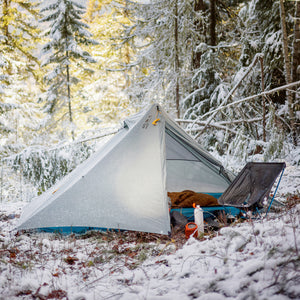
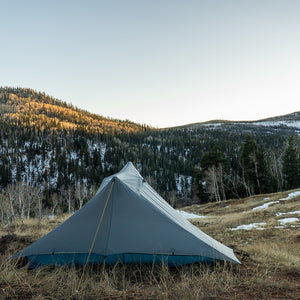
Justin: Yeah, I I I prefer trekking pole tents. I find them easier to set up, and then a big thing for me with bad weather in trekking pole tents is a lot of the time they go up all as one unit, so you're not getting the inside of the tent wet. And with the West Coast Trail, I used the uh the Durston X-Mid tent, and I really like that it has a silpoly fly as well. Um so, it the silpoly just works really well in the rain as far as not sagging and absorbing moisture. Um big tent as well, so I had a lot of room if it was raining just to hunker down, and it sheds wind very well. I think that's something that a lot of people don't necessarily realize with trekking pole tents. Is just usually with um the way their geometry is, they they shed weather extraordinarily well. They just they don't have as many kind of big walls um that are going to catch the wind as much. And I yeah, I I that was that's the reason why I like trek I like trekking pole tents a lot, and it's it's their weather and then their weight um how well they do in weather than their weight.
Tayson: Yeah. Do you swap out uh tent stakes or bring extra tent stakes?
Justin: Yeah, I'm a I'm I'm on the uh the the MSR Groundhog train as far as just I'll bring those for anything that's in dirt, and then if it's in sand or snow, then I'll bring um then I'll bring snow stakes, or I'll use deadman anchors. They work phenomenally well as at the same time.
Tayson: Um what length on your Groundhogs are you looking for?
Justin: I'm I'm full length, yeah. I don't I don't really use I I might bring the minis for like some guidelines or just extras, um but I use the full the full length, especially with some of the trekking pole tents. You just they you just put a lot of force on those stakes, and it's you need you need something robust.
Tayson: Is that in the in the Groundhogs, do they make them at like past 7 in? They make like an 8 or 9 in length or or do you know?
Justin: Um I'm not sure how many inches they're the the full length are about I don't know you probably can't really see but relative to my head I guess.
Tayson: Wider than your head.
Justin: They're wider than my head, yeah.
Tayson: Yeah. Yeah, I uh I I also switch out like cuz that that's the thing I think with these trekking pole tents is people do get nervous about them and you know maybe people have set up like free standing tents and then they have like a tent, you know, a stake pole on a vestibule or something like that but I think what they're some some thoughts on that or or I'm very similar to you. I actually think that trekking pole shelters can do extremely well. I think that the the trade off is like it's way lighter but I focus my energy on bringing extra stakes and I also will typically swap mine out to a bigger stake which um for those of for those of our customers, you know, buying the 40s right now We are. Continuing to look at improving our stake game during COVID. You know, we we didn't have as many options as we wanted to but ones that I'm using right now are actually some Easton um aluminum uh 9-in ones and um I take them everywhere.
Tayson: Like I'm just like stakes are just so important in getting them in and and you know, sometimes I do have some snow stakes and um and whatnot for other scenarios but uh yeah, I think I think as long as you're you've you've got the ability with your tent like you've got some some good ability to get the stake in meaning there's some flexibility in like the the guy line that it's not like a 4-in guy line. You've got, you know, a lot of space to find a good spot to get. Your stake in and then you've got good stakes and extra stakes for additional tie outs. I'm with you. I'd I'd way rather be in a trekking pole tent than some of these other pieces. Um I think that that sometimes people in those free standing tents get a a false sense of security. It's like I don't have to stake out the corners.
Tayson: I don't have to and then you know, I've had scenarios, trust me, where where you know, 40-50 mph winds hit in the middle of the night and all of a sudden literally the bar of the tent hits me in the face as it's laying flat with the wind gusts and stakes are pulling and you're getting out of the tent. And so to me, I'm like a Look, every tent you set up, get. The stakes in the ground, whether it's freestanding or not freestanding. And if I have to do that, then I may as well have a trekking pole tent that's lighter and and easier to pack around, but.
Justin: I think you get more bang for your buck with a trekking pole tent, too. Like people People show me examples of freestanding tents that are as light as certain trekking pole tents, but you just don't have the same kind of livability and performance features as you'll get with a trekking pole tent. And it It makes sense cuz you're you're eliminating and it the the poles essentially. So, you're always going to have get more bang for your buck with a trekking pole tent versus a freestanding.