

Ultralight culture has pushed one idea harder than almost any other:
Lighter is always better.
When it comes to packs, shelters, and sleep systems, that idea usually holds up. But when it comes to puffy down jackets, chasing the lowest possible weight often backfires—especially for backpackers who rely on their jacket as a static insulation layer.
If your down jacket weighs under 10 ounces, there’s a good chance it isn’t doing the job you actually need it to do.
Let’s explain why.
What a Puffy Down Jacket Is Actually For
A puffy down jacket is not a hiking layer.
It’s a static layer—a piece of insulation you put on when you stop moving:
- At camp
- During long breaks
- On cold mornings before you start hiking
- In the evening when temperatures drop
- When weather changes faster than expected

Its job is simple: trap heat when your body is no longer producing much of it.
That job requires a minimum amount of insulation. There’s no way around those physics.
The Problem With Sub-10 oz Down Jackets
Jackets under 10 oz almost always achieve that weight by cutting insulation. Less fill. Thinner loft. Less margin for error.
That leads to two problems:
1. They Aren’t Warm Enough When You Stop
When you’re stationary, your body isn’t generating heat to make up for poor insulation.
A very light puffy might feel fine:
- Standing in your backyard
- Walking around town
- Moving slightly on a cold morning
But once you’re:
- Sitting at camp
- Cooking dinner
- Waiting out weather
- Glassing
- Watching the temperature drop
You feel the gap immediately.
That’s when people start layering rain shells over their puffy, crawling into their sleeping bag early, or shivering through the evening.
That’s not versatility. That’s under-insulation.
2. Puffy Jackets Are Not Designed to Be Worn While Moving
Some argue that lighter, less-warm puffies are “more versatile” because they’re comfortable while hiking in cool conditions.
That logic ignores how down actually works.
Down jackets:
- Are not breathable
- Trap moisture easily
- Lose insulation value when damp
When you hike in a puffy, moisture from your body enters the jacket. Over time, that moisture degrades the down, reducing loft and long-term warmth.

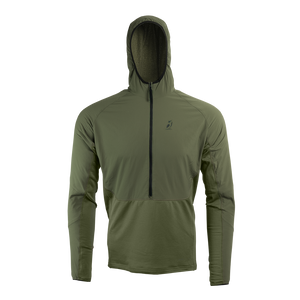
That’s why experienced backpackers don’t hike in puffies. They hike in:
Those layers are designed to breathe.
A puffy is designed to trap heat, not manage sweat.
Using a down jacket as a moving layer shortens its lifespan and compromises its performance when you actually need it.
If You Need Less Warmth, You Need a Different Layer — Not a Smaller Puffy
If a puffy jacket feels like “too much” for certain conditions, that doesn’t mean you need a lighter down jacket.
It means you need:
- A midlayer
- An active insulation piece
- Something designed for movement

Trying to make a puffy do two jobs always leads to compromise.
A down jacket should be warm enough to matter.
If it isn’t, it’s the wrong tool.
The Diminishing Returns of Going Lighter
As down jackets get lighter, the benefits drop off fast.
Saving an ounce or two:
- Rarely changes how your pack carries
- Often eliminates meaningful static warmth
- Reduces your comfort margin in unpredictable conditions
Meanwhile, the downsides grow:
- Less usable warmth
- More reliance on other layers
- Higher chance you’re cold when stopped
There’s a point where lighter no longer means better.
For down jackets, that point is below the minimum viable insulation level.
Why the Zulu Down Jacket Hits the Sweet Spot
The Zulu Down Jacket was designed around one simple question:
What is the minimum amount of insulation a real backpacker actually needs?
Not for expeditions.
Not for standing around town.
For real trips, in real conditions, across most climates.

That answer led to:
-
900 fill power Muscovy duck down for maximum warmth per gram
- Enough fill to deliver true static warmth
- A total weight of 11 oz (Men’s M)—light, but not compromised
Jackets that are as warm as the Zulu almost always weigh more.
Jackets that weigh less are almost always not worth taking into the backcountry.
That’s the tradeoff.
Zero Stitch™ Fabric Changes the Equation
Warmth isn’t just about fill weight.
The Zulu uses Zero Stitch™ fabric, which:
- Eliminates traditional stitched baffles
- Reduces wind penetration
- Protects down from moisture and wear
- Minimizes heat loss without adding weight

That means the insulation you’re carrying actually works when conditions turn.
This is part of why the Zulu punches above its weight class compared to lighter jackets with conventional construction.
One Jacket. Most Trips. Anywhere.
The Zulu isn’t designed to be extreme.
It’s designed to be right.
It provides adequate warmth for 80–90% of backpacking trips, across:
- Different climates
- Different elevations
- Different seasons

It’s light enough to live in your pack year-round.
Warm enough to matter when you stop.
And built to last without babying it.
That’s what a puffy down jacket is supposed to be.
Final Thought
Ultralight thinking is powerful—but only when applied correctly.
A puffy down jacket is not the place to chase the absolute lowest number on a scale. It’s the place to demand reliable static warmth, minimal compromise, and a real margin of comfort.
Below a certain weight, down jackets stop being tools and start being wishful thinking.
The Zulu exists because that minimum matters.
And once you experience what enough insulation actually feels like, it’s hard to go back.
Mentioned in this article
More stories

5 Reasons This Sub-1 lb Alpine Puffy Stands Out

Comments
Agree with what you say about puffies.
They are mainly for static activities.
For jackets I’ve got many. They are Vantage,Novapro, Vario ,Plasma, and Eddie Bauer First Ascent base camp.
All quality and serve many purposes but my fave is the Mont Bel Plasma. It’s super light and really warm for mild Winter. For base camp warmth I’ll combine the Vantage over my Plasma and that seems good considering I save 1 pound over my Eddie Bauer which is a bomber jacket warmth wise.
Only thing about the Vantage is I wish they would put thumb holes in it.
Derek,
For the record, I totally agree. For what down puffy truly shines at, it has to meet a minimum standard to be trustworthy. Part of the problem, as you’ve indicated, is that some people don’t use them correctly, and part of the problem is that some people aren’t properly layering. Good article, man!