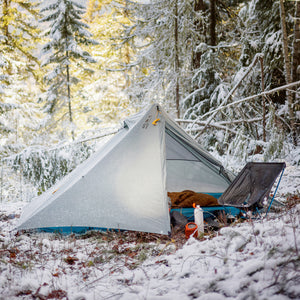
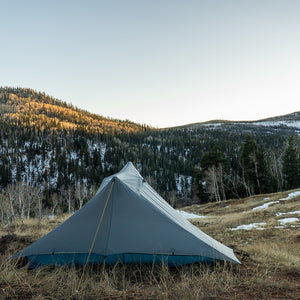


Condensation is one of the most common frustrations backpackers experience with ultralight tents.
You finally cut weight, switched to a trekking pole shelter, and everything feels great… until you wake up to damp walls, dripping fabric, or a wet footbox.
Many hikers assume condensation means something is wrong with their tent.
In reality, condensation is a natural result of physics — but the design of the shelter determines how bad it gets.
Some ultralight tents handle moisture well.
Others make condensation almost unavoidable.
Understanding why condensation happens — and how tent design affects it — is the key to choosing the right shelter for real backcountry conditions.
The Cirq Trekking Pole Tent was designed specifically to reduce the most common condensation problems found in lightweight shelters, without adding unnecessary weight.
Let’s break down why condensation happens, why ultralight tents often struggle with it, and how the Cirq’s design helps keep you drier and more comfortable.
Why Condensation Happens in Any Tent

Every night inside your tent, moisture builds up from three main sources:
-
Breathing
-
Perspiration
-
Damp gear or clothing
Your body releases a surprising amount of water vapor while you sleep. In a small enclosed space, that moisture accumulates quickly.
When warm, humid air touches a cooler surface — like the inside of your tent fly — the water vapor turns into liquid droplets.
This is condensation.
It happens in almost every shelter, but the amount depends on:
-
Airflow
-
Interior volume
-
Temperature difference
-
Humidity level
-
Fabric tension
-
Tent geometry
Good tent design can’t eliminate condensation completely, but it can reduce it dramatically.
Poor design makes it worse.
Why Ultralight Tents Often Have More Condensation Problems
Ultralight shelters save weight by simplifying structure and reducing materials.
That can be great for pack weight, but it often comes with tradeoffs that increase condensation.
1. Smaller Interior Volume
Many ultralight tents are low and narrow to reduce fabric weight.
Less space means moisture builds up faster.
When the walls are close to your face or sleeping bag, condensation becomes much more noticeable.
This is why cramped shelters often feel wetter even when conditions are the same.
2. Limited Ventilation
Some lightweight tents rely on:
-
One small vent
-
A partially open door
-
Mesh panels only
This doesn’t allow enough air exchange in humid or cold conditions.
Without airflow, moisture stays trapped inside.
Backpackers often notice this most in:
-
Alpine environments
-
Forested areas
-
Cold nights
-
High humidity
-
Rainy conditions
These are exactly the situations where good ventilation matters most.
3. Fabric Sag Reduces Airflow
Many ultralight tents use fabrics that stretch when wet, especially traditional silnylon.
When the fabric sags:
-
Vents close
-
Airflow decreases
-
Walls get closer to you
-
Condensation increases
Even a well-ventilated tent can perform poorly if the pitch loosens overnight.
4. Single-Wall Designs Trap Moisture
Single-wall tents save weight but require better ventilation to work well.
If airflow isn’t strong enough, humidity stays inside the shelter.
This is why many hikers complain about condensation in trekking pole tents — not because they’re bad, but because the design has to be done right.
What Backpackers Actually Want From a Tent

Most hikers don’t want the absolute lightest shelter.
They want a tent that feels comfortable in real conditions.
Common frustrations include:
-
Waking up to dripping walls
-
Not enough headroom
-
Hard to pitch on uneven ground
-
Fabric sagging overnight
-
Poor airflow in humid weather
-
Feeling cramped inside ultralight shelters
These are exactly the problems the Cirq Trekking Pole Tent was designed to solve.
How the Cirq Trekking Pole Tent Reduces Condensation
The Cirq was built around three priorities:
-
More interior space
-
Better airflow
-
More stable pitch
Instead of chasing the lowest possible weight, the goal was to create a sub-2 lb tent that stays livable in real backcountry conditions.
The 2.Flo™ Ventilation System

The biggest difference in the Cirq is the 2.Flo™ Ventilation System, which creates continuous airflow through the shelter.
This system uses two airflow paths working together:
Full-width ridge vents
The Cirq has full-length ridge ventilation on both sides of the tent.
Because warm humid air rises, vents at the peak allow moisture to escape before it condenses.
This works even when the door is closed.
Perimeter airflow around the entire fly
Air enters from the bottom of the fly and exits through the ridge vents.
This creates natural convection airflow:
Cool air enters low
Warm air exits high
Instead of trapping moisture inside, the tent constantly exchanges air.
This is one of the most effective ways to reduce condensation in ultralight shelters.
Larger Interior Space Helps Prevent Condensation

The Cirq is longer and taller than many trekking pole tents.
-
Floor length: 91.3”
-
Peak height: 53”
-
Offset second peak: 44”
More interior volume means:
-
Moisture builds slower
-
Air moves more freely
-
Less contact with walls
-
More comfortable sleeping
Many hikers notice condensation feels worse simply because the tent is too small.
The Cirq gives you room to sit up, stretch, and stay away from the walls.
NP Shield™ Fabric Helps Maintain Ventilation Overnight

Fabric stretch is one of the hidden causes of condensation.
When the fly loosens, vents close and airflow stops.
The Cirq uses NP Shield™ Sil/PeU bi-component fabric, which reduces moisture-induced stretch.
Benefits include:
-
More stable pitch in rain
-
Less sag overnight
-
Vents stay open
-
Better airflow all night
-
Longer lasting waterproof performance
This keeps the ventilation system working even in wet conditions.
Catenary Cut Panels Keep the Fly Taut
The Cirq uses catenary cuts across the fly panels.
This improves tension and reduces flapping.
A tighter pitch means:
-
Better airflow
-
Better weather resistance
-
Less condensation
-
Easier setup
Small design details like this make a big difference in real conditions.
Hybrid Inner Body Balances Airflow and Protection

The interior uses a hybrid design:
-
No-see-um mesh for airflow
-
Breathable solid panels for protection
This helps reduce drafts while still allowing moisture to escape.
It also helps keep splash and wind from reaching the inside of the tent.
Designed for Real Backcountry Conditions
The Cirq was built for the situations where condensation is most common:
-
High humidity
-
Cold nights
-
Rainy weather
-
Alpine environments
-
Long trips
-
Thru-hiking
It provides:
-
More space
-
More airflow
-
Better stability
-
Easier pitching
All at just 1 lb 13 oz
Ultralight Without the Usual Tradeoffs

Many ultralight tents feel great on paper but struggle in real weather.
The Cirq was designed for backpackers who want:
-
A tent that feels bigger inside
-
Airflow that actually works
-
Less condensation
-
A more stable pitch
-
Real backcountry performance
Not just the lowest number on a scale.
The result is a trekking pole tent that stays comfortable longer, sleeps drier, and handles real conditions better than most ultralight shelters.
Sleep longer.
Stay drier.
Carry less.

Comments
Do you have any videos on the actual set up of your new tent?